When Daredevil debuted on Netflix last year, it showed everyone that Marvel could bring a lot of darkness to its cinematic universe, bringing unique action and character development not seen before. They pushed the envelope further with Jessica Jones, showcasing characters with actual powers and even darker themes. And now we've come to season two of Daredevil, featuring the MCU debuts of fan favorite characters Elektra and the Punisher. Does the second season top the first? In some ways, yes. In some ways, no.
The definite theme for this season is escalation. The first episode starts with Matt now in his armored and comic-resembling suit, chasing after a group of robbers, taking them out one by one and in public as well. Matt has definitely honed his skills since the first season and is able to take down his enemies much quicker than before. The best example to compare the two seasons are the done-in-one-shot hallway fight scenes. Much like season one episode two, season two episode three takes it even further, and if you watched both scenes back to back, you really see how far Matt has come. On one hand, it's great to see the hero as we're accustomed to. In fact, the whole season takes more cues from its comic book roots than the first one did, even bringing mystical themes with The Hand. However, it doesn't make feel as worried for Matt this season during his fights, considering how inexperienced and armorless he was in the first season. It doesn't mean the action isn't as good this season, but it doesn't have that edge.
In addition, there's a discussion of morality this season with the introduction of both Punisher and Elektra, who are much more inclined to kill, making Matt question whether his methods truly work, as well as if anyone can be redeemed. A good comparison to this season would be The Dark Knight (which sees Batman having to consider killing the Joker to stop him) and season two of Arrow (which sees Oliver changing his methods of not killing his enemies and being tested by this when Slade Wilson attacks the city (in addition, this season also felt more like a comic book compared to the first).
While the last season could be seen as more like Sopranos with all the mob bosses, this season definitely has more of a Law and Order feel, especially since a significant part of this season involves a trial, something I believe only done in one episode the first season, and exposing just how corruption goes in law enforcement and government.
What makes the Netflix Marvel series so strong are its characters, and this season is no different. The characters from last season are just as great this season and even better. Charlie Cox continues to shine as the Man Without Fear, and it's this season where his personal and vigilante lives start to conflict with each other, and it ends up costing him a lot.
Foggy Nelson continues to show his competence as a lawyer, even outshining Matt, as well as showing how much of a good person he is, like being able to talk two rival gang members from killing each other in a hospital with civilians.
Karen Page, played by Deborah Ann Woll, shines even more this season then before, even making a connection with Frank Castle. While it's not explicitly stated, you can tell that Karen is still reeling from having to kill Fisk's assistant Wesley last season. Aside from that, it's amazing just how much bad luck she gets involved in this season, usually by her own volition. It's not like Kirsten Dunsts' Mary Jane who ends up getting kidnapped by every villain.
As a surprise to me, Vincent D'Onofrio returns for a few episodes as Wilson Fisk, and he delivers a performance just as powerful as before. Even in prison, Fisk shows he has just as much power and behind bars as he did outside them. Something I didn't mention in my season one review was how quickly Fisk's demeanor can change on a dime, acting calm and collected one minute and turning as rabid as a dog the next. I'll talk more about Fisk when I get to my predictions for season three.
Moving on to the new characters.
Similar to my thoughts on Kingpin in the first season, this version of Frank Castle/Punisher, played by Jon Bernthal, is very different from what we've seen outside comics before. Much like Matt in the first season, Frank Castle isn't the "hero" we're accustomed to yet. This season is very much a journey for Frank to become the true Punisher. Much like how last season ended with Matt getting his Daredevil suit, this season ends with Frank painting the white skull on his body armor, as well as wearing the trench coat. In most media the Punisher has been shown in, Frank is very grim and not remorseful. This season, we actually have some emotional moments, and he actually cries. In episode four, Frank tells Daredevil his backstory, and my god is it heartbreaking. As I said before, he even makes a personal connection with Karen, but even he goes too far for her to relate to. And while I mentioned how the fight scenes with Matt lose their edge because of his body armor, Frank's fight scenes are just as brutal, and while he's skilled, he still takes a beating, but delivers it back even more. His best moment in my opinion is when he takes out a whole row of inmates in prison after being set-up by Fisk. While it did take me awhile to come to this conclusion, Jon Bernthal is even better than Thomas Jane, who was already pretty damn good in the role. Do I hope the Punisher gets his own spin-off on Netflix? Yes, but it's gotta be done well.
Much like how Cox made us forget about Affleck, Elodie Yung's portrayal as Elektra more than wipes out the 2003-05 version played by Jennifer Garner (who I've come to think is not that good of an actress). Elektra is introduced as an ex-girlfriend of Matt's who nearly derailed his life and comes back very different than he knew her, becoming a trained killer and knowing his identity as Daredevil. First off, I love how they actually cast a Greek to play her. It makes her more exotic, which is a big part of the character in my opinion. The relationship between her and Matt is one of the best things about this season. It's very similar to Batman and Catwoman. She wants to bring him to her side of things, and while he has his own code, he still cares for her very much.
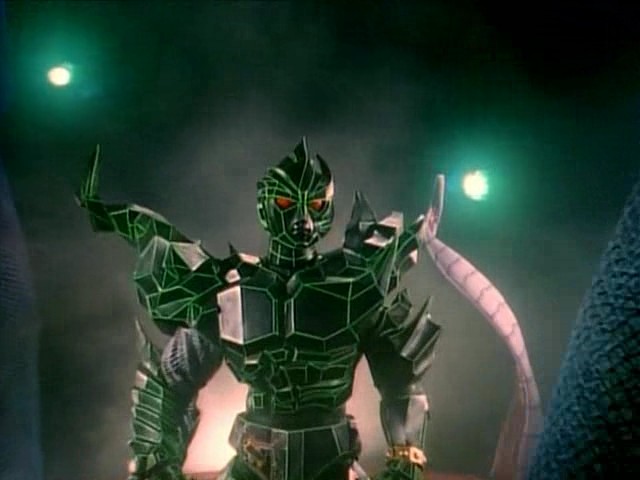
Elektra has two costumes this season (the second of which can be partially seen in the first picture above), which are more practical for a ninja assassin and look pretty cool compared to her comics look.
Apparently Frank Miller, who created Elektra, decided not to watch season two because he didn't acknowledge the show's version as the Elektra he created. Forgive me, but Frank Miller's thoughts and opinions haven't meant much since he wrote Dark Knight Strikes Again, especially if I believe the reason he doesn't like this Elektra is because she's not overly sexualized like almost every female character he's come to write.
One of the things I didn't expect was for Elektra to die. But in the last episode when Matt tells Elektra that he'll leave New York with her once they finish their mission, that pretty much sealed her fate, much like how in Amazing Spider-Man 2 when Peter told Gwen he would come with her to London. Still, Elektra's death is well done, sacrificing herself and proving to herself that there is good in her. On the other hand, given my knowledge of the character, it's a given that she wouldn't stay dead, and they already set up her resurrection.
The season does end on an overall bitter note compared to last season. And so we look ahead to season three. If there's one thing I can predict, it's that it will be based on the famous "Born Again" storyline, which would have been the basis for a sequel to the 2003 film as well as the potential reboot while the rights were still with Fox. The last time we see Fisk this season, he's using his power in prison to request files on Matt. While Fisk is already planning his revenge on Nelson and Murdock for putting him in prison, this could very well lead to him finding out Matt is Daredevil. In addition, the season ends with Matt and Karen, who made an attempt at a relationship this season only to pretty much be ruined by Elektra, as he shows her his helmet and tells her that he's Daredevil. It ends before we get her full reaction, so that's something to look forward to. Will she be pissed? Will she take him back? Whatever happens, I got a feeling Matt's life is going to get turned upside down.
In addition, I would like my predictions from last year of Owlsley's son to arrive and become a more comic accurate Owl with Bullseye as his muscle. Plus, if we do get some adaptation of "Born Again", they could bring in Nuke/Will Simpson from Jessica Jones.
So to wrap this up, while season two is really damn good, I think I liked season one better, just because it got so down and dirty compared to everything else Marvel we saw at that point. But I do applaud season two for bringing more of a comic book feel forward, and I enjoy watching all these characters journeys and look forward to where they go next.
First off, apologies for the lateness of this review. While the finale issue of "Ultimate End" came out in December, my comic shop forgot to hold a copy so I had to wait for the second printing to come out. And considering the distance from my home to my comic shop, I usually make one trip to pick up everything I have for the month.
Secondly, much like my Retro Review of the "Batman: Knight of Vengeance" miniseries that tied-in with "Flashpoint", I will be reviewing "Ultimate End", a tie-in miniseries to the much larger "Secret Wars" event. When it comes to "Secret Wars" itself, I did enjoy it, starting with a lot of potential and ending with a satisfying conclusion. However, I don't feel I would be able to write up a proper review on it. Jonathan Hickman's writing style is a lot to take in. I had a similar situation during the "Infinity" event back in 2013. It's really worth a read though, so I recommend the trade.
But with "Ultimate End", oh I have much to say on this one. Before that though, a little history on Marvel's Ultimate imprint.
While Marvel relaunched a number of long-running series during the late 90's, it only resulted in a temporary sales boost. Eventually they decided that instead of trying to bring in new readers to the main universe, they decided to start from ground zero (which was the working title for the line), creating a new line of comics set in a re-imagined universe where we see what the Marvel heroes we know would be like if they debuted in the 21st Century. Thus began the Ultimate Marvel universe, starting with titles featuring Spider-Man and the X-Men, written by then newcomers Brian Michael Bendis and Mark Millar, respectively. The Ultimate universe was a success, leading to other main titles like Ultimates (this universe's version of the Avengers) and Fantastic Four, along with a slew of miniseries. It got to the point where the Ultimate titles were outselling the mainstream Marvel titles. In fact, elements of the Ultimate universe have been and are still being incorporated into the live action Marvel films.
Eventually though, with Bendis and Millar making the jump to the mainstream Marvel universe and writing game changing events like "House of M" and "Civil War", the original universe was becoming revitalized and starting to outsell the Ultimate titles. This also brought about the problem that the two universes were starting to feel identical to each other. Enter Jeph Loeb, who would write the infamous "Ultimatum" event of 2008-09, which changed the very foundation of the Ultimate universe, mostly by killing a large number of characters: Daredevil, Doctor Strange, Yellowjacket, Wasp, a majority of X-Men like Cyclops, Professor X, Wolverine...seriously, there's a whole section on all who died during this story on its Wikipedia page.
My thoughts on "Ultimatum"? I understand what they were trying to do, but the execution was poor. Honestly, the bigger problem I had was how you had to read all the tie-ins and aftermath issues to get the whole story. Because of this, "Ultimatum" is the only comic book event that I own completely...I'm not sure if I should be proud of that or not.
The line was then revamped as Ultimate Comics, with its main books being Spider-Man still written by Bendis and Avengers by Millar (in this universe, the Avengers are more like the Thunderbolts). This era of the imprint lasted until 2011, ending with the "Death of Spider-Man" event, which did indeed kill the Ultimate version of Peter Parker, making way for new character Miles Morales to take up the mantle. This lead to the next era, Ultimate Universe Reborn, which not only featured Miles as the new Spider-Man in his own book, but new books for the Ultimates and X-Men. However, this era ended by 2014 with the "Cataclysm" event, where due to the events of "Age of Ultron", the Galactus of the mainstream Marvel universe was sent to the Ultimate universe and attempted to consume their Earth. While many this would bring about the true end of the Ultimate Universe and be the way they could bring Miles over to the mainstream universe due to his popularity, the Ultimate line was revamped again with Ultimate Marvel NOW!, relaunching the Spider-Man book again, along with new books All-New Ultimates, starring Miles and a team of other young heroes, and Ultimate FF. Ultimate FF lasted until issue 6 and All-New Ultimates ended at 10. The Spider-Man book seemed to end the most naturally at issue 12 and lead straight into Secret Wars.
To explain the build-up to "Secret Wars", the multiverse was dying, set in motion by the Beyonders, with alternate Earths colliding into one another, with both Earths being destroyed or one having to destroy the other to survive until the next incursion. By the first issue of "Secret Wars", the only two worlds left were the mainstream and Ultimate universes. While the forces of both worlds worked to prevent their destruction, both were lost. However, in his attempt to save existence, Dr. Doom usurps the power of the Beyonders and effectively becomes God, using his infinite power to create a patchwork of what he was able to salvage from alternate Earths called Battleworld, each existing in their own domain, separated and enforced by Doom's army of alternate Thors, and represented by a Baron that answers to God King Doom. Many of these domains are the focus of their own tie-in miniseries.
Which finally brings us to "Ultimate End", from the team of Brian Michael Bendis and Mark Bagley, who started the Ultimate universe way back in 2000 with Ultimate Spider-Man, set in the Manhattan domain that contains what remains of both the mainstream and Ultimate Marvel universes. While it was billed as the final story of the Ultimate universe, a better description would be the long-awaited crossover between the two universes, despite a number of interactions since 2012. Either way you want to view it, it fails in both categories.
The first issue lays down the basic foundation of the miniseries, showing the heroes of the mainstream and Ultimate universes working together, despite some distrust between them, to get back their own worlds despite Doom's power. What's interesting is that at the time this came out, "Secret Wars" was already at issue 2 and gave us the basics of how Battleworld worked. While everyone seemed to follow God King Doom, it appeared that the characters in "Ultimate End" knew what Doom did. Keep this in mind a little later. The first issue ends with the mainstream Marvel heroes leaving the meeting with the Ultimate heroes when a group of Thors are sent by Doom to confront the Ultimate heroes.
But by the start of the second issue, the Thors are actually confronting the mainstream Marvel heroes, killing their Hawkeye in the process. Now, I could see that the Ultimate heroes actually saw the Thors arrive to confront the mainstream Marvel heroes, but I think it's a continuity issue. Honestly, this miniseries leaves out a lot, probably trying to do what it could with the amount of issues it was allotted.
It was by the second issue that I started to notice some continuity problems. For one, the mainstream Tony Stark was acting like his old self and wearing his Bleeding Edge armor, compared to before "Secret Wars" when he had his personality inverted in "AXIS" and had a new silver armor, featured in the Superior Iron Man book. But a bigger problem I noticed was an apparently awkward interaction between mainstream Peter Parker and Ultimate Aunt May and Gwen Stacy, who had already met each before in the "Spider-Men" crossover story, also written by Bendis. It wasn't until during my second read-through of the series that it finally hit me. While the domains of Battleworld resemble the well-known alternate realities, they aren't the ACTUAL realities. Rather they are an echo created by Doom and changed so they worship him. For example, take the "Years of Future Past" miniseries, based on the reality shown in the famous X-Men story, "Days of Future Past". While it was Senator Kelly's death in the original storyline that set in motion the events of the Sentinel controlled future, Kelly is alive and is President and Baron of the Battleworld domain.
Much like that, the mainstream and Ultimate universes shown in "Ultimate End" AREN'T the true versions but an echo created by Doom. So any continuity issues carrying from those universes into "Ultimate End" can be explained by that (well, mostly, but we'll get to that). Also, apparently their domains were originally separated but it was Ultimate Tony Stark's tinkering with the cross-dimensional device used to travel between the two universes and shown in "Spider-Men" and "Cataclysm" that results in the merger of the domains. So that means while the heroes of both worlds are working to set things right, Doom doesn't want them to.
Issue two also includes a brawl between the mainstream green Hulk and the Ultimate gray Hulk. Now there is an art inconsistency where we see mainstream Hulk actually having a goatee, but it apparently goes away when their fight begins. It doesn't help that by the time of the upcoming brawl later on in the series' fourth and fifth issues, he has the goatee again. As the two battle, all the mainstream and Ultimate heroes gather to put a stop to their fight, ending the second issue.
So you would probably think this would lead to an all out brawl with the heroes fighting the Hulks in the third issue, right? Nope. It starts out with mainstream Banner being held in containment by Ultimate Nick Fury and there's very little explanation to where Ultimate Banner went, despite the fact that he is a lot more unstable compared to mainstream Banner, not showing up again until the brawl in issues four and five. I mean, at least mainstream Banner can control his Hulk better, only losing control when pushed by someone like Ultimate Banner did. The issue ends with both Tony Starks busting mainstream Banner out so he can help them in their plan to set their domains right.
Issue four starts with the heroes teaming up to get mainstream Banner back from the Starks. This brings me to another problem I noticed in this series that isn't isolated. At some point over the years, it was decided that caption boxes and word balloons in the mainstream Marvel books would be "FULL CAPS" while Ultimate books would feature "Standard writing" in what I guess was a way to differentiate between universes. As such, both types of fonts are used for the characters depending on their universe. However, in issue four, Ultimate Hawkeye has a word balloon that is full caps. I'm not sure if it was Bendis or an editor who made the mistake, but that's the kind of thing that happens when you make both versions of the character have a similar costume. It happens again later on in issue five with Ultimate Kitty Pryde having a full caps word balloon.
Anyway, the Starks disagree on what course of action to take which leads to them gathering up the heroes of their universes for one final battle. Not counting pages where they're shown charging at each other, the actual fight only lasts ONE PAGE before the final page shows Miles Morales entering the fray.
Which brings us to the fifth and final issue and boy is it a doozy. Miles stops the fighting rather easily, yelling "STOP!" and webbing up everyone he can to get their attention. It's kind of hard to tell at first considering how crowded the panel is, I couldn't see the webs the first time and just thought everyone stopped. And no, this isn't an echo of Miles, but the true version from the real Ultimate universe, surviving the final incursion by hitching a ride on the Cabal's Life Raft in the main "Secret Wars" book. He has mainstream Emma Frost, Rachael Grey, and teenage Jean Grey use their psychic powers to broadcast the truth of Doom and their circumstances to all the heroes.
What happens after that is a two page spread of, and I seriously counted, 70 head shots of characters reacting to what they've been shown. Some of them don't believe him, others are horrified or pissed, and some don't say anything at all. I mean, was that necessary? We had to see EVERY character's reaction?
So Miles is part of the plan to rally up the domains of Battleworld to rise up against Doom (this is explained a lot better in the main "Secret Wars" book). Anyways, the heroes decide to join what would seem to be the final battle they'll take part in.
But before that, Miles Morales and mainstream Peter Parker and Tony Stark all leave messages for their loved ones before going in to battle. And this is another problem I have with this issue.
Let me start with Peter. They're acting like this is the same Peter Parker shown in the main "Secret Wars" book. It's not. Peter actually survived the final incursion and made it aboard Reed Richards' Life Raft along with Black Panther, Cyclops, Jane Foster/Thor, Star Lord, and Carol Danvers/Captain Marvel. The Peter Parker shown in "Ultimate End" is an echo of the mainstream version.
Miles leaves a message for his father, who we see for the first and only time in this book. But you know, at least Miles' dad actually got shown. Tony is leaving a message for Pepper, and we don't even see her, but the outside of Stark Tower. In comparison, Peter was leaving a message for Ultimate Aunt May and
Gwen, who we actually saw him interact with in this series. With Miles and Tony leaving their messages, we don't have that same emotional pull. They couldn't have even shown Pepper? How hard would that be?
But the messages aren't contained to these one panels but are stretched out over a number of pages. We start out with a group shot of the mainstream and Ultimate heroes charging onto Doomstadt for the final battle...followed by three more two-page spreads of 70 character head-shots. However, the head-shots disappear page by page, indicating that these characters are getting killed, leaving a white space from where they were. The last ones remaining are Peter, Miles, and both Tonys before one last double page spread of whiteness. Oh, and through all those pages, Peter, Miles, and Tony's messages to their loved ones just keep going. Honestly, I couldn't even finish reading their messages because of how busy these pages were; I just skipped to the next section. I mean, I know they wanted to save the final battle for the main "Secret Wars" book, but seriously, give us something more riveting than freaking head-shots.
So after the double page spread of whiteness, which is supposed to be the indication of the establishment of the All-New All-Different Marvel universe, we find Miles being awakened by his mother, telling he shouldn't waste his Saturday sleeping in. Now this is a big deal because Miles' mother was killed during the "Venom War" story arc of his solo book. What's also of note is that their word balloons are full cap like the mainstream Marvel books, signifying that Miles, and by extension his supporting cast, have finally made the jump to the mainstream universe, setting up for his new solo book in the All-New All-Different Marvel universe where he would become a member of the Avengers.
But yeah, establishing Miles' mother being alive is the only big development this series brings. If you want an actual reason why Miles' life jumped universes, you'd have to read the main "Secret Wars" book. It's actually done pretty brilliantly.
How do I sum up my thoughts on "Ultimate End"? Well, to borrow the catchphrase of a famous internet comic book reviewer, THIS COMIC SUCK!
I mean, it seems like they just gave Bendis mostly free reign and not to worry about continuity or what was happening in the nain "Secret Wars" book with the important part being that he give some indication of Miles' life in the All-New All-Different Marvel universe. But much like "Age of Ultron" (another Bendis book), the only important part to come of this was at the end and could have easily been referenced in another book...which they did...in the main "Secret Wars" book, when Peter and Miles are about to patrol together and he asks him what he told his mom he was doing. Hell, for a book that's I'm assuming was supposed to set up Miles's status-quo post-Secret Wars, he's only in one full issue, and he's supposed to be the most popular original character from the line.
But that aside, this book utterly fails as both a final farewell to the fifteen year old Ultimate universe and a Mainstream Marvel vs. Ultimate Marvel book. On the latter, such a crossover would have been better as its own story rather than a tie-in to a much larger story. I would say that it displays why the Ultimate universe should have been done away with long before then, but I can't help but feel there could have been some way to have it go out in a blaze of glory than it did. But if you want to see the Ultimate universe get more of a proper send-off, you're better off reading the main "Secret Wars" book AND Hickman's "Time Runs Out" story in Avengers and New Avengers that lead up to the event, as they do both feature characters from the Ultimate universe in a much more respectful way.
You know what's probably the biggest disservice this book delivers though? While we have Brian Michael Bendis and Mark Bagley ending the Ultimate universe with this book much like how they began it in Ultimate Spider-Man, it didn't include the character that started it all: Ultimate Peter Parker. Sure, Ultimate Peter did come back from the dead, gave Miles his blessing, and rode off into the sunset with MJ, but to not have him in the final Ultimate Universe story is just...well, I think I made my point clear.
I'm doing something I haven't done before with my comic book reviews. I'm giving "Ultimate End" a ZERO in both story and recommendation rating. Now, I'm not saying that it's the worst comic ever, but even some comics considered the worst have something going for it. "Spider-Man: One More Day" was an editorial mandate that butchered two decades of character development, but it at least had the emotional pull of Peter and Mary Jane's relationship to it. "Age of Ultron", which I still gave a 2/10 on recommendation, did have entertaining elements of time travel and alternate realities while setting up what eventually lead to "Secret Wars". But "Ultimate End" just exists. Compared to other really good or okay "Secret Wars" tie-ins I read, like "Amazing Spider-Man: Renew Your Vows" and "Years of Future Past", "Ultimate End" just felt like a soulless cash-grab with really no rhyme or reason for it. I'd hate to say it, but "Ultimatum" was a better read than this. What does that tell you?
We've reached the end of Power Rangers month, which means it's time to talk about the best of the best.
5. POWER RANGERS DINO THUNDER (2004)
Adapted from Bakuryu Sentai Abaranger
Disney Era
Ever wonder what a modern take of Mighty Morphin' Power Rangers would look like? Well the answer is Dino Thunder. (Then again, we do seem to get a dinosaur based team once a decade, but we'll get to Dino Charge once it's complete and I can binge watch it on Netflix.)
Before anything else, I love the theme song. Not only does it sound heroic and get you pumped up, but what makes it unique is that this is the only Ranger theme that doesn't have the word "Go" in it.
Due to the lukewarm response of Ninja Storm, then current showrunner Douglas Sloan asked Jason David Frank to return for the next season to reprise his role as Tommy Oliver to act as a mentor to the new teenage Rangers, the first since the Zordon era. While Tommy's return isn't the only reason that makes this a great season, it's certainly a factor and probably the best thing they could have done. When you think back to the Mighty Morphin' days, all the Rangers were really all goody-goodies. But since the series has come a long way since then, Tommy is having to deal with the modern angst ridden teenagers of a new era. What I've noticed about the three main Rangers this season is that they start out as pretty self-absorbed but grow as the season goes on.
Connor, the Red Ranger, is first shown to be obsessed with soccer and becoming a star athlete, also being shallow when it comes to women. In the episode "Wave Goodbye", Connor even tries to give up his Ranger duties when a talent scout is looking for new players, but realizes that being a Ranger is more important. In the episode "The Passion of Connor", he meets an environmentalist named Krista and while initially just trying to get with her, Connor comes to respect her passion, leading to the two going to prom in the season finale.
A criticism Connor gets is that he's a "power-up hog". In addition to the Super Dino Mode all the Rangers get, Connor also gets the Shield of Triumph, powered by all the Rangers' Dino Gems, to become the Triassic Ranger, which goes further into his Battilizer and his own personal Megazord. I can kind of see the point. Now that I think about it, it might have been cooler if each of the Rangers could use the Shield and have their own Triassic mode, like each Samurai Ranger had a Super mode, or Tommy's Dragon Shield being transferable to the others in Mighty Morphin'.
Ethan, the Blue Ranger, is a techno geek, obsessed with gaming and sci-fi. Considering how different he and Connor are, it certainly puts them at odds, but they do become friendlier to each other as the season goes on. In fact, in the episode "Leader of the Whack", when the Rangers are affected by a meteorite that turns them into their opposite, Connor becomes nerdy while Ethan turns into a jock. Once they're back to normal though, it gives them more of an understanding of one another. In the season finale, when he plans to go see a new movie instead of going to prom, he changes his mind and takes a girl he met in line for the movie. I think it shows how far he's come, wanting to do something that he'll remember over seeing a movie.
Kira, the Yellow Ranger, was a bit more tougher to crack, but I think I figured her out. In the episode "Diva in Distress", we learn that Kira had a friend that she sang together with until said friend was discovered and became a self-obsessed pop star. I think because of this, Kira has tried to close herself off in fear of getting hurt, burying herself in her own music (and she's really good). Being a Ranger and working with the others has helped open herself up more.
While this is another season that starts out with three Rangers, it is short lived when Tommy becomes the Black Ranger in the fifth episode. However, I don't really think it affects the team dynamic that much, as it is still the main three in the Megazord while Tommy provides back-up assistance on the ground. In fact, Tommy's own zord is actually a carrier zord for the others.
There is a period of episodes where Tommy is stuck in his Ranger form. Behind the scenes, part of Jason David Frank's agreement to come back was that he would have a vacation to go back home for family time in America, since the series was now being filmed in New Zealand, so he prerecorded his lines. During this time, I couldn't help but make jokes like "Just take the suit off manually! You got a zipper on the back!" This storyline is wrapped up in the episode "Fighting Spirit" when an attempt to get Tommy back to normal leads him going in a coma. In his mind, he's fighting the spirits of his old Ranger powers, the Red Zeo Ranger, and the White and Green Mighty Morphin' Rangers. It's a pretty good tribute episode and shows Tommy's how important his legacy as both a Ranger and a person is.
Overall, Tommy is still entertaining as always, and he doesn't overshadow the newer characters.
Much like in Mighty Morphin', we have an initially evil Ranger in the form of Trent, the White Ranger. What's different though is that the powers themselves are evil instead of a spell being cast on them. Trent accidentally goes through an Invisoportal to the villains' lair and comes into contact with the White Dino Gem, which had just been discovered. The gem takes possession of Trent, turning him into the White Ranger and an enemy of the Rangers. Initially, Trent has no memory of what happens when he's in Ranger form, but as time goes on, he starts to remember his time morphed and tries to keep himself under control, the powers soon begin to corrupt Trent himself. After awhile, when Trent is set up and is having his powers drained, the process is interrupted, and while he keeps the powers, it removes any trace of evil, allowing him to join up with the Rangers. However, an evil White Ranger clone is made with no trace of Trent. Something to note though is that in Abaranger, the White Ranger was a straight-up villain, not joining the team until near the ending, which means there was still evil White Ranger footage to use. This is just speculation on my part, but I'm guessing that this was done because they might have thought it would make Trent look less sympathetic if he joined the team so late. Still, it can be kind of confusing for those coming in and wondering why there are two White Rangers.
Let's talk about the suits now. I really like them, reminding me of the Mighty Morphin' suits but still different. The helmets are little more simple, the diamonds running up the sides are a nice touch, and the symbol on the chest makes me think of the Dino symbols that were on marketing material for Mighty Morphin' (it always bothered me why those weren't on the show).
Trent's White Ranger suit was pretty awesome too, being very different from the others and having a really evil appearance.
While the original ones in Mighty Morphin' were purely machines, the Dinozords this season are biomechanical, as in both machine and organic. Some of them are even shown to watch from eggs. They really hammer in the organic part by even showing that the cockpits have somewhat of a cellular appearance.
In my opinion, it's a good way of making Dino Thunder's zords different from the original. While we've had living zords before like the Galactabeasts in Lost Galaxy and the Wildzords in Wild Force, the Rangers' cockpits still had some kind of mechanical look to them.
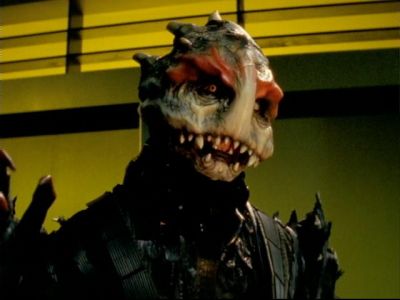
What's really interesting about the villains this season is that they're completely Earth-based. They're not aliens or demons, but actual human beings, even all having secret identities, a first for Power Rangers. The main villain is Mesogog, who is probably the creepiest looking villain to come from the show.
He's certainly what you would call a mad scientist, not only modifying his own DNA, but that of his henchmen, Elsa and Zeltrax (who has his own personal vendetta against Tommy, which makes for some good fights in the season). In addition, he creates his own foot soliders, the Tyrannodrones, and uses the Geno Randomizer to create monsters. But what really makes Mesogog an interesting villain is the Jekyll/Hyde aspect, the only time it's happened in the franchise's history.
Dino Thunder is a really great season, with the dinosaur motif making a good callback to the Mighty Morphin' days while still remaining entertaining in its own ways with interesting characters, and by the end of the season finale, it made me happy that I could follow them on their journey.
4. MIGHTY MORPHIN' POWER RANGERS (1993-1995)
Adapted from Kyoryu Sentai Zyuranger, Gosei Sentai Dairanger, and Ninja Sentai Kakuranger
Saban Zordon Era
Ah you never forget the first. When people think of Power Rangers, this is the team that comes to mind. Even if you hated Power Rangers, you knew who these characters were. Everything about the original is iconic.
Let's be honest though, it isn't as perfect as everyone makes it out to be. For the most part, it followed the basic formula: Rangers have personal problem that needs over come, Rita or Zedd send a monster that may have a tie to said problem, Rangers fight it hand-to-hand and destroy it with the Megazord, Rangers overcome problem. We would get the occasional multi-parter though where the major things happen, like the debut of a new Ranger, villain, or zords. There was a good mix of silliness and seriousness, and it knew when to do both.
Tommy's the one who has the biggest character arc. When he's first introduced, he's brainwashed by Rita into becoming her evil Green Ranger to fight the Rangers, and boy does he make an impressive debut, walking through all of them (and giving Kimberly a mean bitch slap).
The Rangers are able to free Tommy and he joins the team, only to have his Green Ranger powers taken by Rita. But he would come back as the new White Ranger and leader of the team. Personally, I always liked Tommy better as the White Ranger. Aside from a cooler look in my opinion, he felt more involved compared to when he was Green, usually showing up late to battle or having problems with his powers.
When it comes to the other Rangers, they were overall just goody-goodies with no real development aside from the occasional problem of the day. But at the time, we didn't need deep characters. These characters represented ideals kids could aspire to. We wanted to know karate like Jason or Tommy. We wanted to be cool like Zack. We wanted to be smart like Billy. All the boys had a crush on Kimberly and all the girls wanted to be like her. This is where Megaforce failed. They tried to recreate the same feeling from Mighty Morphin' but it eventually devolved into action scene after action scene. If we can't make a personal connection with these characters, then why should we care about them?
Something I liked as a kid watching this show was that when there was a change that happened, it always felt important, whether it be the introduction of new zords or the replacement of old Rangers with new ones. There was a bit of an adjustment period on the latter, but we also had the benefit of knowing the new characters before they took on the powers, so it took hardly any time to accept them. Another big moment was the introduction of the Ninja Ranger Powers.
While the main Ranger suits were used fighting the monsters, these were a nice addition as it shows that the Ninjazords weren't the only thing new they received from Ninjor.
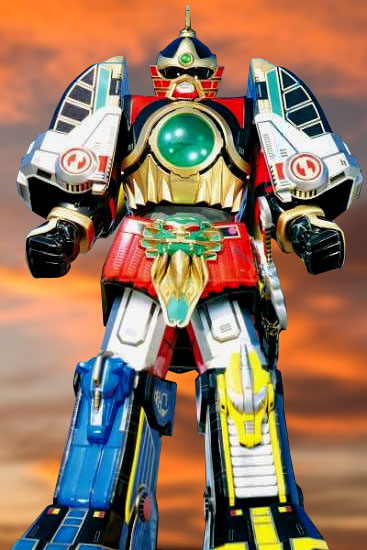
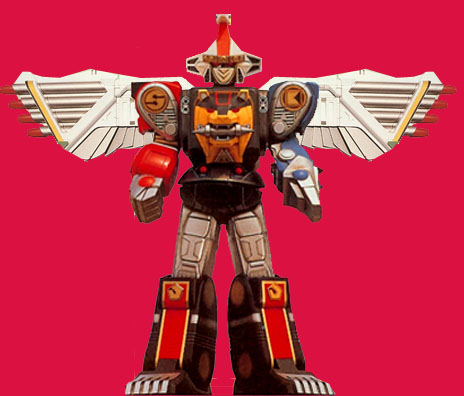
All the zords were great in their own way, being distinctive and following a natural progression. First they were dinosaur based, followed by mythological creatures, then based on modern animals and finally humanoid zords. If I had to pick my favorite zords, it would be the Thunder Megazord (which is also my favorite Megazord altogether) and the Ninja Megafalconzord.
I just really liked the design of the Thunder Megazord, and it's finishing move was so cool, unsheathing its sword, powering it up for the final strike, and after that putting the sword back in its holster as the monster explodes. With the Ninja Megafalconzord, this is what I was talking about when I said Tommy felt more part of the team as the White Ranger, as he got a new Ninjazord at the same time as the others, and it would be the first time all six Rangers had their zords combined and would be in the cockpit together.
Let's talk about the villains now. Visually they were all distinctive and interesting in their own ways. Rita looked silly but still a powerful foe. Goldar was very intimidating in both appearance and voice, especially whenever he would taunt the Rangers. Squat and Baboo were just comic relief, but still entertaining. Finster, while just the monster maker, had a certain charm to him. Then we had Lord Zedd come in, and at the time he was, and in some respects still is, the scariest and most intimidating villain of the franchise, making a very impressive debut.
One other villain to mention is Rita's brother Rito. While he does have a good look and make a good debut by destroying the Thunder Megazord and Tigerzord, after being beat by the Ninja Megafalconzord, he basically just became a dumber version of Goldar. Still, he wasn't as annoying or useless as Elgar.
One of the best things Mighty Morphin' had over all the other seasons was the music. In addition to the theme song, with an extended version used during Megazord formations, we had a soundtrack of songs played during Rangers in civilian clothes fighting Putties. "Hero." "Fight." "Five-For-One." "I Will Win." "Combat." If you remember each of those songs just based on the title, I tip my hat off to you. There were other songs used in Zeo and Turbo, but they just weren't as memorable as those used in Mighty Morphin'.
The ending to the final episode "Hogday Afternoon" was pretty devastating, with the destruction of the Command Center from a bomb planted by Goldar and Rito. With explosions happening around them, Zordon orders Alpha to teleport the Rangers out to safety, despite the Rangers not wanting to leave them. They're teleported outside just to watch the destruction unfold on what was a second home to them, not knowing what happened to Zordon and Alpha. I get goosebumps every time I watch that scene, and even now thinking about it and typing this out. I think it shows how attached one can become to these characters.
This brings me to my conclusion. I know there are some people who just watch or like Mighty Morphin' and don't concern themselves with any other season. But you know what you get if you just watch Mighty Morphin'? The Command Center being blown up, the Rangers powerless, and Rita and Zedd getting the last laugh. You're basically saying you're fine with the fact that evil won.
To what I call the Mighty Morphin' purists out there, I say this: Zeo is just as good as Mighty Morphin', you'll be able to survive Turbo, and finally, you can finish with the season that wrapped up the six year storyline...
3. POWER RANGERS IN SPACE (1998)
Adapted from Denji Sentai Megaranger
Saban Zordon Era
Due to declining ratings and the negative reception to Turbo, it was decided that the next season of Power Rangers would also be its last. With nothing left to lose, those making the show planned to end the story line that began way back in "Day of the Dumpster", doing things they wouldn't have before and going out in a blaze of glory. What resulted was Power Rangers in Space, which would not only save the series, but change it forever.
The season begins with a gathering of all the villains the show has had so far. Mondo and Machina from Zeo, Rita and Zedd from Mighty Morphin', and of course/unfortunately, Divatox, fresh off her victory of the Turbo Rangers. She brags about it to Rita, they bicker, and Rita fires her wand at Divatox, but misses, and hits our main villain for the season, Astronema. She merely absorbs the blast and shakes it off, not even changing her facial expression. Already, she's a step up from Divatox. Then the Dark Specter arrives, the one who controls all the villains, revealing that he has captured Zordon and draining his life force. But before he can elaborate further on his plans, a spy is discovered in the form of a Red Ranger. Now as a kid just coming in from Turbo, this was a very shocking moment. I kept wondering "Is that TJ? Did I miss an episode?"
Elsewhere, the now powerless Turbo Rangers, TJ, Carlos, Ashley, and Cassie, and Alpha 6 are traveling through space in a shuttle they commandeered in hopes of saving Zordon. But they are pulled in by a tractor beam from the much larger Astro Megaship. They explore the ship when they run into the Red Ranger, who escaped from Dark Specter but has been followed by Astronema. She damages the ship significantly, but the Rangers are able to help crash land it safely. The Red Ranger then reveals himself to be a humanoid alien named Andros from the colony planet of KO-35, which had been abandoned due to Dark Specter's attacks. He tells the Rangers about Zordon, and while he initially doesn't want to work together with them, he gives them their Astro Morphers and the Space Rangers are formed. While their main goal is to find and save Zordon, Astronema constantly sends monsters to attack Earth, keeping the Rangers busy as Dark Specter slowly drains him.
Right off the bat, you could tell this was a different season from before. The theme song to start with is the first one to not have any indication of the original "Go Go Power Rangers". (Though to be fair, the third episode "Save Our Ship", an awesome new version done in the style of this season's theme was played during a civilian battle with Quatrons, never to be heard again.) Zeo used some of the lyrics while Turbo included a guitar riff. Even the communicators have a new sound effect rather than just a beeping version of the original theme. I really think this makes sense because in this season, the Rangers don't get their powers directly from Zordon, they have a new headquarters, and they're no longer Earth bound.
I remember seeing a promo for this season as a kid showing the Space Ranger suits for the first time and immediately loved them. For one thing, I was glad they were able to use the original color scheme of Red, Black, Blue, Yellow, and Pink. The helmets really did give off an astronaut vibe, especially with the little vent things on the sides. Honestly, the suits are so streamlined and generic (in a good way), you could honestly use them for any season. They're simple, but impressive enough to be my favorite Ranger suits.
When Zhane comes on as the Silver Ranger, I always thought his suit personified the best parts of the sixth Rangers we've had so far. His suit was gray, which in some ways is a darker white, he had gold on his shoulders and chest, and the squares were green.
Andros was a different kind of Ranger, not only already having his powers before the rest of the team but having a pretty hard life. Even before his planet was lost, his little sister Karone was kidnapped when they were both children, and it continues to haunt him years later. Not only that, but Zhane was critically injured in battle back on KO-35 saving Andros from a monster attack and had to be cryogenically frozen aboard the Megaship. Andros kept this from the Rangers until the episode "Survival of the Silver" when the ship crashlands and they discover the room and his chamber damaged. As the Rangers fend off an attack, Zhane arrives and helps finish off the monster.
Despite all this, Andros is still a strong leader on the battlefield, though can be stubborn at times, often going off on his own or not listening to the other Rangers. I would actually say Andros may be my favorite Red Ranger.
I'm just going to speculate now, but I'm willing to bet that Andros' story is even more tragic. Think about it. He just happened to have four other Ranger morphers? One could say that they were never used before, but there's also the possibility that he lead a Ranger team before that fell in battle. It's possible.
After a season based on cars, a season based on space travel was a logical evolution. The Rangers each had a personal vehicle in the Galaxy Gliders, which were like surfboards/hoverboards. Zhane's could even turn into a motorcycle. But more prominently, the zords were all based on a spaceship. We start the season with just the Astro Megaship, which can transform into the Astro Megazord. Later on, they get the Delta Megaship/zord, which can combine with the Astro Megazord into the pretty rad looking Astro Delta Megazord. Now I've said before that I prefer Megazords to have a good representation of each Ranger' color, but in these cases it makes sense. Besides, I get said wish when the Rangers receive their own personal zords that can form the Mega Voyager. Zhane has his own zord called the Mega Winger, which can detach its wings and give it to the Mega Voyager.
This was actually my favorite Megazord of the season, reminding me of the Ninja Megafalconzord, even though Zhane doesn't join the other Rangers in the cockpit.
Moving on to the villains, which are probably the best batch to come out of any season of the franchise.
Like I said before, Astronema was already a step up from Divatox, acting much more ruthlessly and not as comical or annoying as Divatox or Rita. However, a big twist comes in when it's revealed that Astronema is Andros' sister Karone, both having the same locket of the two of them as children. Astronema has a crisis of faith, and while Andros believes there's still good in her, the other Rangers are less than accepting. This is different from Tommy being accepted to the team as the Green Ranger in Mighty Morphin' because he was under a spell, while Karone has acted of her own accord to commit evil. However, when she saves the Rangers from a trap set by Dark Specter, her true allegiance is shown. Unfortunately, Karone is captured and brainwashed back into becoming Astronema, now more evil than ever.
There's not one bad thing I can say about Ecliptor. He had a great design with the green lines on a black body with red eyes, and a powerful voice to boot. Much like Goldar and Jason's rivalry in Mighy Morphin', Ecliptor was usually in battle with Andros, making for some good battles. But what makes him most interesting was his relationship with Astronema, who he raised like his own daughter. Before Villamax, Ecliptor was a villain driven by loyalty. Even despite his evil nature, when Astronema helps the Rangers escape from Dark Specter, he helps give them time to escape, only for him be brainwashed. But even under a controlled state, his one true motivation remains to be his loyalty to Astronema.
Darkona is one monster of a monster. I mean, just look at the guy. Terrifying, especially with the permanent smile. Before Serrator or Deviot, Darkonda was the OG when it came to Power Ranger villain generals working for their own goals. This is the guy who actually kidnapped Karone in the first place. In his debut appearance, "The Barillian Sting", he infects Carlos with a parasite that slowly turns him into a monster. Having seen this before on KO-35, Andros and TJ head to the abandoned planet to retrieve the cure, while Carlos becomes a full monster and even infects Cassie, leaving Ashley to hold them off until the cure arrives. Not bad for a villain's first outing.
Darkonda is pretty much the antithesis of Ecliptor which puts the two at odds constantly. It doesn't help in the episode "TJ's Identity Crisis" when Darkonda temporarily absorbs Ecliptor into his body to become Darkliptor, capturing Carlos, Ashley, and Cassie while inflicting TJ with amnesia. Ecliptor soon gets his revenge by poisoning Darkonda, causing him to mutate into a more powerful form that almost destroys the Astro Delta Megazord before being defeated by the newly discovered Mega Voyager.
Perhaps the best story arc of the season was the battle with the Psycho Rangers. We've had attempts at evil Rangers in the series before by this point, but this was the first unique and entertaining take on the concept. After Karone is brainwashed back into being Astronema, she creates the Psycho Rangers, who can match the Rangers move for move and even absorb their thoughts. It is their sole mission and obsession to destroy the Rangers, and they would have in their first episode if it weren't for Astronema. See, she had their power linked to Dark Specter so that the longer they battle the Rangers, the more power they drain from Dark Specter until he would be no more, and she would become the new leader of all the villains. Even so, its the Psychos' own bickering and in-fighting that led to their defeat. But despite that, they were a definite force to be reckoned with, even being able to take over the Rangers' Megazords. It was pretty awesome too that they were brought back the next season to fight the Lost Galaxy Rangers, who get assistance from the Space Rangers.
But of course, since this was intended to be the final season, an ending would come in the form of the fan favorite two parter "Countdown to Destruction". Dark Specter orders all his forces to attack in the final plan to conquer the universe. All the villains the shows has had thus far appear, from Rita and Zedd, the Machine Empire, and Divatox, seen battling the Alien Rangers of Aquitar, Trey the Gold Zeo Ranger of Triforia, Blue Senturion, and even the Phantom Ranger. Astronema herself launches a full scale attack on Earth, something not seen before in Power Rangers, full scale destruction and citizen fleeing all around. Even Zhane's Mega Winger is overwhelmed, resulting in its destruction, and with the Delta Megazord and Mega Voyager already destroyed in prior episodes, only the Astro Megaship remained. As the villains begin to get the upper hand, Darkonda launches an attack on Dark Specter, who manages to eat Darkonda before he explodes. Astronema proclaims herself as the new monarch of evil across the universe, and gives the Space Rangers 24 hours to surrender before resuming the attack on Earth. The night before, the Rangers discuss a plan. Andros still believes he can find Karone in Astronema, but TJ heavily argues that's she's too far gone now. Despite this, Andros goes off on his own to the Dark Fortress. The next day, Astronema arrives wanting the Rangers to step forward. Bulk and Skull proclaim themselves to be Rangers, followed by other citizens, until the Rangers themselves appear in public and morph to fight the Quatrons. As the Rangers become overwhelmed, Bulk and Skull lead the charge of citizens to help the Rangers fight back.
Now I haven't mentioned Bulk and Skull much before in other season analyses, but I feel it's important here because this is their shining moment. While they were initially bullies (or at least tried to be), they've always been inspired by and try to do good because of the Rangers, becoming better people as the show went on. Like I said in my SPD analysis, it's always great to see the regular people try to fight back like the Rangers, even against hopeless odds.
On the Dark Fortress, Andros discovers Zordon. Zordon explains that the only way to save the universe is to shatter his tube, which will unleash a wave of energy that will wipe out every evil force attacking, sacrificing himself in the process. As Andros contemplates this, Astronema arrives and the two battle, Andros still trying to reach Karone. When Andros deflects an attack back at her, it injures her pretty bad. Ecliptor arrives and attacks Andros, angered by what happened to Astronema (further showing his fatherly love for her).When Andros has Ecliptor incapacitated, Zordon pleads with Andros to do what is necessary. Andros powers up his Spiral Saber, shatters the tube and an energy waves spreads across the universe, turning most of the monsters and henchmen into dust, as well as Rita, Zedd, and Divatox into humans. The battle was finally over. As Andros holds his sister in his arms, believing to have lost her, she wakes up as Karone, finally free of evil's grip on her mind.
"Countdown to Destruction" was a big deal to me as a kid and still is today. I followed the show for 6 years and three suit changes, and watching it all come to a head was astounding, especially with how it was done. Zordon, mentor to the Power Rangers, who recruited the original team, gave his life for the sake of all. This was the first true finale to a Power Rangers story, before each season afterward would be one-and-done with a rotating cast.
Power Rangers in Space was a real turning point, taking on more mature and dramatic points than previous seasons did, wrapping up the story that began in Mighty Morphin' with the kind of class one may or may not have expected, while delivering plenty of twists and entertaining villains along the way. While intended to be the last, this season was a ratings success and saved Power Rangers from cancellation. Which is a good thing, or we may not have gotten our top two picks...
2. POWER RANGERS TIME FORCE (2001)
Adapted from Mirai Sentai Timeranger
Saban Post-Zordon Era
Much like how I heard a lot of negative things about Wild Force, I heard a lot of praise for Time Force before I got around to watching it during my catch-up period. While I thought Wild Force wasn't as bad as it was made out to be, Time Force was indeed worthy of its praise. This was a season so successful that there were even talks for a movie, but it didn't happen for a number of reasons.
At the time of this writing, I've had the added benefit of recently watching the entire season again on DVD, so it's fresh in my mind. That said, Time Force is even better than I remembered, doing a lot of things that hadn't and haven't been done before in a Power Rangers season. I would even go so far to say that this would be the season to watch for comic book superhero fans.
The series begins in the year 3000 with the capture of notorious mutant criminal Ransik by the Time Force police agency. However, Ransik's daughter Nadira and their robot Frax help him escape, taking control of a prison ship containing more mutant criminals and go through the time gate, killing Red Ranger Alex in the process. Four other Time Force Officers, Lucas, Trip, Katie, and Alex' fiance Jen, take a time ship to chase after Ransik, with Chrono Morphers in tow. They all wind up in the year 2001. However, the four officers are unable to morph because they need to reactivate the Red Ranger morpher, which is locked to Alex's DNA. Luckily, they meet Alex's ancestor, Wes Collins. While Jen is understandably hesitant, she explains the situation to Wes, who unlocks the morphers, and the five become the Time Force Rangers to apprehend Ransik and his mutant comrades and bring them back to the year 3000. In the mean time, Wes sets the four up in a clocktower, providing them with time-accurate clothing, and setting up an odd jobs service so they can make money.
The Time Force theme song is among my favorites. While the Lost Galaxy and Lightspeed Rescue theme songs were catchy, they weren't as epic as those from the Zordon era. The Time Force theme got me pumped as if I was watching Mighty Morphin' for the first time again.
What really sucks you in this season is the amount of drama going on, and I would say this is probably the most dramatic season of Power Rangers.
For the most part, this season follows the journey of Wes. When we first meet Wes, he's the heir of the Collins family fortune with his father grooming him to take over the family business Bio Lab. Wes doesn't really want to but he feels he has no choice. But when he joins the Time Force Ranger, it shows him he can choose his own destiny. This strains his relationship with his father, with Wes moving into the clocktower with the Rangers and feeling that all this father cares about is money based on his actions. We'll get back to this in a little bit.
Another big part of Wes's story is his relationship with Jen the Pink Ranger. The two definitely have some issues in the beginning, due to Jen losing Alex before coming to the past and that Wes and Alex look so alike. But Wes is able to prove himself time and again, earning her respect, eventually resulting in the two becoming pretty much co-leaders. The two even begin to develop romantic feelings for one another, but not telling the other out of fear of being rejected. The other Rangers even try to give them a nudge. They eventually reveal their feelings in the season finale, but it's bittersweet as Jen and the other Rangers are going back to the future (but they at least meet again a year later in the Wild Force team-up). Personally, I see the romantic development between Wes and Jen the best I've seen out of all the Ranger couples throughout the franchise. The only downside though is that we never see the two kiss, and you'd think with how dramatic and somewhat realistic this season was that it would happen. Now that I think about, Tommy and Kimberly are probably the only Ranger couple ever shown to kiss, and yet she dumped him in a "Dear John" letter in an episode of Zeo in a total character assassination...but I'm getting off topic.
I bring up these two relationships because they kind of correlate during one story arc. Due to shifts in the timeline, Alex is alive again (he said he survived the attack, but he looked pretty much dead before) and has been aiding the Rangers in secret from the future, eventually coming back to the past to take back his position as Red Ranger. He informs Wes that he will be taking over Bio Lab as his father will die from critical injuries he sustained from Ransik beforehand. Under Alex's leadership, the team truly suffers as he treats them as grunts rather than partners. That's putting it nicely. Putting it accurately, he became quite a dick compared to his first appearance. I'd like to think that this comes from him probably knowing that his fiance most likely hooks up with his really great grandpa. Eventually, Lucas, Trip, and Katie finally tell Alex off. When a powerless Wes arrives to help during a battle and seeing how well he works with the Rangers, Alex relinquishes his morpher back to Wes. Alex then goes to Wes's father as he's flat-lining, using what's essentially a Time Wish (Gravity Falls reference) to heal his wounds and save his life. Wes goes to the hospital to find his father in much better spirits. The two make amends with each other, telling his son that he's proud that he chose his own destiny.
This is a real turning point for the character of Wes's father, showing that deep down he is a good person and that it takes his son to bring it out to him. This is a man who in an early episode "A Parting of Ways" scolded a boy for accidentally hitting his limo with a baseball and refused to help give Wes money when a bus full of kids is taken hostage. By the season finale, he's out there helping people in need of help due to destruction from Frax's giant Doomtron robot, even letting a mother and her son use his limo and having his butler Phillips (who is criminally underused this season) drive them to a hospital.
As for Jen's character, I would say she's my favorite Pink Ranger. Initially acting as the sole team leader, she's tough as nails, but still has an emotional side she tries to hide. It usually takes the other Rangers to get her to come out of her shell and not act so serious all the time.
When it comes to the other Rangers, there's not much character development wise, but they're all a likable bunch. Lucas the Blue Ranger puts on a cool guy front but does have his moments where he shows he's a big softy. Trip the Green Ranger is actually a psychic alien and acts as the tech genius for the team, even building the team's robotic owl assistant Circuit, who can summon the Rangers' zords from the future. Katie the Yellow Ranger is probably the friendliest of the team, being very open compared to Jen. What's important to note is that she's super strong, often hugging the others super tight, a running gag on the show. She might be an alien or a mutant herself, but it's not ever really explained.
An interesting thing about this season is that it features some tropes one would expect from traditional superhero stories. While many Rangers seasons have had the Rangers hide their identities, this season shows that there would be huge ramifications if their identities are revealed. Since most of the Rangers are from the future, they're trying to keep a low profile so they can operate without worry.
More significantly, this is a season where we constantly see actual law enforcement try to step in to fight a monster, much more than any other season. Wes's father even creates and funds a private security team called the Silver Guardians, fighting mutants in their own way for those who pay for protection. While it's usually the Rangers who do end up defeating the mutants, the Guardians keep showing up to do what they can. The two groups are initially rivals but eventually end up working together. It's just kind of a nice change of pace to see civilians forces not totally relying on the Rangers to protect them and doing what they can against monsters attacking the city.
This brings us to Eric. He and Wes actually went to prep school together, the two reuniting when Eric becomes part of the Silver Guardians, hoping to become the team leader. When Eric steals the Quantum Morpher found in an archaeology dig, he becomes the Quantum Ranger and commands the Q-Rex Zord, which impresses Wes's father enough to promote him to leader of the Silver Guardians. However, Eric never officially becomes part of the Time Force team, initially only working in tandem with them against the mutants. A good way to describe Eric is that he's like Vegeta from Dragon Ball Z. He doesn't usually like or care about his fellow Rangers, but works with them when there's a common goal. Eventually, the alliance between them becomes much friendlier.
When it comes to Eric's Quantum Ranger suit, it does look pretty cool, but it can sometimes be easily confused with the Red Ranger suit. I think a good way they could have made it different was to reverse the positioning of the black and red on the suit.
And now we come to the villains. We've had aliens and demons out to conquer, but this season we have mutants. While they would be seen as monsters in a modern time, they're a common thing in the year 3000, and they're treated like anyone else who would break the law. However, they would be locked up in their own prison, which makes sense. I mean, don't DC and Marvel have prisons just for super villains? Mutant villains this season even do act like certain types of criminals, like carjackers (Mantamobile in "A Blue Streak") and mercenaries (Fatcatfish in "Jen's Revenge"). The Rangers don't act to destroy them, but apprehend them, shrinking them down to action figure size and placing them in stasis pods.
Now, despite the word "mutant" and some sense of discrimination, there isn't much comparison to X-Men. While Ransik leads an army of mutants, he's not like Magneto. His goal is humanity's destruction, not mutant superiority. Mutants have even been shown to be given a chance to work in some human capacity, but throw that chance away such as Lucas's race car driving friend Dash ("The Last Race") or Jen's first time partner Time Force partner Steelix who turned out to be dirty ("Time Force Traitor").
Ransik had been shunned by humanity for how he looked, though he himself acted out against those who tried to help him. He's pretty center-minded on defeating the Rangers and taking over the world, but he does have a kind side that he only shows to his daughter Nadira. What makes Ransik a noteworthy villain is that he's the first and only main villain of a Ranger season to surrender himself. In the final battle of the season finale, he puts up a pretty good fight against the Rangers, knocking them around like nothing. An injured and unmorphed Jen gets him to chase her into a warehouse. As he searches for her, Ransik fires at her, but when she appears behind him and blasts him, Ransik realizes that he fired at Nadira. Ransik realizes that his hatred for humanity almost cost him the only thing he loves, and he surrenders to Time Force.
Initially I didn't like Nadira, but watching through the season again, I finally understood her character. Nadira is in some ways a mob boss's daughter, taking what she wants when she wants, usually stealing clothes and jewelry. She has her own mutant powers as well like growing her finger nails out like swords (like Lady Deathstrike) and is able to hold her own against the Rangers. A big character moment for her comes in the season finale when she and Trip help deliver a baby for a woman who had gone into labor during their battle. This moment shows Nadira the beauty and innocence that can come in humanity, making her second guess her father's actions right to the end.
If there's a real kind of discrimination this season, it's Ransik and Nadira's treatment of robots like Frax and their Cyclobots, constantly demeaning them and proclaiming mutants' superiority over robots. However, Frax has been biding his time before trying to destroy Ransik and gain his revenge. Frax was once a human named Dr. Louis Ferricks who tried to help Ransik, but Ransik burnt down his home, and Ferricks was forced to transfer what remained of himself to a robot body, thus becoming Frax. By the season finale, Frax is captured by Ransik and while he is captive, Nadira tries to ask why there is hatred between humans and mutants, to which Frax responds that it's a vicious cycle that he has become a part of. As Frax is being taken away by Cyclobots, Nadira apologizes to Frax for what her father did to him. Touched, Frax pleads with Nadira to end the hatred in a pretty heartbreaking performance. Ransik essentially lobotomizes Frax, removing any human trace of him, much to the horror of Nadira.
There's a lot of tragic nature when it comes to the villains of Time Force, where they're not inherently evil, but becomes so from circumstance.
Like I said, Time Force is probably the most dramatic season Power Rangers has produced, making us feel things for both good and bad characters. It's not without its problems (what season doesn't have any?), but it earns the second spot on my list and recommended viewing for any kind of fan of the franchise.
And so after a long month, we've finally made it. The final spot of the countdown. This is in my opinion, not only the best season Power Rangers has produced thus far, but it might never be topped...
1. POWER RANGERS RPM (2009)
Adapted from Engine Sentai Go-Onger
Disney Era
Don't let the sillier than usual costumes and zords fool you. Power Rangers RPM is the darkest, most mature, and deepest season to ever come from the franchise. In fact, between this and my second and third picks, these three seasons are the ones to go to when you want to show that Power Rangers is more than just a kids show and that they can do things seriously, not to mention they each represent the best of their respective eras (Saban Zordon, Saban-Post Zordon, and Disney). Some people talk about how they would want a grim and gritty version of Power Rangers, but already have that with RPM. It's not overly dark, and if it were, it would just be depressing. This season takes itself more seriously than any other season, but you can still have some fun along the way.
A little behind the scenes information first. While those who worked on the show cared, the higher ups at Disney cared very little for Power Rangers, significantly cutting the budget season by season. By Mystic Force, the episode count was down to 32 and it ended the tradition of having a team-up with the previous season (and I would have loved a team-up with SPD). By Jungle Fury, there was no Battlizer, something that hadn't happened since Turbo (though one could argue that money used for a Jungle Fury Battlizer was used for the Spirit Rangers). The only reason Disney didn't just outright cancel it was because they were under contract to produce new seasons through 2009. Disney obviously didn't care about ratings either, because with the rebranding of Toon Disney as Disney XD, they removed Power Rangers from that channel's line-up and exiled to ABC's Saturday morning block (which mostly just showed old episodes of their teen sitcoms like Hannah Montana and That's So Raven) as the exclusive home of brand new episodes. So once again, those running the show decided to go out with a blaze of glory and do things they hadn't before. What resulted was a season unlike any other.
The season begins with an extended version of the theme song's opening narration, detailing the rising power of the computer virus Venjix, building a robotic army of machines to take over the planet and eradicate humanity. Unlike other villains though, Venjix is succeeding, with a newspaper headline showing that three entire continents have been decimated. With Venjix's takeover nearly complete, the last remaining sliver of humanity take refuge in the domed city of Corinth, which has enhanced protection from any Venjix based attack. A year passes and while the dome is still a safe place, Venjix still launches attacks, sending foot soldiers called Grinders and monsters. Standing in their way are the Power Rangers.
This is another season that technically starts with three Rangers, but in this case, it's based on availability than design. The Rangers this season are a military operation, and are usually referred to in a kind of military function. In the realm of the season, they are known as the Ranger Operators, and for example, instead of someone calling someone the Red Ranger, they're known as Ranger Operator Series Red, or just Ranger Red for short. There is also a rigorous screening process for one to become a Ranger, with mental and physical testing, because once someone uses the morpher, they're DNA locked. So yeah, not just anyone can become a Power Ranger in this series. By a year's time, the only ones who have become Rangers are Scott as Ranger Red, Flynn as Ranger Blue, and Summer as Ranger Yellow. However, it's shown that Ranger Series Green and Black are waiting for the right person to assume the powers, which go to new comers Ziggy and Dillon.
There are many ways RPM attempts to take an aspect well known in Power Rangers and make it sound serious. For example, the Morphing Grid is known as a Bio-Field of energy that can be tapped into to create the Ranger powers and Zord Attack Vehicles. Speaking of the zords, you may have noticed that they're a combinations of animals and vehicles and even have big eyes. Well the explanation for this is that their connection to the Bio-Field has a connection to life and nature, hence the animal-vehicle hybrids. It's almost like the Dinozords from Dino Thunder; mechanical in nature but with animal qualities, only the RPM zords have a more vehicle appearance. Other attempts are somewhat self-referential humor to the series. For example, whenever we see an explosion behind the Rangers after a morph, it's an exposition of excess energy.
You have to admit that it's nice to see them attempting to show traditional Power Ranger tropes and adding a new spin to them.
What's interesting this season is that each Ranger gets a spotlight episode early on named after them ("Ranger Green", "Ranger Red") detailing their lives before they become Rangers and Venjix's uprising. Scott's episode shows that he was in the air force with his brother Marcus and both served under their father, Colonel Mason Truman. During Venjix's initial all-out attack, Scott and Marcus were both shot down in battle, killing Marcus. This puts a strain on Scott's relationship with his father for most of the series.
Flynn's episode shows that he always dreamed of being a hero, much like Chip in Mystic Force. However, Flynn's attempts at bravery often fail or go unappreciated. It isn't until Venjix attacks that he finally shines. What's noteworthy is that Flynn is actually the first Scottish Ranger, and he wears it with pride.
Summer's episode shows that she was once a spoiled girl from a rich family with many friends. However, once Venjix attacks, Summer is abandoned by her friends. The only one who helps her is her butler Andrews, who she constantly treated like dirt. When she asks him why he's stayed by her despite her behavior, Andrews says that he's waiting for her to become who she really is under the fancy dresses and jewelry. Unfortunately, Andrews is killed trying to protect Summer from a Grinder attack. Through this experience, Summer's character changes drastically, leaving her family behind to eventually become Ranger Yellow to protect Corinth.
Ziggy is just a delight and is the funniest character in the season. The funniest thing? He wasn't even chosen to become a Ranger. While attempting to keep the Green Ranger morpher from falling into Venjix's hands, he accidentally morphs, bonding to his DNA and becoming an official part of the team, much to the chagrin of everyone except for Dillon. Since Ziggy has no training, he has a very unique fighting style, usually just trying not get hit and getting lucky when he's able to take down a Grinder. As the season goes on though, his fighting style improves greatly.
The only one who doesn't get a background episode is Dillon, because, well, even he doesn't know his background. He's introduced roaming the wastelands trying to make his way to Corinth, being chased by Grinders along the way. When he makes it to Corinth, he actually does help the Rangers fend off a Venjix attack, but then they discover that he has robotic implants placed in him by Venjix. While there is some distrust of him, Summer sees the potential of making him Ranger Black. Dillon isn't too keen on the whole thing, but takes the offer when it keeps him out of prison. It is soon discovered that a version of the Venjix virus is in Dillon, slowly infecting him, and that when it eventually reaches 100%, he'll be a mindless slave.
The Rangers' mentor this season is Dr. K, and while very young, she has developed all the Rangers' suits (she hates when someone calls them spandex), weapons, and zords. While intelligent, she is a very blunt person, often being insulting when she doesn't mean to be and only calling the Rangers by their color. This is due to being recruited (abducted?) by a government thing tank called Alphabet Soup as a little girl after seeing her potential. They give her the codename K and force her to build and design technology for them, never allowing her to go outside. Years go by to the point where she doesn't even remember real name anymore. She is eventually forced to work with two new recruits, twins Gem and Gemma, actually laying down the groundwork for the RPM powers, including Series Gold and Silver. K makes a plan for all of them to escape Alphabet Soup by uploading a virus into their security system. But given the virus' growing nature, K would have to set up a firewall to ensure it doesn't spread. However, Alphabet Soup thwarts the three's attempt, and K is unable to upload the firewall to contain the virus. Oh, the name of the virus by the way? VENJIX.
Dr. K can be seen as the most tragic character of the season. She had her childhood ripped away from her and in her attempt to gain back her freedom, she doomed the entire world. In one instance, she asks Ziggy "what it's like being stupid his whole life?" While in a way an insult, there's a bit of envy as well. This just opens a lot of character development though. In one episode, I remember K attempts to have a girl-talk with Summer when they're both up in the middle of the night, asking Summer about her feelings for both Scott and Dillon (on that note, it is Summer and Dillon that get together; they even almost kiss before it's interrupted).
Having thought to have lost them during Venjix's initial attack, when Gem and Gemma are revealed to be alive and using the Series Gold and Silver powers, K begins to open up a little more, even starting to call the other Rangers by their actual names...except for Ziggy. Why? Well because she has a big old crush on him, even using his name as a computer password. The two even get together in the season finale, finally calling him Ziggy since he's no longer a Ranger. Seriously though, the interaction between Ziggy and K is the most entertaining of the season, seeing as how they're practically polar opposites.
Going back to the subject of the suits and zords, I like to think that another reason that the reason they look so silly is because since K didn't have much of a childhood, so maybe she designs them like a child would.
Now on to Gem and Gemma. They're a pretty upbeat group and have a running gag where they constantly finish each other's sentences. It can get annoying, but it makes sense when you realize they're K's opposites. Having also been part of Alphabet Soup, Gem and Gemma had the benefit of having each other whereas K was mostly alone. Since they've also usually had each other, there's some added character development for them about working with the other Rangers, with some episodes showing extended interaction between Gem with Scott and Gemma with Flynn.
Moving on to the villains, and this is the area where we get to how different this season is from others. With every season of Power Rangers, it's always the villains seeking to conquer the world and the Rangers fight back any attempt from them. This season, the villains have already all but won. The world is a wasteland and only one city remains, and the Rangers defending that city are just trying to keep the people safe. People are dead, have been shown to be held captive, and worse yet, mutilated and experimented on.
The best way to describe Venjix is a cross between Skynet and HAL 9000, especially since he's usually shown as a red bot on a silver cylinder and has very distinct powerful voice. He's very centered on eradicating Corinth and making the world completely his.
It's worth mentioning that he has created robotic generals in the forms of Shifter, Crunch, and Kilobyte. You might be wondering, why would an AI system build himself generals with different personalities? Well, for one thing, Venjix isn't shown to be a hive-mind. But more importantly, well, remember back in my Wild Force analysis about the "Forever Red" anniversary special about all the Red Rangers fighting the remnants of the Machine Empire? What was the name of the leader of that group? Venjix. Okay, I know that's a stretch and there would be a big question about how K or Alphabet Soup were able to get parts of Venjix that could be converted into a virus, but I honestly think it would be fitting for an enemy connected to the early years of Power Rangers be responsible for taking over the world in what was to be the final season. That's why I think the two Venjix's are the same and why he would feel the need to create some companions. Besides, if you look at Venjix's designs, there is a pattern.
One other villain to note is Tenaya. Originally believed to just be a machine designed to look human, she is actually a cyborg. In fact, Tenaya is actually Dillon's sister. While Dillon's memories are fragmented, he remembers that he does have a sister who was blind and it becomes part of his mission to find her. A clue he finds is a pocket watch that when opened, plays "The Farmer in the Dell". Tenaya also whistles that same song in a bit of an intimidation factor. When the two find out the truth, Tenaya does attempt to work with the Rangers against Venjix, but she is recaptured and reprogrammed back into Venjix's servitude.
I do realize that a lot of this is a point-by-point retread of the Andros/Karone storyline, but I don't really mind that. Since this was supposed to be the final season, it was nice to have a callback to a famous plotline from the franchise's history.
What's also interesting is that the monsters, called Attack Bots, this season don't always have a convoluted plot like monsters traditionally do in Power Rangers. Hell, some of them don't even talk. I like this aspect because Venjix sends Attack Bots for that reason. Attacking. They don't trash talk or want to mess with the Rangers. Their goal is to destroy. In addition, they way they're grown this season is in the form of Venjix sending them a download.
While I've usually talked about theme songs a little earlier on in this analyses, I decided to wait until now because I wanted to get my point across about how different this season was. That said, the theme song is drastically different, usually just repeating the same lines, no additional lyrics, and not quite as catchy. It fits pretty well with what they were going with. Still, before the season debuted, some potential theme song demos did leak out that were more what you would expect from Power Rangers. While I was fine with what we got, this would have been my next choice:
The season finale, "Danger and Destiny" does a good job at wrapping up the season, showing the final attack by Venjix and the last stand of Corinth, with process of rebuilding on the horizon. It doesn't really fit as a series finale though, partly because they were still hopeful that Disney would change their minds and renew Power Rangers for another season. It's not a big deal though. Considering all the season was about, there wasn't really time to pay tribute to the past as the Rangers this season were preoccupied with securing the future.
During the season's run, there was a lot of fan discussion of whether or not RPM was in continuity with the rest of the series, and if it was, when it took place. Personally, I thought it was another SPD situation, where it took 20 years in the future from its air date.
While 2010 didn't feature a new Power Ranger season, it was the year Saban required the rights back from Disney and began production on Samurai. During that season, it was revealed that RPM took place in an alternate reality when Scott jumped between dimensions to work with the Samurai Rangers in the special "Clash of the Red Rangers".
However, in my headcanon, I see RPM as set in and the final season of the original Power Rangers timeline. The way I see it, Venjix launched his attack soon after Jungle Fury. Any Rangers that still had access to their powers most likely put up a fight against Venjix's force, but were most likely defeated and/or killed. Some Rangers may have also help evacuate citizens to Corinth, and maybe Andros used the Astro Megaship MK II to take as many citizen as he could off-world. Soon after Venjix is defeated, word gets out into space, and planets that have had contact with Earth through its Rangers (Triforia, Aquitar, KO-35, Mirinoi, etc.) come to offer their assistance in rebuilding. Hell, it was Earth-based Rangers that saved the whole universe in "Countdown to Destruction". Grateful to the extraterrestrial help, Earth opens its doors for aliens to live among them, and even become the newest planet to join Space Patrol Delta.
The seasons we see starting with Samurai are set in the Neo-Timeline, where everything from Mighty Morphin to Jungle Fury still happened, but Venjix was never created or at least never escaped out into the world. Honestly, I would have been okay if RPM was set in its own universe, but it's because of Megaforce being a complete disgrace to the franchise that I refuse to think of it, and by extension Samurai and any subsequent season, as part of the same universe as other seasons I enjoyed. I've mentioned before that I've been collecting the DVD season sets, currently up to Time Force. Once I have RPM, I'll consider my collection complete.
RPM has everything a Power Rangers fan loves and if it were indeed the final season as it was meant to be, it would have been a proper ending to the then 17 year franchise. In my view, RPM is the peak of Power Rangers story telling, and I'm unsure whether any future season will be able to top it.
And so, Power Rangers Month is complete. I hope you've enjoyed my countdown and that I've given you a push to check out a season or two (they're all available on Netflix by the way). After the Megaforce finale, I believed my days with the Rangers were over. Despite my ups and downs with the show, I'll always remain a fan of Power Rangers. Once Dino Charge wraps up by the end of this year, I will binge watch it afterwards on Netflix and will probably do a write-up on that season like I've done the others this month.
In addition, a new Power Rangers movie is set for release in 2017, being a rebooted version of Mighty Morphin'. While I'm still a little wary about that, I do have some hopes that this is the modern Abrams-Star Trek style updated take I've always dreamed about.
To close out, here's a pretty cool tribute video I found on YouTube. What else can I say but "Go, go, Power Rangers!"