Sunday, October 9, 2016

TV Review: Luke Cage - Sweet Christmas!


While being around for decades, Luke Cage hadn't really gotten mainstream attention until he became part of the Avengers in 2004 and boasting a more contemporary look, later making appearances in video games (Spider-Man: Web of Shadows and Marvel: Ultimate Alliance 2) and animated series (Avengers: Earth's Mightiest Heroes). At the time of their announcement, Luke Cage was probably my third most anticipated Netflix series after Daredevil and Iron Fist. We saw Cage's MCU debut in Jessica Jones' series, giving us just a taste of the character in anticipation of his own series, and it's within this series that we truly get to know this character as well as see aspects we haven't before in the MCU.

As I said in my Jessica Jones review, Mike Colter was probably the perfect choice to play Cage. He embodies pretty much every thing I know about the character and how you'd expect him to be. While mainly a supporting character in Jessica Jones, we finally get to see the character for who he truly is, and he's much different from the other Netflix heroes we've seen so far. For the most part, Cage is very open with who he is and works to help others when he can, offering a sense of hope. He doesn't hide his identity like Daredevil and while his past haunts him, he doesn't let it consume him like Jessica. He's essentially a man of the people, even being described in the show as "Harlem's Captain America". In one episode where we learn his origins, I constantly got a "Shawshank Redemption" vibe. Besides that, Cage is sometimes quippy, which I believe adds a little more humor compared to the other Netflix shows (I cracked a smile every time he said "Sweet Christmas"), and is very smooth with the ladies. He's just an all around fun character to watch.

In terms of tone, I'd have to say this is the most authentic environment I've seen in a Marvel production. What I mean is that the character interactions just feel natural and I believe this is best shown during the scenes at Pop's Barber Shop, just people shooting the shit with each other; I think that goes hand in hand with Cage's more open nature compared to Daredevil's or Jessica's. You get a real sense of community and solidarity (particularly during a segment in episode 12 with multiple people wearing hoodies with holes in them similar to Cage when he gets shot at as a way to support him) and when something happens to any character, you feel something for them. In addition, the tone matches those of the other Netflix series in terms of intense violence and more. In some ways, it takes it even further than it has before. Pretty much anything can happen outside of saying "fuck" or showing a woman's nipple. Plus, if you never thought you'd hear the 'n' word uttered in something Marvel related, prepare to be wrong.

The action is pretty much what you'd expect when it comes to a bullet proof, super strong hero. There's a lot of shoot outs with Cage just walking through them, often crushing guns beyond repair, and knocking thugs out with just one hit, which does make for some funny moments. It's kind of what I was expecting back in Jessica Jones, that someone super strong should just take care of an enemy with just one hit.

Much like "Guardians of the Galaxy" and "Suicide Squad", the show offers a very unique array of music that really helps build some atmosphere to tie into what was happening in that moment. It's not my kind of music preference, but I really enjoyed which and in what way the songs were used. Episode 12 even includes an original song called "Bulletproof Love" by rapper Method Man, who Cage saved prior. Lots of superheroes get their own theme song; now Luke Cage does.

We have two supporting female leads in the series with Detective Misty Knight (played by Simmone Missick) and Claire Temple (reprised by Rosario Dawson and returning from Daredevil and Jessica Jones). They're both very independent and can handle themselves well, taking Luke's help when they absolutely need it. It was interesting to watch Misty's character development, believing in the system and questioning if Luke's actions are helping or hurting Harlem, only to continue to have her faith shaken throughout the series. As for Claire, this is the mos prominent she's been in all her appearances so far in my opinion. While she was important in Daredevil, the chemistry between her and Luke just made her feel even more so.

Now for the villains. While Daredevil and Jessica Jones have had one main villain, Luke Cage has a myriad of villains that are very entertaining in their own ways.
* Diamondback: In a way, this character reminded me of the Reverse Flash, in that he hates the hero mostly because he can't be him. I won't go into any spoilers, but there's a lot of bad blood between him and Cage that makes for some entertaining interactions. If anything though, his emotions and hatred of Cage constantly gets the better of him, which leads to forming what should be a really stupid plan in episode 11, even if it does work. In his final battle with Cage, he wears a battle suit that I thought looked really ridiculous.
* Cottonmouth and Mariah Dillard: Cousins raised in the same home, these two have a very unique relationship, having the same goals but working on different sides of the line (even if the latter has one foot across it). Cottonmouth was a pretty scary guy, acting calm and cool one moment and then going berserk the next (much like Kingpin), although he does have a sense of honor. As for Dillard, one thing I liked about her is that in the first episode, she remarks that they shouldn't be overconfident or they could end up like Fisk; it shows that with everything going on in New York, the bad guys know they need to play it smart. And due to her performance by Alfre Woodard, she reminded me of Amanda Waller, although much more emotionally vulnerable in comparison. It initially makes her a sympathetic character, but as the show reaches its conclusion, you will quickly grow to hate her, but in the way that you love to hate her as a villain. It was with these two, as well as Diamondback, that I've started to notice that the main villains of these Netflix series like Kingpin and Kilgrave all seem to have horrible childhoods. I don't if I should go so far as to say that it's starting to get played out, but there could be room for variety.
* Shades: Out of all the villains, this guy was just fun to watch. He has a very smooth and charismatic side as well as conniving and manipulative, which makes me feel like he's probably the smartest of all the villains of the show.
* Tone: Okay, honestly, this guy only last for two episodes, but what he does is so damn evil that he deserves a mention.
Another thing I've come to realize after this show is the perception of how Marvel uses their villains between the movies and TV shows. While the movie villains seem to be hits or misses or somewhere in between, the Netflix villains usually receive the most praise. The way I see it, it's because since the Netflix series are basically 13 hour movies, it gives the writers much more time to write fleshed out characters. Honestly, if the villains are written well, I don't care how much time is focused on them.

Much like season two of Daredevil, Luke Cage ends on a bit of a dark note, even more so than Daredevil in my opinion, but there is still a sense of hope. Between these two, it makes me wonder just how the plot threads laid out will factor into "Defenders", because that will be the next appearance for both heroes given the projected release schedule of the Netflix series.

Overall, Luke Cage is another successful series for Marvel and Netflix, once again giving us a variety of new things, despite a few things spark some familiarity. The way I see it, Jessica Jones is still the best series, Daredevil is still my favorite, but Luke Cage is right behind them, although it was better than season two of Daredevil.

RATING: 9.5/10

Sunday, September 18, 2016

TV Review: "Ultimate Spider-Man: Return to the Spider-Verse" - Creative, But Lacking (SPOILERS)

In it's third season, "Ultimate Spider-Man" produced a very entertaining four part storyline called "The Spider-Verse", which featured the main Spider-Man chasing the Goblin through the multiverse and meeting alternate versions of himself along the way, teaming up with all of them in the end. Apparently this went over so well that they decided to recapture the magic in season four's new four part storyline, "Return to the Spider-Verse". Did lightning strike twice? Let's dive in.

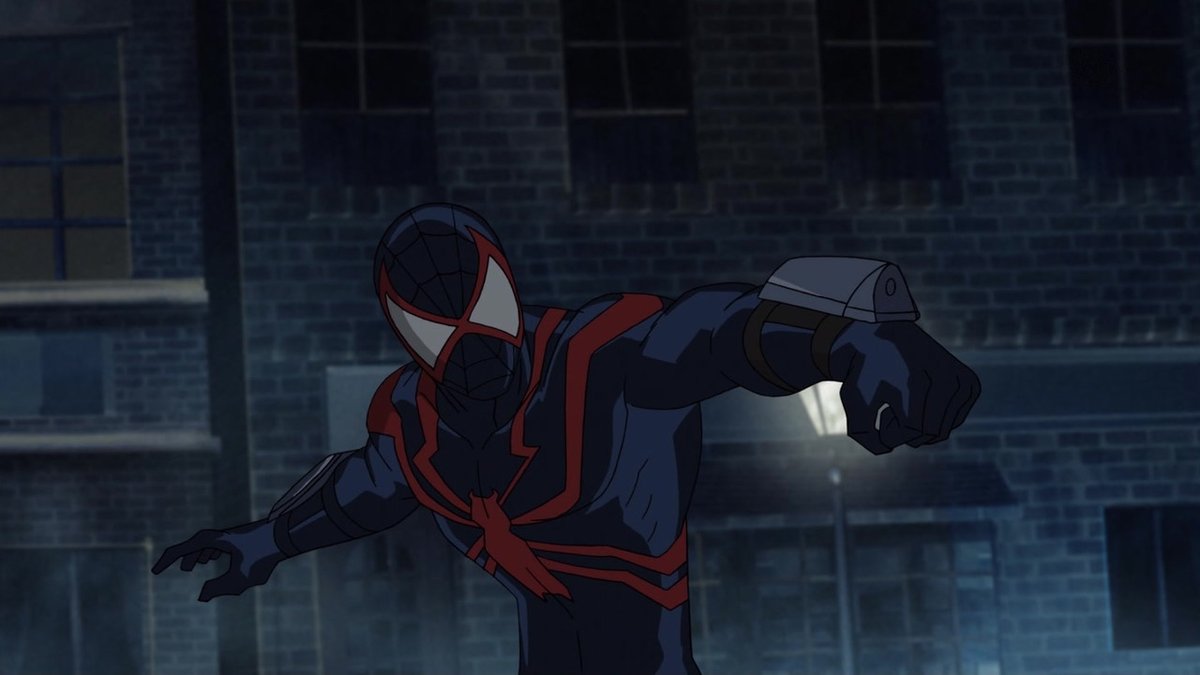
Earlier in season four, Miles Morales/Spider-Man traveled from his world to aid Peter Parker/Spider-Man when Doctor Octopus used the Siege Perilous to draft the Goblin from Miles' world into his new Sinister Six. The battle resulted in the shattering of the Siege Perilous and Miles unable to get back to his own world. While working to find a way to get him home, Miles would join Peter's spider-team and take the stupid name of Kid Arachnid to help differentiate himself from Peter in the field. For the sake of dignity, I'll just be referring to Miles in this review as Miles.
As the four-parter begins, we learn that when the Siege Perilous shattered, it spread across alternate dimensions and was now trying to reassemble itself, causing realities to begin to smash into one another, which will eventually result in total multiversal destruction. Since it was their doing, Peter and Miles are tasked with using a shard of the Siege Perilous to track down the remaining pieces across the multiverse and reassemble the gem before it's too late.
I remember during my review for the first "Spider-Verse" story about how the basic concept has been used before in the 90's animated series and the "Shattered Dimensions" video game. In this instance, my mind quickly jumped to "They're just copying the plot of 'Shattered Dimensions' now." In the game, the Spider-Men had to retrieve fragments of the Tablet of Order and Chaos to restore balance to the multiverse. Despite that, I'll still be reviewing this story on its own merits.
This leads to our first stop...


BLOOD SPIDER

Peter and Miles land in an alternate 19th century Manhattan, where they realize that vampires have taken over half the planet and spreading. The last hero remaining: the Blood Spider.
In the comics, Blood Spider was a supervillain trained by Taskmaster with the goal of defeating Spider-Man. In terms of popularity, the character never really caught on, so a different take, at least in name and origin, is a welcome change. While the previous "Spider-Verse" story mostly visited established worlds well-known to fans (with the exceptions of Spyder-Knight and the gender swapped world of Spider-Girl), this was our first indication that this year's story was going to get more creative with their universes.
That said, this version of Blood Spider is freaking badass. He's got a great costume (I always like a black/red color scheme), his web-shooters fire stakes like spider-stingers, and he's willing to do whatever it takes to end the vampire threat to his world. As far as I know, there hasn't really been a vampire hunter version of Spider-Man, so this was a pretty fun and dark take on the character, though there's indication he did/does have a lighter side to him, like there is still a more familiar version of Peter there.
In the course of the story, we learn two things. First off, it's the Lizard who leads the vampires and helped unify them in their world conquest. I scratch my head at that. Why and how Lizard? Wouldn't it have made more sense to have Morbius, an actual vampire, lead this army of the undead? The second is that the Siege Perilous has the ability to temporarily suppress vampirism in a human, and combining it with a UV light, they're able to cure all the vampires across the planet. It seems that the Siege Perilous will be granting others additional abilities to add more to the story...much like the tablet fragments did for the villains in "Shattered Dimensions." Again, I'm reviewing this as its own, but if I notice similarities to something else, I'm going to point it out.
By the end of this segment, we meet our main villain of the story: the Wolf Spider. Coming from another universe, he intends to gather the pieces of the Siege Perilous so that he can conquer the multiverse himself. So now it's not only a ticking clock, but a race for the fate of all existence.

WEB-BEARD

Well, this one was weird. In terms of animation and tone, it's similar to the Spider-Ham segment from the previous "Spider-Verse" story. Very comedic and reminiscent of Looney Tunes. I got quite a few chuckles from it. Aside from that though, there's not much substance other than "Look, it's Spider-Man as a funny pirate." I'm not even sure if this is supposed to be a parody of anything specifically. Besides that, this version of Spider-Man wasn't even the highlight of the segment for me. That honor goes to the animal pirate versions of Web-Beard's crew made up of characters from "Guardians of the Galaxy": Rocket Raccoon, Cosmo, Howard the Duck, and even Groot makes up their ship. Honestly, I would have liked to see a pirate universe of the whole Guardians of the Galaxy crew with Star-Lord, Gamora, and Drax as well. A pirate Spidey here just feels out of place.
Anyway, the main plot of this segment is that Peter and Miles have to help Web-Beard and his crew work through their trust issues over treasure while also fighting off a kraken. Oh, and the fragment of the Siege Perilous they're looking for? It's just sitting in a treasure chest and doesn't have any action until they use it to open a portal to the next fragment. Even Wolf Spider doesn't appear or is mentioned.
While creative, this segment doesn't meld with the common aspects of the rest of the universes shown in this story, but as we'll learn later, it's not the weakest.


WEB-SLINGER

Things start to pick back up in this segment. In this alternate old west world, we have the cowboy Web-Slinger taking on Sheriff Dr. Octavius "Doc Ock" Holiday, who killed the previous sheriff Ben Parker, and placed a strong hold over the town.
I'll start with Web-Slinger himself. As far as I know, there hasn't been an old west version of the character, so again, I have to applaud the creativity. The guns that shoot out web-bullets are a nice touch, and the costume itself is pretty much what you'd expect from a cowboy version of the character. You have the spider like symbols and on the front and back of the poncho which also has web pattern on the ends and around the neck. If I have one problem though, it's with the mask. The web pattern just looks weird when it's only a half-mask. I think it would have worked better if he had a regular domino mask like the Lone Ranger with a plain red bandana over his mouth.
I really liked this version of Doc Ock, even more so than the mainstream version on this show. It's just nice to see Doc Ock up and walking again, not to mention he's even created his own mechanical arms thanks to the fragment he found of the Siege Perilous, which he was also able to use to fight off Wolf Spider from taking it (Yes! The main plot returns!).
Ock also has a right-hand henchman called the Phantom Rider, who wears all white everything: shirt, pants, gloves, mask, hat, and cape. At first I though this was a version of Moon Knight, but the end of the story brings a pretty good twist that I won't spoil here, but it does make for an emotional moment.
If there's one fault I have with this segment, it's that it wastes a perfect opportunity for a classic old west saloon brawl. The battle crashes into a saloon and while the patrons run, the piano player continues to play, only for the battle to lead back outside 15 seconds later. I don't know if it's considered cliche, but how can you go to an old west world and not have a saloon brawl? Was more time really needed for the Web-Beard segment? Even the preceding "Spectacular Spider-Man" series played with the idea with Spidey fighting Mysterio on a saloon movie set, with the piano playing and Spidey even getting hit over the head with a bottle. But I digress.
I kind of found Web-Slinger similar to Spider-Man Noir, specifically the aspect of the main villain being responsible for Uncle Ben's death, but also that he's pretty serious, gruff, and fighting corruption. There's also a sense of realism, but that's downplayed by the magical elements at hand.


NOIR

Speaking of Noir, we have our only returning universe from last year's "Spider-Verse". But he's not alone this time. As you can see from the pic, we are introduced to this universe's Hulk. Since there was never a Hulk Noir comic series and he didn't appear in any of the others, this is an original creation, using the Mr. Fixit look and name from the mainstream universe, which fits with the Noir reality. He even has two partners in Noir versions of General Ross and Rick Jones.
As we re-enter this world, Peter and Miles wind up in the middle of a shootout between Fixit's crew and Hammerhead's. Peter and Miles get pulled away by Spidey Noir, who is more than happy to let the two gangs finish each other off. At first I found this to be little dark, even for Spidey Noir, but I'd like to assume he'd step in if civilians were in danger. Surprisingly, Miles agrees with him, which adds for some conflict between him and Peter during this segment. But when Hammerhead's receives a new tommy gun powered by a fragment of the Siege Perilous created by Martin Li, Spidey Noir feels the need for him and the other Spiders to step in. During the battle, the fragment becomes loose, and when Li grabs it, he uses its power to become this universe's version of Mr. Negative. Unlike the mainstream version, this Mr. Negative uses the Siege Perilous to turn people and objects to stone, using it on not only Ross and Jones, but Hammerhead as well, taking over his crew in the process. It's not like Negative's actual powers are as dangerous as that, so I can welcome this change.
The Spiders and Fixit retreat back to Spidey Noir's place, where we find not much has changed. At the end of last year's Noir segment, it seemed him and Mary Jane were going to reunite, but in the time since, it's revealed that Mary Jane had been killed during one of the battles between Hammerhead and Fixit. It kind of sucks that he didn't get a happy ending, but I guess when it comes to darker vigilantes, much like Batman or Daredevil, there's no such thing. As you can imagine, Spidey Noir isn't feeling any love for Fixit, which leads to them duking it out. Miles thinks they should just let Fixit be taken care of, but Peter believes there's still a hero in Fixit, much like the Hulk in his world.
Meanwhile, Mr. Negative modifies a spotlight on top of a tall building to amplify his powers and continues to turn people to stone from great distances. Think of the giant freeze cannon used in "Batman & Robin." Negative is approached by Wolf Spider, who wants to join forces with Negative much like he did with Lizard in Blood Spider's world. While he explains the potential for more power, Negative isn't having it and attacks Wolf Spider, who decides to open a portal to another dimension and leave. You know, for our supposed main villain of the event, Wolf Spider doesn't seem as much as a threat as Goblin was last year. Goblin stayed until he got what he wanted, the blood of that world's Spider-Man. Between this and the mention of his unsuccessful encounter with Doc Ock Holiday in Web-Slinger's world, Wolf Spider's kind of cowardly. I suppose it's more of a strategic reasoning and he's still finding other fragments in other worlds while Peter and Miles are on others, but I have to wonder how he's accomplishing this if he seems to run at the first sign of trouble.
Back to the main story, Miles gets turned to stone by Negative, leading Peter, Fixit, and Spidey Noir to another retreat. Peter blames them because they couldn't stop fighting, but when Spidey Noir brings up that it's Fixit's fault that MJ died, Fixit reveals the truth. Hammerhead had tried to bring a building down on top of Fixit along with everyone else in it, but Fixit was holding it together as long as he could so people could escape. MJ was there as a reporter but did her part to get people out too. Unfortunately, the building finally caved in before MJ could make her own escape. Spidey Noir forgives Fixit and the three begin a plan to stop Negative. First, they use a blimp (don't ask where they get it) to crash into his spotlight and they lure Negative and his henchmen to a theater, where they're able to pick off his henchmen one by one through stealth moves (reminding me of the Noir levels of "Shattered Dimension") before turning to Negative himself. Spidey Noir gets turned to stone protecting Fixit, which can be seen as a bit of redemption for himself. Before Negative can do the same thing to Peter, Fixit grabs him and takes the fragment for himself, using it reverse all the damage caused around the city, reverting Miles, Hammerhead, Ross, Jones, and everything else to normal. There's one other thing it does though.
The feel of this universe is that it's all black and white, hence the Noir designation. But once Fixit uses the fragment to repair the damage, he also brings color to the world. I honestly think this was a mistake on the writers' part because it takes away this universe's unique style compared to all the others we've seen. While I can't speak for the other Noir titles, the Spider-Man ones had a bit of a sepia tone rather than black and white, but even then it had its own style. Here, they go with natural colors similar to the main universe and it just seems weird. Even Miles' world from last year still had a different pallet than the main one.
So overall, it was nice to revisit the Noir universe again. It retained its sense of realism even though it did deal with magical elements, much like the Web-Slinger segment, but I felt the realism was more prominent here, though that could be attributed to the fact that we had already seen this world before last year. Spidey Noir himself was still pretty badass, not taking any crap from anyone, though we still see he has some heart, and I really felt for him when it was revealed he lost MJ, who was probably the only person that gave him some kind of normalcy and calmness in his life. Sure, in the previous Noir segment, Aunt May was mentioned and that he "hadn't seen her in years", but no mention this year. It's possible that even if they did reconnect, he probably pushed her away again after MJ died. It was also kind of cool to get a Noir version of Hulk, even if they did just seem to pluck the mainstream version and drop him here, but it showed he had some relationships in this world, probably even more than what we were shown. Like the "Guardians" characters in Web-Beard's world, it's something that I would have liked to explore more, but at least they were able to make both Spider-Man and Fixit interesting, which they failed to do with Web-Beard. Still, it makes me wonder how they would have done a Hulk Noir miniseries during the time the imprint was still running.


SPIDER-GWEN

Last year's "Spider-Verse" story featured a Spider-Girl segment that really didn't adhere to the most well-known version of the character, that of Peter's daughter May. Apparently when it comes to female spider characters, this show has a problem.
Since her debut in the comics in 2014, Spider-Gwen has become quite popular, starting from a one-shot character to being given her own ongoing series. For those who don't know, in an alternate universe, it was Gwen Stacy that was bitten by the spider, giving her powers and becoming Spider-Woman. The Peter Parker of this world would become the Lizard and died in battle with Spider-Woman, who would end up being blamed for his death. There are many other differences in this universe that are pretty interesting, but let's not take away focus. That focus being how this segment completely ruins the Spider-Gwen concept.

So to start off, this version of Spider-Gwen lives in Miles' universe, which in my opinion is CHEATING. We find out that crime has been rampant since Miles disappeared, getting so bad that police have been targeting heroes and villains because apparently some villains were pretending to be heroes, although this is never brought up again, which makes me think they just needed some bull reason for the police to be after Gwen like they are in the comics.
Second, it turns out that Gwen doesn't have any powers. Realizing the city needed help and being inspired by Miles and the late Peter of her world, she put together her own suit with tech that helps her stick to walls, shoot webs, and even a "digital spider-sense". It's worth mentioning that Peter was her friend. FRIEND. They could have made it more faithful and emotionally powered if she said "boyfriend", but expecting romantic relationships in this show is too much to ask at this point (hell, Noir had MJ and she died). You know what I really hate about this? It takes away this Gwen's significance. In her comic, she's the main spider-powered being of her world. She was bit by the spider. She lost the person she loved. Before the "Spider-Verse" event in the comics, she had no idea about all the alternate dimensions where Peter was Spider-Man in a majority of them. To have her following in both Peter and Miles' footsteps here doesn't give her her own identity. The aspect I do like though is that Aunt May acts as the Oracle to Gwen's Batman, mostly because it gives her the chance to interact with a version of her nephew who's alive in another dimension, making for some good emotional moments.
Anyway, they track the Siege Perilous fragment to an evidence locker in the NYPD where they encounter Wolf Spider, who has kidnapped Miles' mother for leverage. It's here we see the full capabilities of Wolf Spider's powers, the most prominent being that he has four large spider legs coming from his back. They battle and the good spiders manage to take away the fragments Wolf Spider had collected to completely reform the Siege Perilous. They save Miles' mother and retreat back to the Morales apartment. Peter is about to bid farewell before Wolf Spider busts in to steal the Siege Perilous back, revealing not only that he knew where Miles lived because he killed him along with ever other hero in his own world, but that he's Peter Parker (please hold back your "shock"), and that he's apparently the only evil Peter Parker in the multiverse. First off, it's not really shocking that Wolf Spider turned out to be a Peter Parker, because not only did they spoil it in the commercials, but a majority of universes have a Peter Parker as Spider-Man. However, it was interesting to see a purely evil version of Peter, making me think of DC's Earth-3, though the whole "conqueror of the world" thing is a bit of a stretch.
Peter, Miles, and Gwen track Wolf Spider down to his underwater lair where he begins siphoning off the lifeforce of the multiverse's spider-people to make himself more powerful, capturing Miles and Gwen as well. Peter then allows himself to be caught, entering a sort of mindscape where all of the spider-people are being held captive so he can inspire them to never give up. Peter gets freed as well as Miles and Gwen as the rest of spider-people inside Wolf Spider begin to fight back and tear him apart until he explodes, with Peter's reasoning being that all the good spider-people can't be contained by one evil version. So it all comes down to the power of good is stronger than the power of evil, a message I'd expect from a children's show aimed at a lower age group.
With the multiverse saved, Peter plans to head home, but Miles and his mother decide to come with him to his world since they don't have any other family and that Gwen is now the spider of their world. Okay, the Gwen thing I understand, but why the hell would Miles and his mother completely uproot their lives?! Does she not have a job? Do they not have any friends at? How do they expect to make a living in another universe? I mean, I guess SHIELD can help out with that, but still, it's all just an excuse to keep Miles as part of the show...which I guess means he'll still be using that idiotic Kid Arachnid name instead of being the Spider-Man of his own world like he's earned. I remember in Miles' own segment in the last "Spider-Verse" story when Peter said Miles didn't have to be like Peter Parker to be Spider-Man because "Miles Morales is just fine." I guess he should have followed that up with "but if for some reason we live in the same universe, I keep the Spider-Man name."
I guess the biggest problem with the Spider-Gwen segment is that it just uses the name and focuses mainly on Peter and Miles.

To begin my conclusion, let me rank the segments from my favorite to least:
1. Noir
2. Blood Spider
3. Web-Slinger
4. Web-Beard
5. Spider-Gwen

As for my overall feelings of "Return to the Spider-Verse"? Well, it was at its strongest when it was original and creative (except for how they portrayed Spider-Gwen; I can't forgive them for that). But it lacks a lot of what made the first "Spider-Verse" work, from a cohesive theme between each story as well as an unrelenting main villain. Wolf Spider had a lot of potential from his first appearance in Blood Spider's world, but mostly took a backseat until Spider-Gwen's. While it was obvious he was a Peter Parker, they could have built up more mystery about who he was. Hell, I had some theories that he was a zombie Peter either from Miles' or Gwen's world (before they revealed it was the same world) that came back to life and turned evil due to the Siege Perilous.
Another thing I liked in the original was that all the spiders came together to fight together in the finale, and while we kind of get it here, it would have been better to see an actual fight rather than the whole "good overpowers evil" morality lesson.
I might also be playing favorites too since the original story featured mainly alternate Spider-Men that were well-known, which made it fun and why I viewed it as a tribute to Spider-Man's overall legacy. With the new one, I don't get that same feeling. While still entertaining, it didn't have the same heart, which makes me hope they don't try another "Spider-Verse" story in season five.

RATING: 4.5/10

Sunday, August 7, 2016

Movie Review: Suicide Squad - A Jumbled Puzzle (SPOILERS)


Here we are again. Another DC film, another bashing on Rotten Tomatoes. I understood the mixed reaction to "Man of Steel." I'll keep defending "Batman v Superman" for being unfairly criticized. But with "Suicide Squad", I hate to admit it, but maybe the critics aren't unfounded this time. Now, personally, I've never been that interested in the Suicide Squad in the comics. That doesn't play a role in my feelings of the movie though. I've seen plenty of comic book movies where I don't follow the source material and I can still enjoy them. Hell, after the second trailer for "Suicide Squad", I thought it could be even better than "Batman v Superman." Now, it's not as horrible as the critics are making it out to be. It had all the right pieces and was still entertaining, but I find it to be the weakest of the three DC Extended Universe films so far.

The story itself is not what I was expecting. I kind of thought it would be a lot more grounded and dirty compared to "Batman v Superman" with these nasty and crazy people forced on a black ops mission going after a certain villain with a connection to one of the team members and then it explodes into something out of their league. But in actuality, right off the bat their main mission and target are that of a magical nature. Now that kind of story could have worked, but when it takes up most of the movie and and we know the scale of the threat straight away, there isn't too much in terms of build-up.
At the very least though, the action is pretty grounded, considering most of the characters aren't superpowered. Everyone has their moments, but just don't expect it to be at the level of "Batman v Superman". However, it didn't help during the climax of the film where there's a lot of smoke and dust that obscures the fighting and half the time only features character silhouettes.

If there's anything that saves this movie though, it's the characters. The introductions are so-so, working better for some than others, but its when they first come together and begin working as a team, playing off each other, that's where they truly shine. I think it's better to go through and give my thoughts on each character:
* Viola Davis as Amanda Waller: She's a cold-hearted bitch...which means her character was done justice. She's manipulative, willing to kill anyone to protect her self interest (even her employees), and even considered using Enchantress to create an army of near indestructible minions for her own use.
* Will Smith as Deadshot: Come on, it's Will Smith. Of course he's going to give a charming performance (we can forgive him for "After Earth; he was Shyamalan'd after all). Out of all the male characters, he's the one who's the most snarky. He's also probably the only guy on the team who's truly bad but still has a heart when it comes to his daughter.
* Margot Robbie as Harley Quinn: Oh hell yes. Robbie is Harley incarnate. She's funny, sexy, and like Deadshot, still has love in her heart for a special someone. That special someone is a homicidal clown, but it's still love. So why isn't she my favorite overall? Well, it has to do with one of the issues of the film: pacing. The film begins with some introductions to the team. Most of them were done well, but I thought Harley had a very abridged version. We see some brief flashbacks to when she was still a doctor at Arkham and joined up with the Joker, but again, it's very abridged. I know this Harley already has a history and fans know it, but I wanted to know more, like how exactly did this version Joker ensnare her? But I'll have more on that later. Point is, Robbie killed it and if she is going to star in a female centric DC film, bring it on.
* Jay Hernandez as El Diablo: Out of the whole team, El Diablo is the only one with actual powers and is also the most sympathetic character in the movie. The way he uses his powers is really entertaining to watch, even when he does the littlest things, although there's one moment during the climax that was a little over the top, but still fits with what was established. But to borrow a quote from Black Widow, he "avoids the fight because he knows he'll win." Because he was responsible for his own personal tragedy, he turns himself in to Belle Reve as penance and really doesn't want to get involved in the battles at first.
* Joel Kinnaman as Rick Flag: Flag is a character I kind of had to warm up to, mostly through his animosity with Deadshot which later turned into mutual respect. But what the film wants more is for you to feel emotional for Flag because his girlfriend, June Moore, is the human possessed by the Enchantress and there's the possibility that he'll have to kill the woman he loves. This is a problem of pacing, as well as exposition. Through Waller, we find out that she placed Flag in charge of Moore because she knew it would lead to a romantic relationship between the two, which makes Flag easier for her to manipulate. The problem is though, we don't see this relationship grow, and it made me question, why should I care? More on Enchantress in a bit.
* Jai Courtney as Captain Boomerang: What you see in the trailers is pretty much what you get. He's violent. He's crazy. He's Australian. He drinks. It makes for some laughs though, but I feel there's more that could have been done with him, especially since he's one of the most well-known members of the Squad. It's possible he could have been outshined by everyone else, especially Smith and Robbie, but then again, Jai Courtney hasn't found much luck in Hollywood between the recent Robocop and Terminator reboots. I hope he gets another chance to play the character again, like in the Flash movie looking for payback.
* Adewale Akinnuoye-Agbaje as Killer Croc: Croc doesn't do much but deliver one-liners at first, but he does become a little more impressive during the climax. My problem though is I thought he was a little small. Most of the time he's wearing a jacket, but out of it, he's not as muscular as you'd think. It's like his head is too big for his body. In the comics, Croc's body does mutate further, so a future appearance could work things out.
* Karen Fukuhara as Katana: Why was she even here? Her in-story reason was to watch Flag's back in case one of the Squad goes after him. But on two occasions where Flag is being dragged off by Enchantress' minions, it takes most of the Squad to save him. She just didn't seem necessary, despite entertaining sword skills, particularly in the climax. But her introduction does bring out a good Harley moment...and she gets hit on by Captain Boomerang...so there's that.
* Adam Beach as Slipknot: Okay, is there anyone going into this movie who DIDN'T expect the character that was barely shown in trailers to go rogue and get his head blown up because of it so they could demonstrate the nanobomb? ...I didn't think so.
* Cara Delevingine as June Moore/Enchantress: So while an intended member of the Squad, they flip the script and make her our main villain of the movie. She actually has two forms: her possessed form, which is a lot more dirty, and a complete form, which makes her more like an evil goddess. Not only does the dirtier appearance look more believable, but I would have believed Doomsday was actually there in "Batman v Superman" than the complete Enchantress here (and the overacting didn't help). Oh and apparently she has a brother who helps...except they don't tell us his name...which made he again question why I should care (I looked it up when I got home though and it's Incubus, but I stand by my IDC). I honestly just didn't think this was the right choice for the main villain. I would have liked to see her work with the team, which would have helped build her relationship with Flag more, and when the major shit went down, that's when she could have gone full powered.

But let's talk about what probably for a lot of people was one of the main draws for the movie: Jared Leto as the Joker. Coming off eight years from Heath Ledger brilliant depiction of the character in "The Dark Knight", many were expecting Leto to at least compete with, if not top that performance. The verdict: still in deliberation. The Joker isn't in it as much as you'd expect and it's questionable whether he was necessary. I thought they were showing very little of him in the trailers so they could save the good stuff for the film itself, much like Spider-Man in Civil War. In fact, that's a good comparison. It's a glorified cameo that wasn't so much a necessity but adds more fun. But while we saw enough of Tom Holland's Spidey to compare him to Maguire and Garfield, we don't get that luxury with Leto's Joker. This is another problem with the pacing. We don't have time to fully immerse ourselves with this Joker, although there's enough to see the potential in this version. I heard that a lot of Leto's scenes were scrapped from the final cut, which is noticeable. We don't get the "I can't wait to show you my toys" line, we don't see him with part of his face burned and pulling a pin out of a grenade with his teeth, and a set photo from a flashback scene of Harley pointing a gun at Joker also didn't seem to make it. Hopefully we get to see these scenes when it comes out on DVD, either through deleted scenes or another extended cut (more on that in a bit). The worst part of it though is that we don't get to see Leto's Joker interact in person with Affleck's Batman. Even if it was just 30 seconds (no pun intended), it would have been enough for me. Leto has potential, but as is stands, Heath Ledger is still the best Joker.

Speaking of Batman, his appearances in this film were brief but still entertaining. Compared to how he was in "Batman v Superman", it was actually nice to see him taking in actual supervillains like Deadshot and Harley Quinn (who he punches out hard after she comes at him with a knife).

Closing out the topic on characters though, DC really needs to stop building mystery around what characters certain actors are playing. Back in "Batman v Superman", Scoot McNairy played Wallace Keefe, the Wayne employee who lost his legs during the battle in Metropolis. Speculation before that included Flash and Jimmy Olsen. With "Suicide Squad", we get two instances. Ike Barinholtz of MadTV fame played a head security officer at Belle Reve, and the last speculation I saw was that he could be Hugo Strange. But the bigger speculation was who Scott Eastwood was playing, either being an undercover Dick Grayson or Oliver Queen. I listened intently during the movie to catch his name, only to watch the credits to find he was just another soldier. So seriously DC, stop making us speculate who certain actors are playing. We're going to automatically assume it's someone big, only to make us feel stupid when it's no one important.

Now this is more of a little problem, but I had a hard time seeing where this film stands within the grand plan of the DCEU, even though it's built off of events of "Batman v Superman" and the mid-credits scene offers more build-up for "Justice League". It's easier to see with the MCU, especially since all the Phase One films were leading up to the Avengers. But while we have "Man of Steel", "Batman v Superman", and "Wonder Woman" leading up to "Justice League" with "The Flash" and "Aquaman" coming afterwards, where does "Suicide Squad" fit in? Maybe there's just something I'm not seeing.

When the negative reviews started hitting, so did the behind the scenes drama of reshoots and alternate cuts. After the response to "Batman v Superman", despite denials, reshoots for "Suicide Squad" were partly done to insert more humor and make it a little lighter. First off, I don't think that this is a film that needed to be "lighter". On a scale of "Guardians of the Galaxy" and "Deadpool", this film is somewhere in between. I reference those films because those are the ones that WB were most likely trying to evoke from audiences, with the bad guys trying to be good.
Speaking of "Guardians" though, "Suicide Squad" also has an extensive repertoire of music, featuring almost twice as many songs as the Awesome Mix with a mix of classic rock, some hip hop, and a pinch of alternative. While it was entertaining and some songs were used better than others, it didn't have the same magic like in "Guardians", and I couldn't help but feel like they were trying too hard in that aspect. I might have bought the soundtrack if it wasn't cut in half and had a majority of the good songs on it, and I was hoping it could have been as good as the Awesome Mix. 
One could say it is lighter than "Batman v Superman", mostly for the humor. It's hard to tell whether more jokes were added during the reshoots, but I wouldn't have been surprised. I wouldn't say it hurt the film though. There was a lot of laughs at the showing I went to and I was adding to it. I do take it as a sign though that they're trying to lighten things up for the future films, which will probably help "Justice League" more than anything, despite my own feelings that they should still try and stand out from Marvel.
But this brings me to a major issue that's affected both of DC's movies this year: studio interference. "Batman v Superman" got thrashed by critics for its theatrical cut but redeemed itself with the extended edition. Is history repeating itself with "Suicide Squad"? Will there be an extended edition for that as well? My point is, we shouldn't have to wait an additional few months to see the true version of the movie. WB needs to learn to respect the vision of the director, and they need to learn that lesson soon. "Wonder Woman" is the last DC film before "Justice League", and if they can't get one positively received film before that, it could affect some's expectations for what is essentially going to be their "Avengers" moment. I'd hate to see Wonder Woman, the first female hero finally getting her own movie, to go through the same thing.

So overall, maybe I'm being a little overcritical, but I still found "Suicide Squad" to be an entertaining film even with its problems and possibly being a little over-hyped. I'm glad though that other fans are enjoying it more than I did and that they're flocking to theaters this weekend; the screening I went to was more packed than when I went to "Batman v Superman". I think I might enjoy it a little more after seeing it again, but at the moment, while it's not my favorite DCEU film, it still has its merits despite what the critics say.

RATING: 6.5/10

Wednesday, August 3, 2016

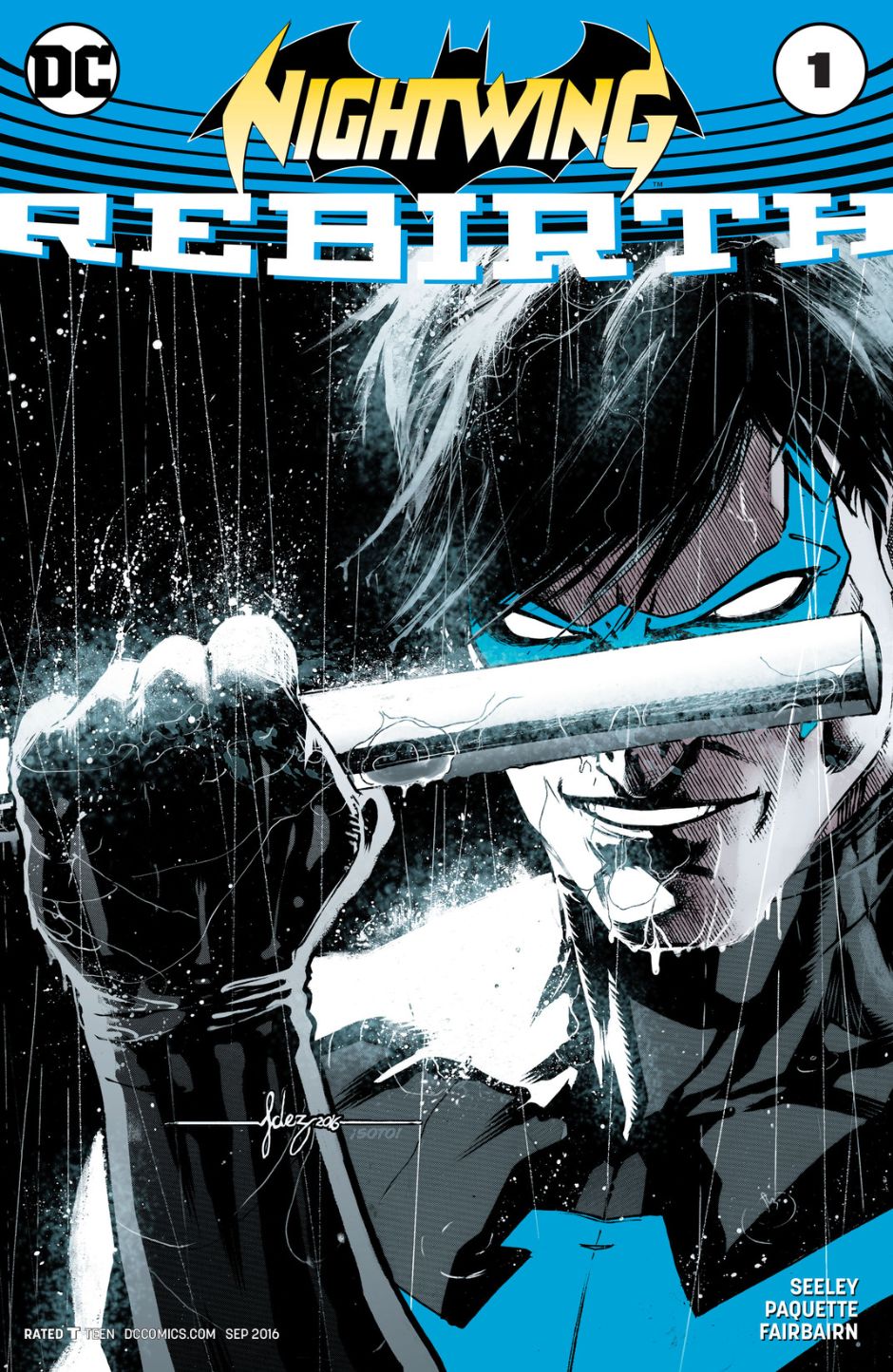
Rebirth Reviews Part 2: 'Justice League' and 'Nightwing'

Welcome to part two of my Rebirth Review series. Before we get to the actual reviews first, a bit of an update on how I'm proceeding this series after the Rebirth one-shots.
I'm still toying with the idea of getting ALL the first collected volumes of each corresponding Rebirth series that I'm not currently reading, but there are some I know for sure I'll be getting.
The series I'll be reading in trades regardless: 'Superman', 'Titans', and 'Teen Titans'.
The first volumes of books I'll be getting just to try them out: 'Green Arrow' and 'Hal Jordan and the Green Lantern Corps'. I'm also considering getting 'Supergirl' because the art by Brian Ching looks pretty good and the story could be worth a shot.
That said, let's start this part of the series with seeing how the flagship New 52 title begins anew.


Story and Art by Bryan Hitch

After nearly five years, Geoff Johns, recently promoted to president and chief creative officer at DC Comics, hands the reigns of the Justice League over to Bryan Hitch. This isn't Hitch's first foray into the League though. After "Convergence", a new 'Justice League of America' series was launched with Hitch writing and drawing. That series has yet to be concluded because much like Jim Lee and David Finch, Hitch is notorious for not being able to work on a deadline. It's part of the reason that while I had interest in 'JLA', I decided to trade-wait that story because of the expected delays, even though the story itself has been referenced in other books, including this one. I'm not even sure I'll still get it at this point.
Speaking of art, Hitch does draw this one-shot and he has a unique style, where you can look at it and immediately say 'that's by Bryan Hitch.' Personally, I'm not a big fan. It's not that it looks bad, but it just looks off to me. He does a good job with landscapes and alien creatures, but people's bodies (particularly the faces) are sometimes in weird positions. Maybe it has to do with the characters being in motion. Thankfully though, Tony Daniel, who has worked on not just the previous volume of Justice League, but also Batman and Superman, will be the main artist of the book. He's quite good and is able to make a deadline (and also provided the cover above).
Story wise for this one-shot, there's one thing that works, and one that doesn't. For what works, it's the character interactions, particularly the League discussing how to handle this giant alien creature called a Reaper from engulfing a city (they don't say which one) and its inhabitants. They all sound like you'd expect. But outside of that, there are two other scenes shown. One is at the home of the pre-Flashpoint Lois and Clark, who are discussing whether Clark should join up with the League now that their Superman is dead. The League, still mourning, have also been discussing this idea, though uneasy about the fact that another Superman has been living on their world for years and not sure. If anything, the League, especially Batman, wants him close to keep an eye on him and make sure he can be trusted. Between the two conversations, the other correlation is how the New 52 Superman's death and the discovery and succession of the pre-Flashpoint Superman may be too connected to be a coincidence.
A couple more notes. I've felt more this way while reading Action Comics, but I see it applicable here as well. When I read Superman and Lois, the voices I hear are Tim Daly and Dana DeLaney from the animated series. With the New 52 versions, I kind of felt like I had to force those voices in my head because they were very different from what people expect from the characters. But using the voices with the pre-Flashpoint versions, it feels so much more natural, because these are the versions people expect. That's also kind of the reason I don't like that the League are uneasy about this Superman because they don't know him. Batman even says "He claims he's Superman, but we know nothing about him." I know this trustbuilding will probably be a plot-point in the book for awhile, but I myself, already familiar with this character, know he can be trusted. In the end though, he doesn't officially join the League, but says he'll "be around".
Now the thing about the story that doesn't work. The threat of the story is one of an extinction level. On one hand, it's nice that to see a story where it doesn't take 6 issues to fight off an invasion. However, it appears that this is Hitch's go-to story. Between from what I've heard of Hitch's 'JLA' and reading the first issue of the new volume of Justice League (and I've been trying not to talk about the stories following the Rebirth one-shots so soon), it involves an alien force threatening to destroy the Earth and take over the population's minds. I realize that the League is THE team to fight off the major threats, but there should be some variety. Geoff Johns' run included a villain targeting the League because he blamed them for the death of his family, and a virus outbreak that was granting normal humans super powers. I know it's too early to tell, but I hope Hitch brings some different story types. Another thing about this story though is that I think Hitch is channeling the first Avengers movie, especially in the end where they tell the creature to run and let his kind and anyone else know that Earth is protected by the Justice League. It's kind of similar to what Nick Fury said: "[The Avengers] surely are [dangerous]. And the whole world knows it. Every world knows it."
I guess the only other thing to talk about is the team line-up. Carrying over are Batman, Wonder Woman, Flash, Aquaman, and Cyborg. And in addition to the pre-Flashpoint Superman, the other two members are the new Green Lanterns, Simon Baz and Jessica Cruz (not sure why the League needs two Lanterns but whatever). Baz hasn't had much spotlight since his debut so it's nice to see him in a starring major role again. Cruz has been working with the League since after "Forever Evil" trying to use Power Ring's powers for good, but was inducted into the Green Lantern Corps at the end of "Darkseid War". Apparently there's some kind of attraction between her and Flash and a future solicit says shes going to ask him out, which will kind of put a damper on my thought from the Flash Rebirth special that Barry and Iris were going to get back together. Guess we'll have to see what happens.
Justice League's Rebirth one-shot in my opinion isn't a perfect set-up for the future of the series (especially the art), but it offers an idea of what's to come: big threats and a good team dynamic.


Written by Tim Seeley
Art by Yanick Paquette

For the last two years, Dick Grayson has been playing super spy in his eponymous title, "Grayson". But now he's back in black (and blue) in the role he's made his own, Nightwing. While this one-shot sets up his return to his former identity, it also pays tribute to his previous title as an agent of Spyral. It's written in such a way that I feel that a new reader can easily follow along with what happened, along with make them interested in going back and read the "Grayson" title. Having read it myself, I really do recommend it. The best interactions Dick has in that series as well as this one-shot are with fellow agent Tiger (who Dick affectionately calls 'Tony' to his annoyance) and Midnighter, member of the superhero team Stormwatch who considers him and Dick to be "arch-frenemies".
Looking toward the future though, Dick and Damian are hanging out, which acts as a framing device for Dick's last missions as a Spyral agent (shown through flashbacks). I always enjoy the interaction between the two, going back to when they were partners as Batman and Robin. I won't spoil the specifics, but there's some follow-up to events from the "Robin War" crossover event that's a little too complicated to explain here and just gets glossed over in the one-shot. So I guess that's one aspect that probably requires from additional reading to understand. Let's just say it has to do with the main antagonists Dick will be facing for the beginning of his new series.
Dick has a cool inner monologue about the meaning of the name 'Nightwing'. Many may not know this, but it actually comes from a superhero from Krypton. It meant 'eternally reborn to start anew'. It certainly fits with Dick with all the roles he's undertaken in his career, from Robin, to Batman, and now, once again, Nightwing.
While Yanick Paquette is only working on the Rebirth one-shot, the art here is excellent. There are some instances where I think Dick or Damian's faces look a little weird, but I've gotten used to it after a couple re-reads (though I guess weird faces is the connection between these two reviews).
Now for a little commentary on aesthetics. First off, when Dick became Nightwing again when the New 52 began, he had a black/red color scheme instead of black/blue. Some people were upset about it, but I wasn't. Personally, I think the red kind of fits better because it connects more with his past as Robin. But I do like the blue. That said, I also kind of wish they went back to the logo they used for his solo book in the 90's and early 00's. It would have fit better with the 'Rebirth' theme. Either that or at least removie that bat-symbol behind the name in the current logo.
Out of all the Rebirth one-shots I've read so far, Nightwing's is the one that's nearly perfect, paying respect to the past that mostly won't leave readers asking questions while setting up what's to come.

It's going to be awhile before the next part of Rebirth Reviews, but when we return, it will be to the future world of Batman Beyond in another story of role reclamation.

Tuesday, July 26, 2016

Movie Review: "Batman: The Killing Joke" - Almost Perfect (SPOILERS)


When it comes to adapting an acclaimed and well-known book into film, there's always the responsibility of being faithful to the source, and if there is the need to change something, it has to work in the flow of the overall narrative. The fans of the source can also be hyper critical of the adaptation. I've done that myself with my reviews of the Justice League animated films, "The Flashpoint Paradox" and "War". But while those films were based on more recent stories, "Batman: The Killing Joke" is almost 30 years old and is considered an overall classic, and to adapt it into an animated film is a big deal. Does it succeed? For the most part yes, but there is something bringing the overall project down.

Since the original story is too short to adapt into film on its own, a prequel story centered around Barbara Gordon/Batgirl would also be part of the film. The film even begins in a very meta way with Barbara narrating that this probably isn't how the audience thought the story would begin. Her story is centered around Batgirl dealing with a criminal that has become obsessed with her. In context of the overall film, it serves as a parallel between Batman and Joker's relationship, while also acting as the catalyst for Batman's urge to want to talk to Joker about trying to end their rivalry peacefully.
But let's discuss the controversial aspect of the film that's had everybody talking: Barbara is infatuated with Bruce, she ends up kissing him, he reciprocates, and it leads to them having rooftop sex (with a gargoyle above them apparently watching very intently).
Let's backtrack a bit though. I may be the wrong, but the idea of a Batman/Batgirl relationship seemed to start in an episode of the 90's animated series, "Batgirl Returns", where in a dream sequence, Batgirl almost kisses Batman but is awoken before it happens. The stronger hints of a romance between the two came later on in the "Batman Beyond" animated series, apparently happening during the "New Adventures" era where she more or less became Batman's main partner after Dick quit being Robin. But the furthest things ever showed to get between the two was in the "Batman Beyond" follow-up comic from 2010-2014, where it was revealed that at one point, Barbara was pregnant with Bruce's child, but lost it early on while fighting off a group of muggers.
Personally, I'm indifferent to the idea of a Bruce/Barbara relationship. I see how it's weird in the way that it's like a non-biological uncle and niece getting together, but I really don't bent out of shape about it like others do.

The film is strongest when it finally reaches the actual story its based on. It's almost a word for word adaptation of the original story, with some dialogue changes. I actually did expect that to happen, because even reading the original story, Alan Moore has a certain style with his dialogue that sometimes felt off when reading it in Batman and Joker's voices. In the film, some things were changed but what I expected to be changed remained the same.
Aside from being a superhero film, if this were to be placed in another genre, it would be a psychological thriller. That being said, it's very light on the action. It's to be expected though since the original story was as well. But there still is some action, not only in the prequel story, but with Batman actually fighting off the sideshow henchmen Joker has at the carnival. On that note, I like that those henchmen bring more to the film than they did in the book, since they were really just there to add more surrealism to the situation. Back to the action though, it's not as over the top as the other recent DC animated films. I think that can be attributed to the Bruce Timm's animation style, which is mixed here with Brian Bolland's look from the original story. It's a very back to basics approach.

For some, the main draw of this movie is the return of Kevin Conroy and Mark Hamill reprising their iconic roles of Batman and Joker. Honestly though, it would have been a crime to do "The Killing Joke" and not have either of them be a part of it. Conroy is in top form as usual, but it's Hamill that really shines in this film. Not only is it great to hear him speak the lines from the original story, but he brings quite a distinction between his Joker voice and during the flashback scenes where he was still a down-on-his-luck comedian, sounding a lot more timid. Something I noticed was how after the comedian emerged from the chemicals and became the Joker, his voice became a lot more raspy. You could say that in addition, to the chemicals bleaching his skin and hair, his voice was altered as well.
As for the rest of the voice cast, we have Tara Strong again playing Barbara with Ray Wise voicing the Commissioner, both delivering good performances. If there's one voice I wasn't feeling though, it was Robert Atikin Downes playing Harvey Bullock, though I may just be spoiled by Robert Costanzo.

The film's biggest highlight was Joker's big musical number, "I Go Looney". While Alan Moore contributed the lyrics in the book, it was up to the film makers to put together a melody that would work with the lyrics. They did an excellent job and it was pretty damn entertaining. Personally, I found the song's style to be reminiscent of Danny Elfman, making me think of his songs from "Nightmare Before Christmas", which really fits because Elfman's Batman theme is so iconic and served as inspiration for the scores heard on the Animated Series, where Conroy and Hamill made their debuts as the characters.

There are two controversial plotpoints in the original story that has had readers debating for years, evoking such discussion because how subtle they were executed. I actually wondered how the film would handle them.
The first implication is that Joker raped Barbara after shooting her pointblank and paralyzing her. While I could see how that can be perceived, I never got that impression from the comic. The film, however, gives a stronger hint. In his search for the Joker, Batman questions a group of prostitutes that Joker usually visits right after he breaks out of Arkham. However, they haven't seen him and believe that he probably found someone else to, shall we say, get his jollies. It's not stated right out, but I feel one could be able to put things together. It adds more horror to the situation as well since it's hinted at more in the film than in the graphic novel.
The second implication is that in the end of the story, Batman actually kills the Joker. After Joker tells his joke as the two share in a laugh, Batman places his hands on Joker's shoulders (or possibly neck) as it pans down to a puddle being hit by rain drops. Initially, "The Killing Joke" was meant to be non-continuity story, and some believe that due to one of the main points of the book being Batman believing that he'll end up killing the Joker or vice versa, Batman laughing and killing his nemesis could be a plausible ending, signifying that he gave into Joker's worldview. In the film, the two laugh, the camera pans down to the puddle, and the credits roll. There's no sign of Batman finishing Joker, and the interpretation I got is that because they know how their relationship works, it's a twisted version of a laugh between old friends, and that Batman's laugh is his resignation to that fact.

While I won't spoil the specifics, there is a mid-credits scene that brings about a silver lining to the otherwise dark ending and wraps up Barbara's story from the prequel.

All this said, the film is damn near perfect adaptation of "The Killing Joke" when it gets to the actual story. However, the prequel portion of the film hurts the overall product. The story there is fine, but it has very little bearing when it gets to the story everyone is there to see. Let's think back to Ron Howard's live action adaptation of the Grinch. There was A LOT of original material added to the film, but it was all building up to the main story people are familiar with. But with the "Killing Joke" film, it feels like two separate stories.

Overall, "Batman: The Killing Joke" is sure to please many fans of the book and the voice actors, making it a worthy addition to their film collections.

RATING: 7.5/10

Wednesday, July 20, 2016

Thoughts on the 'Batman v Superman' Ultimate Edition


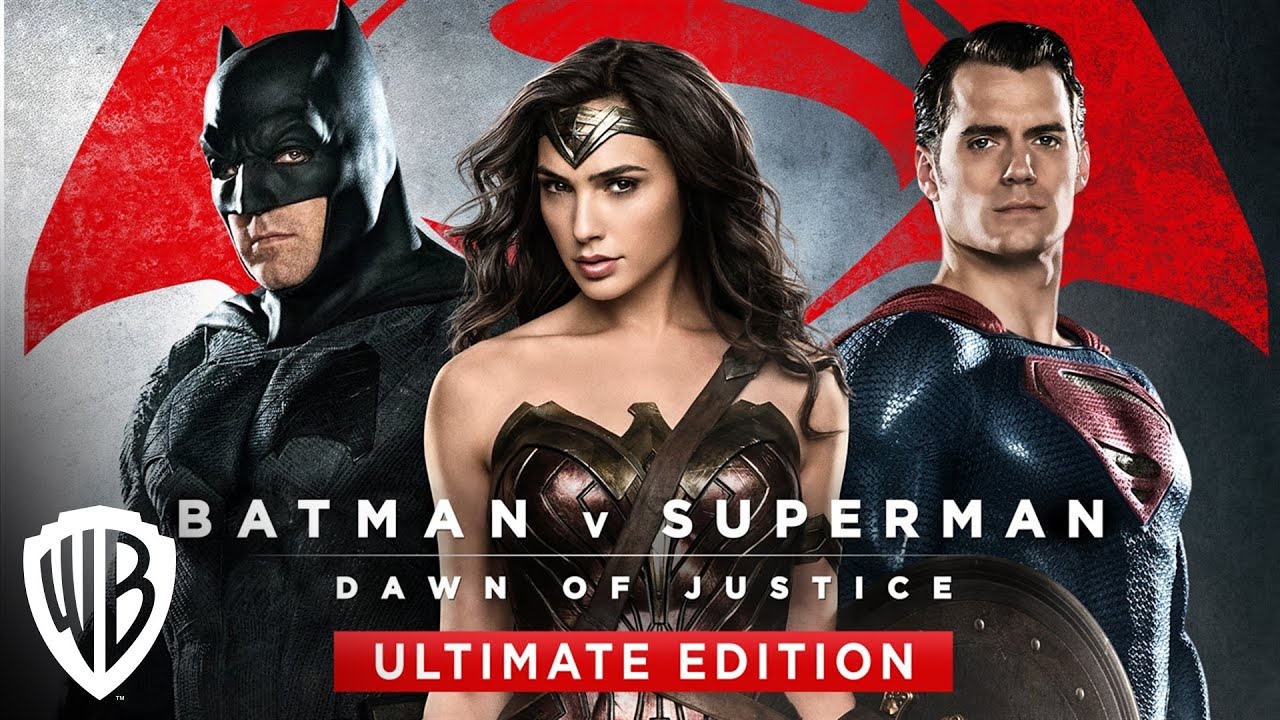
Before 'Batman v Superman: Dawn of Justice' was released in theaters, it was revealed that an R-rated director's cut would be released when the film came to home video. Since then, the theatrical cut has divided fans and critics on whether it was a good film. Now the extended 'Ultimate Edition' has been released, and for some, the extra scenes really helped flesh out some plot points that were found to be confusing. As someone who had already enjoyed the film from its theatrical cut, I have to agree that the 'Ultimate Edition' does indeed help the film flow better. Personally though, I was able to follow along during the theatrical cut, even if we were just getting the gist of things.

While there were some scenes that were really just extensions of what was already in the film, there were two aspects of the 'Ultimate' cut that I thought expanded the overall story for the better.
The first is the Superman incident in Africa. We're actually shown what happened, and the specifics as to why Superman is blamed for the terrorists' deaths. I won't spoil the specifics, but there's a lot in this scene that would have been better left in the theatrical cut.
The second thing that the 'Ultimate' cut really approves on is the build-up and motivation for Superman's animosity towards Batman. You get the basic idea in the theatrical cut, but here, we're given a good parallel to Batman's own feelings toward Superman, specifically 'what gives this person the right to do what he does?' This is actually something I pointed out in my original review that Clark is projecting the feelings some have about Superman onto Batman.

Besides that, the 'Ultimate' cut is a bit more violent than the theatrical one, which was the main reason for its R-rating. I just thought it would be extended fight scenes and that it wouldn't be that noticeable, but it was, from gun-splatter coming from gun-shots to Batman slamming a thug's head so hard into a wall that he leaves a pretty big blood smear as he slides down to the floor. That part kind of reopened my uneasiness about how brutal this Batman could be. I still stick to my reasoning that Bruce isn't setting out to kill anyone directly, thinking once again of the Arkham games. That big blood streak doesn't help things though, and I'm glad that it wasn't in the theatrical version.

A couple more sidenotes:
* While it wasn't stated specifically before in the theatrical cut, Jimmy Olsen is indeed the undercover photographer CIA agent in the Africa scene, and he does gets shot. Before, I just thought, 'hey, maybe they just decided to call him Jimmy since he was paired with Lois.' Well, I'd like to give people some hope. Considering he was a CIA agent, it's possible that maybe he's not really THE Jimmy Olsen. When agents go undercover, sometimes they'll go under a false identity, or use someone else's credentials to get access to some place. I know this would kind of be a cop out, but hey, Marvel's teasing a REAL Mandarin coming to the MCU after the version from Iron Man 3 got a lot of criticism. Will we see the real Jimmy arrive in the DCEU? Who knows?
* In one of the extra scenes, someone is watching Jon Stewart on the Daily Show talking about Superman renouncing his U.S. citizenship. Okay, 1) While the movie features a lot of news commentators, they're from current shows. At the time of both cuts' releases, Jon Stewart had retired from the Daily Show at the end of Summer 2015. 2) Superman makes no declaration in this film. 3) They obviously just used that clip from a 2011 show talking about where in the comics, Superman had decided to renounce his U.S. citizenship (a storyline that really didn't go anywhere because DC rebooted with the New 52 soon afterwards). My point is, using this Jon Stewart clip just really took me out of the movie for a moment.

Overall, it seems that the 'Ultimate' cut is winning people over who didn't like the original version. Which brings me to my next topic: studio involvement affecting a film's quality. There have been two recent examples of this: Sony using 'Amazing Spider-Man 2' to try and launch their own Spider-Man cinematic universe, which backfired and ultimately led to Spider-Man coming to the MCU; Fox hating Josh Trank's cut of 'Fant4stic' and demanding reshoots (although when you get down to it, that film was going to fail no matter what cut). It seems 'Batman v Superman' is another victim though, because having to cut it down to a 2 hour 30 minute film affected the quality for some.
I honestly believe that some of what was cut could have stayed in the film, specifically more details on the Africa incident and Clark's motivations for going after Batman. The violence would still be scaled back and the scenes that had extensions could still be shortened. Plus, Jena Malone's scenes really had no bearing on the overall film (and unfortunately, she did not play Barbara Gordon). If anything, the film could have clocked in at 2 hours 45 minutes (the same length of 'The Dark Knight Rises') and may have gotten an overall better reception (aside from the people who already had their mind up to hate this movie no matter what).

While I enjoy that the 'Ultimate Cut' enhances the film's viewing experiences, my personal feelings for the film are no different from the theatrical version. I stand by my original score of 9.5/10

Wednesday, July 6, 2016

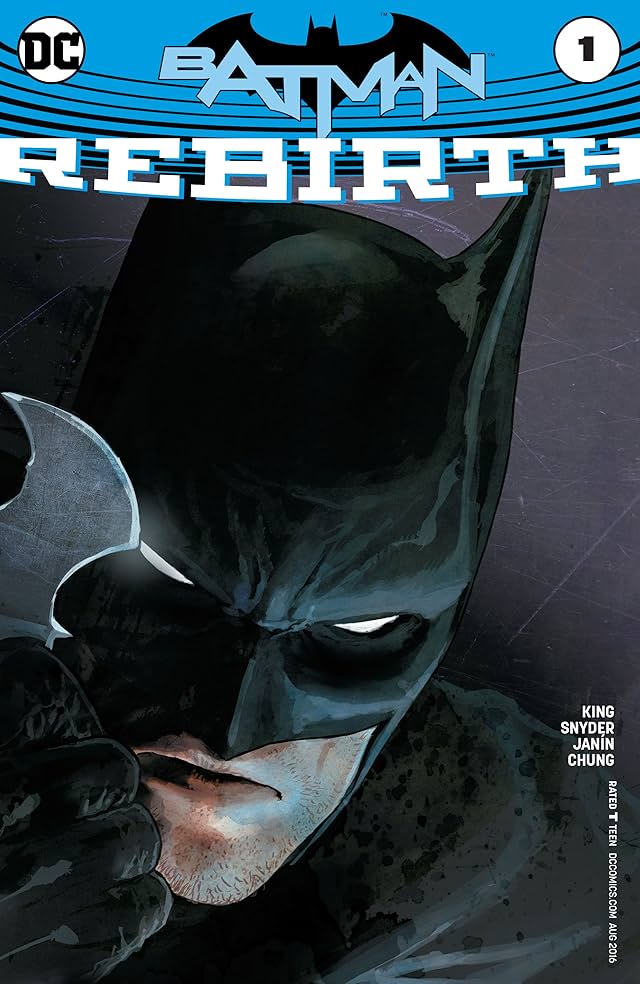
Rebirth Reviews Part 1: 'Batman' and 'The Flash'

Welcome to what will sure to be a long running series on this blog for who knows how long.
At the time of this post, DC's Rebirth initiative has wrapped up its first month of relaunches and things seem to be going well with mostly good reviews and issues sell-outs resulting in second printings. If you were ever interested in getting into DC, this would be the best time.
Everyone has their processes when it comes to reading comics, especially when it comes to line-wide relaunches like Rebirth. Some may decide to get the Rebirth one-shots and decide whether to get the new series following it. As for myself, I am mostly re-adding titles I was reading before but are starting over. However, I have decided to get the DC Universe Omnibus hardcover being released in December, so I'll have all the Rebirth one-shots in one place.
So when it comes to my Rebirth Review series, here's my projected guideline and time frame:
* I will only be reviewing the Rebirth one-shots that correspond with each new series, as those are meant to be a sampling for what's to come from that series while not being necessary.
* At first, I'll only be reviewing Rebirth one-shots for the books I buy regularly.
* Once the Rebirth omnibus is out, I'll be doing a whole month of reviews for the remaining Rebirth one-shots I have not read (and I've been doing my best to avoid spoilers for those).
* While I haven't totally committed to the idea, I might actually buy the first collected volumes of each new series and review those as well, or in the case of the books I'm currently reading, the first story arcs.

In my reviews of the one-shots, I'll be critiquing the writing, art, how it serves as a good jumping on point for new readers, and how it works to bring back some aspects of the pre-Flashpoint DC universe to the New 52 timeline.

So without further ado, let's begin out first Rebirth review with...


Written by Scott Snyder and Tom King
Art by Mikel Janin

After a nearly five year run on the book, Scott Snyder helps pass the torch to the new 'Batman' writer Tom King. The one-shot is a pretty straightforward issue with Batman dealing with a plan set in motion by the Calendar Man to poison Gotham, while also beginning to train new protege Duke Thomas, a character created by Synder during his run.
Well, maybe straightforward isn't the best word to describe this comic. While Calendar Man's plan is to poison Gotham with spores he created, it can only happen during Spring-like weather, so he had created a mechanism that speeds up the weather in Gotham to where all the seasons happen within one week, which is basically like living in Illinois. But aside from that, a new aspect has been added to the Calendar Man's character, where his body also ages with the seasons, where he eventually sheds his old skin and becomes young again every Spring. While the scene happens for only one page, the art is pretty good showing Calendar Man coming out of his old skin almost like he was a new born.
Moving on to Duke Thomas, he has been a supporting character in 'Batman' while also leading a street team of kids who all take on the Robin identity in the now finished "We Are Robin" series (which I haven't read but heard good things). Going into this issue though, Bruce has decided not to bring in Duke as his official new Robin (that role remains with his son, Damian), but gives him a mostly yellow and black costume that has more of bat-motif. While he hasn't gotten the name officially, many have presumed to call him 'Lark' based on a post-apocalyptic vision Bruce had during the 'Endgame' arc where Bruce was fighting alongside with Duke/Lark and Harper Row/Bluebird (another character created by Snyder early on in his run). Probably worth mentioning as well that it was during 'Endgame' that Duke's parents were poisoned with Joker's latest toxin and have been left comatose since then. While I like Duke's costume, I'm not too crazy about the name 'Lark' if that is what they go with. But I'm sure I'll get used to it and I like that it gives Duke his own identity straightforward, even if he was unofficially a Robin. My only complaint though is that Duke doesn't really do much but act as support, but we do see him training with Bruce in the end, so I'm sure at some point we'll see the two back-to-back while in combat with enemies.
But as for the star himself, Batman. There's not much to say other than it is Batman being Batman as we know him. I won't spoil how, but there are a couple instances where Batman puts himself on the line and even pulls off impossible situations where you'd think he wouldn't make it. Even Duke/Lark is surprised at Bruce's feats. I get the feeling this is something we'll see a lot with King's run on the book: Batman doing the impossible. Why? BECAUSE HE'S BATMAN! (Sorry, had to do it.)
The art of the one-shot is pretty damn good too, and it makes me wish Janin was going to be the main artist on the book. Nothing against David Finch, but I'd just like someone new to show off.
It's worth mentioning that while Scott Snyder is leaving 'Batman', he'll be starting a new series 'All Star Batman' with a rotating team of artists that will mostly focus on the villains. I think we got a sampling of that with this interpretation of Calendar Man. Snyder's created new villains like the Court of Owls and Mr. Bloom, used Joker for 'Death of the Family' and 'Endgame', Riddler for 'Zero Year', and gave Mr. Freeze an updated (though pointless in my opinion) origin, but it'll be cool to see what he does with the other rogues of Batman's gallery.
While I think this is a good jumping on point, giving us what to expect from a Batman comic while signifying a new direction for the title, it doesn't really do much in restoring elements lost from 'Flashpoint' because not that much was lost. If anything, it continues to build on what was previously established in the New 52 continuity, particularly Duke's progress, though I think new readers may be lost as to who he is without reading anything prior to this one-shot.
Overall, a good start that probably goes a little too fast and may leave some with questions, but still a good start.


Written by Joshua Williamson
Art by Carmine Di Giandomenico

In contrast, 'The Flash: Rebirth' is a clear starting point with a new writer and artist beginning here. I'll start by praising the art. I talked about Carmine's art before in my Spider-Man Noir review, and I have to say he is a really good fit for the Flash, creating a real sense of movement, which is important for a character with super speed.
The comic starts with Barry working a case with a dead wife and mother, a father in custody and suspect of murder, with a child as a witness, very similar to how Barry's own mother was killed. As he waits for test results in his lab, Barry does what he does best by helping others around the city as the Flash. Eventually, Barry is confronted by the pre-Flashpoint Wally West/Kid Flash. Now those who read the main DC Universe Rebirth special know that Wally had been trying to find someone in the DCU who remembered and knew him, only to be met with confusion as the Speed Force continues to erase him. Wally goes to Barry last, believing that even if Barry doesn't remember him, he could at least thank him for giving him a great life before he dies. Of course, Barry remembers and is able to pull Wally out of the Speed Force and save his life. While it is a bit of a condensed replay of the same scene from the main Rebirth one-shot from Barry's perspective, I felt the same emotional pull as before. We do get a little more interaction between the two, as Wally lets Barry know that he's going to go find and reunite with the Titans as Barry gives Wally his blessing to use the Flash identity as well. We'll get to Wally more whenever we get to the Titans Rebirth special, and I'm indeed planning to read the Titans series in trades.
So besides that, we get a little more follow-up to the mystery of the force Wally talked about that manipulated the DCU's history, with Barry going to the Batcave and compare notes with Bruce (who Wally had tried to contact before without success) about what may be going on, but decide to keep it to themselves for now since they don't have any concrete evidence.
Wally West's return to the main DCU is probably the most prominent pre-Flashpoint element being reintroduced in this one-shot (as well as the main Rebirth one-shot), but I noticed another one. Prior to 'Flashpoint', Barry and Iris were married and had a family, but that was erased once the New 52 began, and the two had remained friend. In one snippet, Barry had plans with Iris to go to the movie, but those plans were actually for the next day. It's kind of clever to make a 'Barry showed up early' joke rather than the usual 'Barry showed up late even though he has super-speed' gag. The point is, I think this is a clear sign that they're planning to reunite Barry and Iris as a couple, much like they're doing with Green Arrow and Black Canary in the Green Arrow book (which will also be covered later).
As much as I liked this book, I would have preferred it had more focus on the Flash. The case Barry is working on in the beginning is moved to the wayside to focus on Wally, and it ends up being written off with the husband confessing to the murder. It might have been better if it was Barry working to solve a murder, but not having a supervillain involved, showing how good he is in and out of the suit. However, I do like that we get a little more follow up from the main Rebirth one-shot. I don't know how many of the Rebirth one-shots will do something similar, but it could be a problematic. It's good to link things together, but it could take away focus from the new book you're trying to promote. Still, I think you could still read the Flash Rebirth issue on its own without having read the main Rebirth one-shot, but might want to check that out to see what was going on with Wally before he met up with Barry.

My minor criticisms aside, I enjoyed both these one-shots and felt they succeeded in what they set out to do: creating a jumping on point while reaffirming the continuity that came before them.

When the Rebirth Reviews series returns, we'll be taking a look at the Rebirth one-shots for Justice League, featuring the pre-Flashpoint Superman joining the familiar but different team, and Nightwing, with Dick Grayson back in black and blue.