The Doom Patrol is definitely one of DC's lesser known super teams. The most they've been seen outside comics are guest appearances in animated series like Teen Titans and Batman: The Brave and the Bold. After their debut appearance in an episode of "Titans", I was really looking forward to their forth-coming spin-off series. While I thought "Titans" was just okay, "Doom Patrol" shows the true potential of the DC Universe streaming service, giving characters who have had little to no spotlight shined on them.
In comparison to "Titans", "Doom Patrol" is so much better in terms of structure, from story pacing and character story arcs. I was immediately sucked in with the first episode just from the opening credits alone. The main characters and tone are firmly established in that you connect with them and know what to expect for the rest of the season, and what you can expect is weirdness. Lots of weirdness from start to finish. So much so that you'll be quoting Cliff's unofficial catchphrase "What the fuck?" throughout the series. Story wise, we're given a lot more time to breathe with some smaller subplots throughout that allow us to get to know the characters better. And while the season does wrap up quite quickly and has set-up for a season two, you can still watch season one by itself with no worry of being left on a cliff-hanger.
While it shares the same mature nature of "Titans", "Doom Patrol" is able to make use of it in a way that isn't distracting. The constant f-bombs in "Titans" came off as juvenile and trying to be edgy for the sake of it; it's equivalent to Fant4stic in attempting to make lighthearted characters more gritty. "Doom Patrol" is like the Deadpool movies in a way, as its mature nature is prominent, but the weirdness of everything else happening helps balance things out.
But what really makes this series so great are the characters. Because initially, these characters are not heroes. A good way of looking at it is that Doom Manor is kind of a halfway house for super people. Even before their accidents, these were not good people. A major part of the series are these initially selfish characters trying to find closure for their past mistakes and traumas in an attempt to become better people.
I don't think there's one bad actor on this show. Even characters like Cliff/Robotman and Larry/Negative Man, whose faces are covered up in some way, shine thanks to their voices and the subtle facial ticks coming through; and going off that, I applaud the character designs and costumes on the show with a good mix of practical and special effects.
My favorite character of the series is probably Cliff Steele, the Robotman, played by Brendan Fraser. This is probably Fraser's biggest role in quite some time and it's nice to see he hasn't lost his touch. Cliff's origin story is the most heartbreaking of all the characters in my opinion, and Fraser's performance, even through his voice alone, tugs at the heartstrings. I think I also like him because he's pretty much the most open out of all the characters. He's quick to point out how weird something is (usually cursing while doing it) and tries to get the others to talk about their own problems as well.
My second favorite is Crazy Jane, played by Diane Guerrero. Jane has multiple personalities, each with a different super power. Guerrero shows she has great range as she pulls off many different character types, from the hot-tempered Hammerhead, the child-like Baby Doll, and the hopeless romantic Karen, just to name a few.
Jane and Cliff share my favorite relationship of the series where we see a budding surrogate father-daughter dynamic develop, as the characters attempt to fill voids left from their old lives.
Joivan Wilde is our second live-action Cyborg in the last few years, and no disrespect to Ray Fisher, but Wilde is the better between the two. Cyborg's strained relationship with his father and his balance struggle of man and machine are much more prominent in this series, and honestly, Wilde offers more emotion in his performance. There's just more character to connect to here compared to the movies.
The show probably has the some of the strangest villains you will ever see, from Ezekiel the Cockroach, Admiral Whiskers, the Beardhunter and the Decreator. But none of them are quite as entertaining as our big bad of the season, Mr. Nobody, played by Alan Tudyk. Tudyk has done voice work for a number of projects for both DC (like Green Arrow in both "Young Justice" and "Injustice") and Disney (like Alistair Crei in "Big Hero 6" and King Candy in "Wreck-It Ralph"), and you would recognize him in real life from roles such as Steve the Pirate in the movie "Dodgeball." Tudyk has this eccentric personality that shines through in all his performances, and Mr. Nobody is no different. Nobody is able to warp reality, which allows him to do things like create a donkey that sucks up an entire town into a pocket dimension inside its stomach (and that's just the first two episodes). He also constantly breaks the fourth wall, sometimes providing narration, so there's a lot of fun and meta-humor to be had with the character. As you'd expect, a character like that can be pretty unhinged, so it's really hard to picture anyone else by Tudyk in the role.
"Titans" may not have been the best original series to kick off DC Universe, but any room for improvement was proven and accomplished with "Doom Patrol". It's unlike any superhero movie or show before. The Doom Patrol's first appearance in the comics billed them as the "world's strangest heroes" and I feel the show captures that sentiment.
Since 1977, Marvel Comics have both regularly and irregularly thought of what would happen had certain stories happened a different way in a series called "What If...?" Soon, that question will be posed to the Marvel Cinematic Universe in a new animated series coming to the Disney+ streaming service. The first episode confirmed for the series will be what if Peggy Carter became the first super soldier. There is a lot of potential with the series, and I wanted to share the stories I think would be interesting, would like to see done, and my own thought process of how said events would go.
WHAT IF BETTY ROSS BECAME THE HULK?
The idea of Betty Ross becoming a Hulk has been done in both the mainstream and Ultimate Marvel comics, but what if she had been the one originally exposed to gamma radiation instead of Bruce Banner? The relationship that would be most affected in this situation would be with Betty and her father, General Thaddeus Ross. If Betty went on the run (with or without Bruce), Ross' tactics in trying to find the Hulk would probably just be as obsessive, but more likely as a father than a military man. Then again, Ross has been shown to lie to Betty, as he did in "The Incredible Hulk", not telling her that he wanted to find Bruce to weaponize the Hulk. Ross may convince Betty to work with him to help her try to understand the Hulk, hiding his true intentions.
WHAT IF CAPTAIN AMERICA WAS NEVER FOUND?
Without Captain America being revived in the 21st century after being frozen in ice during World War II, the MCU would be a very different place. It wouldn't be an overstatement that the MCU's moral compass would be lost. With a bunch of hotheads like Tony, Thor, Natasha, and Bruce, the Avengers may really be as dangerous as Ross viewed them to be in "Civil War". While I could see the team being able to thwart the Chitauri invasion without Cap, the events of "Winter Soldier" may have been the true turning point. Bucky wouldn't have had his old memories stirred up, but more importantly, would Fury have been able to trust anyone else with what he found out about "Project Insight"?
WHAT IF LOKI TOOK CONTROL OF NICK FURY?
When Loki arrived on Earth in the first "Avengers" film, he used the Mind Stone placed in his scepter to take control of some who were present, including Erik Selvig and Clint Barton. Nick Fury was also there, only to be shot by the controlled Barton. But what if Loki didn't just try to take Fury out, but wanted him as another minion? Loki could potentially have even more of SHIELD at his disposal to use to create a portal with the Tesseract for the Chitauri, with less opposition to stand in his way. Would anyone within SHIELD like Coulson or Hill go underground and try to recruit the Avengers themselves? Would anyone even realize what was happening within SHIELD until Thor arrived to find Loki? Going off that, would Thor even have allies to help him against Loki's plans?
WHAT IF TONY STARK USED EXTREMIS?
Tony has said it himself that he's a mad scientist. He's been known to take risks and use whatever he has at his disposal to further his mission to protect the people; the best example is using the Mind Stone to create Ultron, which obviously didn't go so well. But in another potential instance of something not going well, what if Tony had decided to look more into Extremis after the events of "Iron Man 3"? He may perfect it the best he could and use it on himself. On one hand, it would be a way for him to defend himself in case he's unable to access his armor, but Tony would most likely also be able to craft an armor that amplifies the Extremis, powering the suit or making more weapons based around it. Of course, the biggest drawback would be the psychological effects. Based on what we've seen with Killian, Savin, and other Extremis users, they seem to have a few screws loosened, as well as violent tendencies. Even Pepper had to collect herself after the brutal way she killed Killian while she was under Extremis. Tony's relationships with Pepper and the other Avengers could be greatly affected with his Extremis use.
WHAT IF HULK NEVER LEFT EARTH?
In Hulk's last scene in "Age of Ultron", he chooses to close himself off from the world and drift wherever the Quinjet takes him. But what if Bruce was able to take back control, transform back and follow Natasha's directions to get back to them? Where would Bruce and Natasha's relationship go from there? Furthermore, how would Hulk's presence affect "Civil War"? It's easy to see Bruce choosing Cap's side based on his distrust of Ross alone. But who's to say Tony wouldn't be able to sway Bruce over to the Pro-Registration side? Tony's been able to convince Bruce to do things before, such as their creations of both Ultron and Vision. Whichever side he would choose, it's a sure thing the airport battle would have been a lot more one sided with a Hulk thrown in there. This would also affect Thor's story in "Ragnarok". Without Hulk on Sakaar, would Thor's escape be easier, harder, or possible at all? Would Hela have had no true obstacles in her way?
WHAT IF HANK PYM WENT SUB-ATOMIC?
To stop a missile, Janet Van Dyne as the Wasp shrank down to sub-atomic level in order to disable it and save scores of people. In doing so, she was lost in the Quantum Realm for 30 years. But had Hank Pym's suit regulator not been damaged, what if he had gone through what Janet did? Janet's very intelligent in her own right, but I have a feeling the biggest secrets of the Pym Particles would be lost with Hank. Hank also made many mistakes after losing Janet, both in raising Hope and his business practices. Would she be more open with Hope compared to her father? And with Janet most likely the beneficiary of Hank's assets, including Pym Technologies, she would probably run things much differently, probably grooming Hope to take over rather than Darren Cross. Admittedly, Hank and Scott Lang get screwed in this scenario. No Cross means no recruitment of Scott, who most likely ends up barely scrapping by after getting out of prison. No Scott also means he doesn't travel to and from the Quantum Realm and wouldn't entangle with Hank like he did with Janet. So yeah, Hank would pretty much be trapped forever.
WHAT IF THE AVENGERS REMAINED ASSEMBLED?
Aside from Tony finding out Bucky killed his parents, the Sokovia Accords introduced in "Civil War" was the focal point that fractured the Avengers. Tony rallied half the team to sign while Steve was against government oversight. But what if things happened in a way that they were able to see the other's way? Maybe Tony missed Miriam Sharp and wasn't swayed into thinking about accountability. Or maybe Tony chose his words more carefully when convincing Steve to sign while in Berlin. How would the Avengers fair working with the government or working in the shadows? And more importantly, would a more united front have prevented Thanos from achieving his goal?
WHAT IF SPIDER-MAN JOINED THE AVENGERS?
Yes, Tony officially declared Peter an Avenger in "Infinity War", but Peter had an opportunity to join prior to that. This scenario is asking what would happen had Peter accepted Tony's offer at the end of "Spider-Man: Homecoming", which in he had rejected the offer feeling he wasn't ready yet. Peter also assumed it was a test, not knowing there was a press conference waiting for his debut. It's also worth noting that Peter revealing his identity was a potential ending considered for "Homecoming". So what if Peter took that leap? How does a 15 year old kid handle the spotlight as a publicly known superhero and member of the Avengers? How would this affect Aunt May, Ned, and his other friends? Based on what happened when Peter revealed his identity in the comics, it probably wouldn't go well.
And those are my ideas for the "What If?" series with the most potential. What stories would you like to see? Leave a comment and let's get the discussion going.
Next month, I intend to review the soon to be completed "Heroes in Crisis" miniseries in what will surely be the DC equivalent to my Civil War II review. But before that, I wanted to talk about a precursor to that story that involves the book's writer, Tom King, and one of the main characters, Booster Gold.
Michael Jon Carter was a disgraced football player in the 25th century until taking a security job at a superhero museum allowed him to steal certain items, including one of the museum security robots named Skeets, to travel back in time to make a name for himself as a superhero. He became Booster Gold, and he did not hide the fact that he was in it for fame and money. As time went on though and having to go through personal tragedies, Booster would begin to act more like a real hero. However, his old reputation still makes other heroes look down on and reluctant to work with him. This is also a sentiment some writers tend to have as well.
Tom King entered the comic industry in 2013 and after a number of works at both Marvel and DC, he eventually became the writer for Batman as part of the Rebirth initiative, which he continues to write. King's Batman run has had its ups and downs for me. His first few arcs were just okay, but starting with "The Button", a crossover story with the Flash, his run really started to hit its stride for me. This was partly because he was bringing something new to the character: his engagement to Selina Kyle/Catwoman. It really seemed like the wedding was going to happen, but Selina would end up leaving Bruce at the altar; but due to this happening because of Bane's machinations, I don't think their story is over just yet, especially since King's plan is a 100 issue run, and we're almost three-fourths of the way done. After the non-wedding though, the book's back to hit and miss for me, with the worst part of his run so far being a seven issue arc called "Knightmares" that did nothing to move his story forward at all.
That brings us to today's story, "The Gift", a three-parter in the Batman book that was one of several stories meant to lead up to the wedding, and one that I had mixed feelings about when it first came out. As we look at this story, I plan to prove one thing: Tom King doesn't get Booster Gold.
Part one begins in Gotham City, which looks even shittier than usual with constant fires going through this arc. Green Lantern Hal Jordan is talking crazy to Booster Gold stating he can do anything with enough will power, like blasting himself in the head with his ring and survive. Hal does this and does not actually survive. And it just occured to me that between this and Deadpool 2, 2018 was a popular year for Ryan Reynolds characters killing themselves. Booster's reaction is as follows: "That was...intense. Seriously intense. But y'know...also admittedly, a little bit, or kind of...awesome!" I think this gives you an idea of the kind of Booster that Tom King is giving us.
Booster tells Skeets that they should go find Batman as Skeets tells Booster this is the worst thing he's ever done. Booster indeed finds Batman, but it's a gun-toting one that attempts to kill Booster, and Skeets' scans reveal that this Batman is actually Dick Grayson. After the two are able to escape Bat-Dick, Booster says they need to go find Bruce Wayne, locating him dancing with his mother at his parents' anniversary party.
During all this, we get an idea of the state of Gotham and see where other Bat-related characters are. Tim Drake works at a cubicle at Wayne Enterprises, Jason Todd sells tires that shock people who try to steal them (because irony), Duke Thomas has been lobotomized, Oswald Cobblepot is the President, Ra's al Ghul rules over a combined Europe and Asia, and some kind of disease runs rampant in Gotham that turns people as crazy and violent as the Joker, only effecting the lower classes of the city.
So how did it get so bad? Because of Booster of course. He tells Bruce he wanted to get a wedding gift for him and Catwoman and thought about the time Superman was in a dream world where Krypton never exploded, but it wasn't perfect, which made Superman appreciate the life he does have. So he thought he could do the same thing for Bruce by using Skeets to go back in time and save his parents' lives, so Bruce could see how bad things would be and that he'd have more appreciation for the life he has once he sets things back. Bruce admits he's had dreams of his life as Batman and thanks Booster for doing what he did...and proceeds to destroy Skeets with a fireplace poker, having Alfred escort Booster out of Wayne Manor as Bruce returns to the party.
While the ending of part one does subvert expectations with Bruce allowing the world to go to hell as long as he has his parents, the premise of this story alone has major problems.
1. The story Booster is referring to that served as his inspiration was "For the Man Who Has Everything." In that story, Superman had been tricked into having an alien plant latch onto him by the villain Mongul. The plant is the Black Mercy, which places its victim in a coma where their mind lives out their heart's desire while the plant feeds off the victim's body. I think when Booster heard this story, he wasn't paying close attention. Mongul gave Superman the Black Mercy to kill him, not make him appreciate his life. And Superman was trapped in a dream world which he slowly woke up from; his real life wasn't changed. It's also worth noting that this story was written by Alan Moore, and this is something we'll get into more with "Heroes in Crisis", but Tom King has a tendency to try and emulate Moore.
2. "The Gift" comes only two months off "Booster Shot", a story that shows Booster as a competent hero. Superman had just discovered that his father Jor-El had been transported away from Krypton just before its destruction by an unknown force (though believed to be Dr. Manhattan from "Watchmen") and forced to witness all of the travesties humans have committed on Earth. Believing he made a mistake sending his son to a world with no hope, he became the villain Mr. Oz. Shaken and still unwilling to believe this revelation, Superman uses Flash's Cosmic Treadmill to travel back in time to just before Krypton exploded to see for himself. After failing to arrive in time to stop him, Booster and Skeets chase after Superman because his interference could break time itself, either with Superman trying to save Krypton or dying with the rest of his people. Making sure the timestream is kept in tact and that certain events happen as intended is another role Booster has taken on in the character's history. I am really wondering what happened to Booster between these stories to pull a 180 like this. In "Booster Shot", while he was aware of Superman's well intentions, Booster still knew there was temptation for Superman to try and help. Even if Booster was planning to fix things, where was this concern that Bruce would try and keep the life he has with his parents alive? Hell, things aren't just bad in Gotham, but part two reveals that without Bruce's presence and his strategic knowledge, the Justice League died in battle.
3. This is more of a nitpick, but why is Dick Grayson Batman? I have no doubt that Dick would become a vigilante after his parents' murders and that he would be more bloodthirsty without Bruce to guide him, but why would he specifically become Batman? Did this Dick have some kind of traumatic experience involving bats too?
Part two picks up one year later, with Booster breaking Catwoman out of Arkham Asylum. This version though is a serial killer who can only make cat noises. Booster's plan is to have Bruce meet Selina, realize he loves her, and that will make Bruce want Booster to make the world right again. Again, this is an altered timeline, not a dream. This Bruce and Selina have never met and are extremely different from their mainstream counterparts. This is obviously not a good plan, though Booster thinks all she needs is a leather catsuit. Booster sews the costume (seen on the cover at the top of the page) and it quite resembles the one worn by Michelle Pfeiffer in "Batman Returns"; it's a good homage and fits well given the psychotic nature of these versions of the character.
Later at Wayne Manor, Bruce is with his father who has just recovered from a heart attack. Booster and Catwoman arrive and that's when things go south. After slashing Alfred's neck with her claws, Selina begins scratching away at Thomas only to be stopped by Bat-Dick, who shoots her in the back. Bat-Dick then throws flashbomb/smokebomb at Booster which knocks him out. Bat-Dick then moves to put down Selina once and for all, but he's close enough for her to slice off the tips of his fingers, causing him to drop his gun. The two battle as Martha arrives trying to reach Thomas. Bat-Dick uses another of his guns to shoot Selina again, this bullet going through and also hitting Martha. Bruce picks up the dropped gun from before and fires it right between Bat-Dick's eyes. Bruce screams "NO!" in anguish, surrounded by the bodies of his butler, parents, Bat-Dick and Catwoman. The only other living party is Booster, who has no idea of the bloodbath he caused. "Did I do it? I bet I did it. I'm a hero. I always do it. I have to do it. I saved the world." Booster, with heroes like you, who needs villains?
Part three picks up another year later as Bruce has had his company rebuild Skeets, intending to go back in time one year and save his parents. Unfortunately, Skeets can only be operated by voice command, and that being Booster's. Bruce reluctantly has to use Booster, who he has kept chained beneath the caverns of Wayne Manor in what would have been the Batcave. Booster's also worse for ware, with his hair and beard long and shaggy and body wasting away.
After having Booster cleaned up and reunited with Skeets, Bruce tells Booster to have Skeets take them back in time so he can kill Batman and Catwoman before they kill his parents, return them to the present, and then he'll kill Booster. Booster then tells Skeets to take them back to the night Bruce's parents were killed with a not so subtle wink. Bruce notices and after some rambling dialogue between the two as Skeets powers up, they're all transported back to that night in Crime Alley, but Skeets is shot by Bruce, jumping in the way to save Booster.
The past Booster and Skeets who prevented the Waynes' deaths arrive knowing its time to undo that, with past Booster not analyzing the situation well as past Skeets starts to put the pieces together. Present Booster tries to get Bruce's gun away, but it ends up shooting and killing past Booster (which means all of this story should have been prevented, but when it comes to time travel, it's basically dealer's choice in how the writer wants to handle it). This distracts Bruce long enough for events to play out as they should, with Joe Chill killing Thomas and Martha in front of young Bruce. Unable to handle the trauma, the older Bruce shoots himself in the head, with his blood splattering on Booster.
The story ends with the surviving Booster and Skeets returning to the proper present, telling Batman (Bruce) and Catwoman what he had done, hoping it would make him feel better and that despite his visor being clean, he still sees the other Bruce's blood on it.
If all you know of Booster Gold is his reputation as the moronic showboat, this story may not be so bad for you, but those who have seen his more competent side may find it frustrating. Booster may not be the smartest guy, but he is not as idiotic as Tom King writes him to be in this story. Even taking Booster's characterization out of the equation, it's kind of a mean-spirited and exploitive story as we see familiar characters act so differently. At the same time though, it's almost like watching a multi-car pile-up, where it's fascinating to see just how much worse things can get, this case being Booster's actions. So upon re-reading it, I still have mixed feelings, but it's definitely not better the second time around. If I had to give this story any positive points, it's that Tony Daniel's art is on point as usual.
The events of this story lead Booster to get some therapy at Sanctuary, the secret superhero rehab facility, which is the focus of "Heroes in Crisis". Come back next month as I give my thoughts on that story, where I won't be as lenient as I was with this one.
Last year, "Avengers: Infinity War" was the beginning of the end of what would be called the "Infinity Saga", the collective name for the first three phases of the Marvel Cinematic Universe. "Infinity War" left such a major impact on audiences, from the character dusting practically becoming a meme to so many theories about how things would be resolved; it actually got ridiculous with how every character or item was believed to be the key to defeating Thanos. But we need no longer wonder, as "Avengers: Endgame" has finally arrived.
The trailers and commercials didn't show much, but if you think can piece together the story from that, you'd be dead wrong. There's plenty of twists and turns that will surprise you and keep you on the edge of your seat. As the story progresses, you'll find the surviving characters dealing with life after the Snap in their own ways. There are a lot of emotional moments, and you'd be surprised with where certain characters end up. It tonally matches "Infinity War" with its mix of serious moments and trademark humor. A lot of that is thanks to the investment we've had in the characters through these years, and we know these actors and characters well enough to expect magnificent performances.
While this is part two to "Infinity War", "Endgame" is where the real culmination of all the MCU films since "Iron Man", especially now that we have "Ant-Man and the Wasp" and "Captain Marvel" under our belts. The film is full of callbacks and payoffs to almost everything that came before it; I was even making my own callbacks in my head during certain moments. There are also multiple cameos from characters you wouldn't have expected to appear or even share the screen with. As we end one era and begin a new one, main characters have their arcs wrapped up (some in quite the poetic fashion) while others embark on journeys quite different from what we've seen previously.
Then there's the climax, which was the most exhilarating experience I've had watching a film probably since the very first "Avengers" film. The climax of "Endgame" is the moment that fans have been waiting for ever since the idea of a shared superhero movie universe was becoming more and more tangible, and even with how crowded it gets, each character gets a standout moment or two. I was damn near hyperventilating and the tissues I had brought in case I cried were used to wipe the sweat off my forehead. The climax and its aftermath are a testament to how large the MCU has gotten, and it's only getting bigger and bigger.
This review is going to be shorter than my usual ones because I don't want to go into any details and wish for everyone to experience the film for themselves. I'll just take this moment to thank everyone who made these last eleven years so amazing, not just for the stories told, but all the fans that were brought together because of these films. When I was younger, I used to feel like an outcast because of my love for comic books and superheroes. But now, even if not everyone's a hardcore fan, I know I'm not alone.
So thank you Kevin Feige. Thank you Russo Brothers. Thank you Robert Downey Jr. Thank you Chris Evans. Thanks to all the stars, directors, and everyone behind these films. But most of all, thank you Stan Lee for making it all possible; we'll always miss you.
Here's to the last eleven years, and here's to many more.
My Marvel Cinematic Universe Film Rankings:
1. Avengers: Infinity War/Avengers: Endgame
3. Guardians of the Galaxy Vol. 2
4. Black Panther
5. Captain America: Civil War
6. Thor: Ragnarok
7. Avengers: Age of Ultron
8. Captain America: The Winter Soldier
9. The Avengers
10. Guardians of the Galaxy
11. Doctor Strange
12. Spider-Man: Homecoming
13. Ant-Man and the Wasp
14. Ant-Man
15. Captain Marvel
16. Iron Man 3
17. Thor
18. Captain America: The First Avenger
19. Iron Man
20. The Incredible Hulk
21. Iron Man 2
22. Thor: The Dark World
In June, we will see the release of the animated "Batman vs. Teenage Mutant Ninja Turtles" movie, which I intend to review. As it happens though, I've never actually talked about Ninja Turtles on my blog before. And rather than take a good portion of that review doing so, I thought it best to do a separate post and share my history with the Ninja Turtles franchise.
Like a lot of kids of the 80's and 90's, I was really into the Turtles, from the original cartoon, the movies, as well as the live action Next Mutation series (which crossed over with Power Rangers in Space).
As kids do though, I kind of outgrew the Turtles, at least for awhile. I barely remember the TV shows, and while the first two movies don't really hold up for me like they used to, they do still have rewatch value and I respect their place and impact in the franchise.
I never really watched the 2003 cartoon, but I did go see the 2007 computer generated movie.
I liked this movie when it came out, and I still think it's one of the best Turtle movies.
My outright love for the Turtles was revived though thanks to the 2012 animated series, which in my opinion is the definitive version of the franchise.
Well balanced wacky comedic moments with emotional and dramatic storylines. Stellar animation that makes for high stakes action scenes. Brilliant characterizations with iconic voice acting to match. In short...
It was definitely a show that was made for adults as much as children. In one regard, there are a lot of homages to old school pop culture, from classic cartoons like Voltron and Thundarr, to horror franchises like Alien and Friday the 13th. But more importantly, the show featured a lot of imagery and moments that I'm surprised Nickelodeon allowed through. Seriously, some of the mutants are either truly scary or just really hard to look at.
I loved this version of the Turtles so much, I even collected the complete series on DVD.
Admittedly, it takes up a lot of space since seasons three through five were collected in separate volumes compared to the complete sets for seasons one and two. I'm halfway expecting them to announce a complete series box set on Blu-Ray now that I've actually bought the whole series. Seriously, if you are or have ever been a Ninja Turtles fan, the 2012 series is a must-watch. (And just to throw it out there, the series is also on Hulu in its entirety.)
The series ended in 2017 in what I felt was an epic finale with the "Mutant Apocalypse" three-parter. Which made its replacement series, "Rise of the Teenage Mutant Ninja Turtles" even more disappointing.
Needless to say, it's heartbreaking to see the franchise succumb to what I call the "Teen Titans Go!" effect. This is when a beloved show is rebooted in a manner that strips away what made it special, suffering from little effort, poor animation and pandering to a young audience; other victims of the "Go!" effect include Powerpuff Girls, Total Drama, and soon enough, ThunderCats. In short, the less said about "Rise", the better.
As for the live action reboot films from Michael Bay, I honestly thought the first one in 2014 was trash.
The Turtles' designs alone were meme worthy.
Besides that, I'm just going to list out some of my more egregious problems with the movie in no particular order:
* Any of Michael Bay's usual tropes.
* Megan Fox as April, basically being there for eye candy rather than character, which is bad considering she gets more focus than the actual Turtles; though to be fair, she seemed more invested in the first one compared to the sequel, mostly because the second one was actually about the Turtles.
* The lack of actual ninja-ing, from the Foot being criminals who use guns to the Turtles, who turn out to be bullet-proof, basically making them Hulks with shells.
* Mikey acting like a creepy Jonah Hill character and basically saying he had a boner for April. That is something nobody should ever have to hear from a Ninja Turtles story.
* Donnie having taped up glasses just because he's the nerd of the group.
* The villains wanting to infect the city with an airborne biological attack is ripped off from the Lizard's plan in the first Amazing Spider-Man film.
Its sequel, "Out of the Shadows", was a far better outing. While still suffering from similar problems of the first one, it felt more like a Ninja Turtles movie by comparison and I actually found myself enjoying it, especially seeing villains like Bebop, Rocksteady, and Krang. Of the 21st century TMNT films, this is actually my second favorite behind the 2007 one.
So with the end of the 2012 series, we are in desperate need of some decent Ninja Turtles. Will "Batman vs. Teenage Mutant Ninja Turtles" deliver? Well, the trailer alone is better than anything I've seen from "Rise", but we'll know for sure come June.
There are a lot of unique superheroes, but there aren't a lot quite like Shazam (originally known as Captain Marvel in the comics). A young boy who can transform into a grown adult with superpowers? It's basic childhood wish fulfillment. It's been a long time since the character's last live action depiction, but here we are with a feature film and set within the larger DC Extended Universe. It can be best described as "Big" meets "Superman" as 14 year old Billy Batson learns the ins and outs of powers bestowed on him by an ancient wizard. If the trailers weren't any indication, the film is laugh out loud funny and is thus far the most fun entry in the DCEU.
Something I really found unique about the film is how it's very down to Earth compared to the other DC films so far. Our hero isn't rich or has their powers written into their DNA; Billy Batson is just a normal kid given great abilities. It's also worth noting that this film is set in a post-"Justice League" world and we get to see how accepted superheroes have become in normal society. We see kids wearing t-shirts and carrying backpacks featuring logos of Batman, Superman, Aquaman, and Wonder Woman, as well as a variety of toys based on Batman and Superman. It's very reminiscent of the post-"Avengers" MCU, and shows the DCEU's come a long way since the shaky trust people had in Superman way back in "Man of Steel". It also sets a standard Billy needs to aspire to in his journey as a hero.
As Billy Batson, Asher Angel does a great job as the troubled teen as we see him long to find his birth mother and slowly becoming close with those in his foster family. As Shazam, Zachary Levi is spectacular. It's absolute fun as we watch him slowly discover his various powers with childlike wonder; you can really believe he's a kid in the body of the adult. There's also good development as we watch him use his powers for fun and mostly being a superhero-in-name-only to becoming what it means to be a true one. The best contrast between the two is in their demeanor. Shazam is basically Billy's escape from the pain he feels inside, with Billy coming off as the more serious character while Shazam allows him to be a big kid with initially no worries.
While each of Billy's foster siblings are unique and entertaining in their own way, none of them steal the show as Jack Dylan Grazer does as Freddy Freeman (though Darla comes in second). In addition to being Billy's roommate, eventual best friend, and confidante, Freddy's superhero fanboy tendencies allow him to be Shazam's superhero coach. The excitement he shows in conjunction with Zachary Levi's as Shazam just adds to the hilarity of their scenes together. I think a lot of fans can relate to Freddy's encyclopedic-like knowledge from trying to instill superhero values into Billy and how to handle supervillains.
Speaking of villains, Mark Strong, who has previously portrayed evil characters in "Kick-Ass" and "Sherlock Holmes", delivers another great antagonistic role as Dr. Sivana. The flashback scene to his childhood shows a clear motivation, and the film does a good job at making him feel as if he's the hero of the story. His allies in the Seven Deadly Sins are also pretty monstrous looking, if not somewhat generically demonic.
This brings me to a parallel I saw between Billy, Freddy, and Sivana: they each want to feel like they matter with a sense of belonging. Billy seeks to find his birth mother, believing he matters to her as much as she does to him, closing himself off from anyone else who may actually care about him. Freddy has a hard time at school as no one seems to be able to look past the crutch he walks with to want to be his friend; wanting to be a part of Billy's journey as Shazam is both Freddy wanting to form a friendship and live out his own dreams vicariously through Billy. Sivana's family treated him poorly and he was denied the powers of Shazam when he failed the wizard's test, which lead to his alliance with the Sins, who are essentially using him for their own means. Between these three, I think the clear message of the movie is that family is important as long as it's the right one.
If there's one problem I do have with the movie, it's that certain characters who are technically meant to be abusive or bullies, but lack real depth. Sivana's father and brother are cruel to him as a child and continue to belittle him as an adult; it's no wonder why he turned out evil, but amazing he survived childhood. There are also these bully brothers who consistently pick on Freddy, with their first appearance in the film them grazing Freddy with their truck and start beating him when they notice his crutch scratched it. To reiterate, they are assaulting a kid who walks with a crutch; that's one dimensional "bully in a Stephen King story" levels of dickishness. And unlike Sivana's family, they never get any real comeuppance by the end.
There's definitely some set-up for a sequel, with an appearance from a villain I won't spoil here. If I have any hopes for future Shazam movies, it's that we finally see Dwayne "The Rock" Johnson as Black Adam. Not only is Black Adam hinted at in this film, but Rock was cast in the role ELEVEN YEARS AGO; I think it's time for some payoff. Apparently they're wanting to debut Black Adam in his own movie, but I think it'd be much better to have him face Shazam and then do his own movie if it's warranted. Besides that, if we ever get another Justice League movie, it'd be pretty cool to see Shazam alongside heroes like Wonder Woman and Aquaman; it would definitely add a new dynamic to the group.
Overall, the best word to use to describe "Shazam" is just "fun", giving DC back-to-back movie victories. Its simple nature is a nice change of pace compared to the large epic scopes of other recent superhero films. With lots of comedy and action with a pinch of emotional drama, "Shazam" has something for everyone to enjoy and can most assuredly bring out the kid inside.
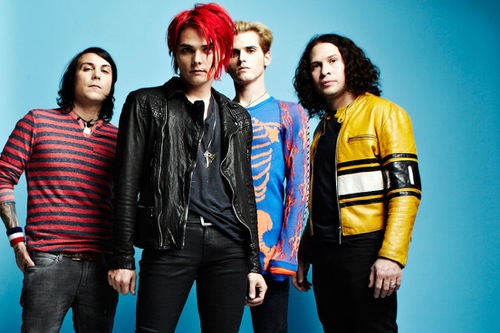
Gerard Way. Mikey Way. Ray Toro. Frank Iero. From 2001 to 2013, these were the four constant members of one of my top five bands, My Chemical Romance (Linkin Park, Green Day, Angels and Airwaves, and Madina Lake are the others). While I knew about them since 2005, it was during their Black Parade era when I became a major fan. I think what really drew me to them was the theatricality in not just their performances and music videos, but the fact that each of their albums revolved around a story more different from the last and reflected their growth as artists. While I can't say I've been there from the start and didn't have the chance to see them live before their disbandment, the band has had and still does have a real effect on my life. I've been thinking a lot about them recently, and decided I wanted to share my thoughts on each of their albums, what they mean to me personally, and my own thoughts about the content, while talking about the band's history. Unlike my Linkin Park post from years ago, this isn't a ranking from worst to best. I'll just say right off the bat that The Black Parade is my favorite since it was what made me a fan in the first place. Each album is crafted so differently and are great in their own way that it's hard to really compare them. I'm just going to through each album in order of release.
I BROUGHT YOU MY BULLETS, YOU BROUGHT ME YOUR LOVE (2002)
The beginnings of My Chemical Romance can be traced back to the events of 9/11. Gerard Way had been working as an intern for Cartoon Network in New York City when the attacks happened, and having a first hand view of the tragedy deeply affected him. He quit Cartoon Network and wrote what would be the first My Chemical Romance song, "Skylines and Turnstiles", where he expressed his feelings about the attacks. The song lyrics go into graphic detail about what it must have been like for those involved, either as a victim or a helpless onlooker. At the same time though, there's one lyric I feel is the heart of what My Chemical Romance truly means: "...if the world needs something better, let's give them one more reason..." MCR came about because Gerard wanted to make a difference in the world after seeing the worst of humanity. It's an instance of something good coming out of something bad, and the fanbase that continues to grow for the band even after their break-up is a testament to that.
Sure enough, the band would form, sign with Eyeball Records, and record their first album, "I Brought You My Bullets, You Brought Me Your Love". Being an independent record means the album has a very raw sound to it, and it's the evident by the heart and energy being put in from everyone in the band. Compared to what would come later from the band, you really have to appreciate the humble beginnings.
The concept of the album focuses on a "Bonnie and Clyde" like couple who break away from their normal lives to go on a crime spree, which based on the lyrics involves murder and drugs, with the two ultimately being gunned down in the desert. The events of said fate are depicted in my favorite song from the album of the album, "Demolition Lovers." The song begins with a slow dark melody that gradually builds up as it goes on, with Gerard's vocals going from soft to screaming in relation to the beat. One of the best things in this song to me are how it's split in half with a moment of silence and the second half begins with an altered tempo from how the song began, not to mention the instrumental that follows before the finale. Above all though, it's a love song. The character is telling his lover, who have been through so much together by this point, that he's with her no matter what, all the way up to when they're riddled with bullets. It's a song about true commitment and dedication, even if the characters aren't exactly good people.
My other favorite songs from the album include "Vampires Will Never Hurt You", "Drowning Lessons", "Our Lady of Sorrows", and "Early Sunsets Over Monroeville". "Vampires" has a definite horror feel to it, with its soft intro and outro as well as whispers and screams in the background. And of course, there's the whole idea of surviving an army of vampires, which can also be viewed as a metaphor for those who use others. "Sorrows" is the shortest song on the album, but it makes up for it by being very fast paced with lots of screaming; it's definitely a song to listen to if you want to get pumped. "Drowning Lessons" and "Early Sunsets" both have dark content to them but at the same time comes across as kind of sweet; it's really better to listen to them as simply describing them don't do them justice enough.
"Bullets" is often overlooked since it wasn't the band's first mainstream album, but it did gather them an underground following and attention from Reprise Records, who the band signed with a year later. As for the album itself, despite not listening to the whole thing until years after its initial release, I liked it a lot more than I thought I would compared to their mainstream releases. Maybe it has something to do with it being their first album, meaning they had a lot to prove at that point. Like I said, there's a lot of heart in it.
THREE CHEERS FOR SWEET REVENGE (2004)
As their first major record label release, "Three Cheers for Sweet Revenge" has a much cleaner sound compared to "Bullets". That's probably part of the reason a portion of their fanbase from the first album felt the band had sold out (though to be fair, that's been said for each album after "Bullets"). I really hate the term "selling out" since it's sometimes used by fans to justify their negative opinion of a new direction a band takes. It may be valid in some cases, but unless it's a major departure from what the band is known for, it's not a good excuse. The term is also used when an unknown band becomes more popular. I mean, you'd think they'd be happy more people would get into a band they like, but I guess there's some hipster "I liked them before they were cool" logic to it. My point being, "Revenge" may sound different from "Bullets", but it still carries the unique sound and dark and heartfelt themes they became known for. And if it wasn't for them hitting the mainstream, I wouldn't have become part of the large fanbase that spiked with "Revenge".
In addition to being cleaner, the songs on the album have a lot more energy to them, like the band poured their heart into it even more than before. The high pace of each song results in none going up to four minutes. Seriously, it can be quite a work out singing along, especially when it's "You Know What They Do To Guys Like Us In Prison", "I'm Not Okay", and "Ghost Of You" back-to-back-to-back.
The concept of the album is a continuation from "Bullets", and if you listen to both albums, you'll notice a lot of connective tissue. In a story of love and loss, after being gunned down, the two lovers are separated between life and death, so the man makes a deal with the devil that he can be with her again, but in exchange for the souls of a thousand evil men. So he basically goes on a killing spree, and given the title of the album, seeks revenge on those who gunned him and his lover down. I'm not sure about anyone else, but I've tried to think of an overall title for the story both albums tell. There's a simple route with "Bullets and Revenge" (which would also make a great band name). "Demolition Lovers" is also a good choice, since the album cover artwork for "Revenge" (drawn by Gerard) shares the name of "Bullets"' last track. Finally, since it is technically a love story, maybe it's the titular "Chemical Romance". Those are just my crazy fan theories though.
The conclusion is bitter sweet though in the album's final track "I Never Told You What I Do For A Living", as the lyrics suggest he failed in his mission. As he's dying, it's like he's begging with the devil that he "tried" and asking for "one more night". In the end though, he takes some solace in that he will be reunited with his lover: "And we'll love again, we'll laugh again, we'll cry again, and we'll dance again. And it's better off this way, so much better off this way". Considering our protagonist actually loses though, it kind of explains the structure of the song. It doesn't start out like a grand conclusion to the story, but it at least ends that way. In that regard, it's actually my least favorite final track from their albums, but it works given the context.
While the band had already done music videos for the first album, the ones they did for "Revenge" allowed them to get more creative, and in my opinion had the most memorable out of all their albums. We had the high school outcast centered video for "I'm Not Okay."
(For the record, my favorite part is probably Ray's solo when he's banging his head and his hair goes back and forth.)
Not only was this a great mainstream introduction, but I think it helped the song become what many consider to be the "emo kid anthem". I actually sang this in my high school talent show junior year. To this day, I still get into this song whenever it comes on the radio. Either it's stood the test of time, it reminds me of old times, or I'm just still not okay.
After that, we had "Helena" (named after Gerard and Mikey's then recently passed grandmother), which no description can do justice.
This video was my first real exposure to My Chemical Romance (and let's take a moment to remember the good times when MTV still played music). It pretty much became the staple of the band's "Revenge" era, particularly the red/black fashion scheme (I even had a red/black tuxedo for my junior prom). You have to appreciate all the work that went into the video too, from the set design to the dance choreography. They practically put the fun in funeral.
Finally, there was the World War II centered video for "Ghost of You."
In regards to the song itself, I feel it's the best emphasis of the album's theme of love and loss. I feel it can be applied to past relationships as well. And recently, mostly thanks to the video, I've come to think of Captain America and Agent Carter's relationship in the MCU with this song as well. Though in my search of tributes to them on YouTube, apparently more people think of Cap and Bucky instead.
While the video's a great departure from what people think of with the band, it's still pretty damn good in its own right. Who doesn't love the transition of the beach waves coming over the dance floor? I also love how the tone shifts in the song connect to what's happening, with the slow parts happening during the dance compared to the boom of the chorus over the warzone. Connecting the song's sudden end to Mikey's death also adds to the tragedy that the song tries to convey.
It's needless to say that the singles from the album are great (and let's not forget "Thank You For the Venom" which had a single release in the UK; the meaning behind it is brilliant as well as the guitar solo). So when it comes to my favorite non-single songs from the album, those include "Give 'Em Hell, Kid", "Hang 'Em High", and "It's Not A Fashion Statement, It's a Deathwish." "Give 'Em Hell" is a lot like "Our Lady of Sorrows" in that it's also the shortest song of the album but still does a lot in its short time. "Hang 'Em High" has a western like intro before going into the usual MCR style, but the seed was planted, and I can't help but picture wild west imagery when I listen to it. As for "Deathwish", I think what I love about it is how it's about the impact one person can have on another, and I think we've all been there at some points in our lives.
"Three Cheers for Sweet Revenge" was a major success for the band, allowing them to attract new fans and helped them to grow as artists. For me personally, this put the band on my radar, but it wasn't until their next album where they hooked me for life.
THE BLACK PARADE (2006)
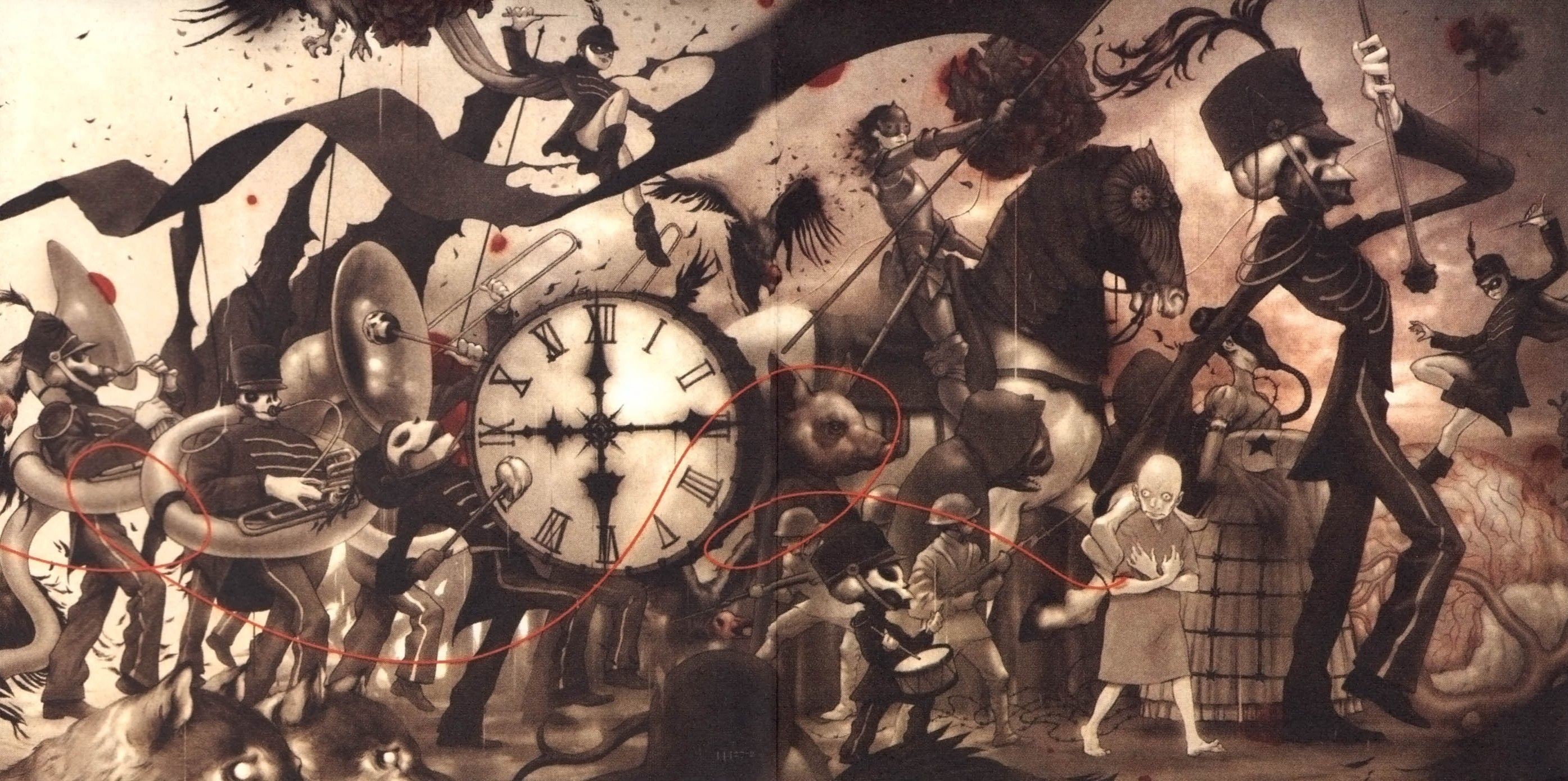
For their next album, it seemed the band had the need to reinvent themselves...literally. Similar to the Beatles' approach to "Sgt. Pepper's Lonely Hearts Club Band", My Chemical Romance created an alter ego band known as the Black Parade; they even had their own marching band uniforms. The separate band idea was also applied to their tour for a good while, with the Black Parade performing the entire album, followed by My Chemical Romance after an intermission to play older songs.
The concept this time around focused on a character called "The Patient" who is dying of cancer, with the album detailing his passage out of life as he comes to terms with his past actions and relationships. The eponymous Black Parade comes from Gerard's notion that death comes to a person in the form of their happiest memory; for the Patient, it was of his father taking him to see a parade as a child.
Compared to their other albums, "The Black Parade" is classified as a rock opera. At the time this album came out, I was starting to get into Green Day thanks to their own rock opera, "American Idiot". When I heard "Black Parade" was also a rock opera, my interest was piqued. There was also the fact that the music videos for "Welcome to the Black Parade" and "Famous Last Words" were directed by Samuel Bayer, who also directed all of Green Day's videos from "American Idiot."
I didn't really appreciate the video for "Welcome to the Black Parade" when it first came out. After learning the context, I loved how it captures the story of the album, from the designs of the city and the Parade itself with all the characters, even though its not as outlandish as in Gerard's drawings in the album art.
The song itself is also considered one of the band's most iconic, from just the piano beginning alone.
As for the sequel video in "Famous Last Words", something about it drew me in immediately. It's very simple with the band playing with fire behind them, but there's the sense that everything is falling part, including the band itself. Considering "Famous Last Words" is the final track of the album (not counting the hidden bonus track "Blood), it makes sense that the video would be done as such a grand conclusion as the song itself does for the album. It's honestly my favorite My Chemical Romance song period; much like "I'm Not Okay", I also sang this at my senior year talent show.
As the videos show, this was a point where the band included more theatrics in their live performances. Initially in the tour at the start of the show, Gerard would come out as the Patient on a gurney and wearing a hospital gown to sing the opening stanza to "The End." before ripping it off when the rest of the band kicks in. Other effects included confetti shooting out during "Welcome to the Black Parade" and pyrotechnics during "Famous Last Words" to match the video. This level of theatricality is one of the reasons I would have loved to see the band perform in person; even without the theatrics, live MCR has a much different energy compared to album MCR. It's worth noting that the band released their last performance as the Black Parade on the live video album "The Black Parade is Dead!" It is just a live version of the album, it's still worth watching as it adds more to the experience in my opinion.
Something I've realized during my re-listening to the albums is that Black Parade has a theme much different from the others: isolation. Within the dark lyrics in "Bullets" and "Revenge", there's still this idea of wanting the best for others, even if it means you have to suffer yourself. Black Parade however has a much more selfish tone. There's conflict in the Patient, as while he wants to make peace with his past, it's very hard to so with what little time he has, and it causes him to lash out at others; in addition to fear of death, it's possibly fear of redemption as well. Between "Disenchantment" and "Famous Last Words", the end of his life marks his acceptance of both his selfish nature and that it's his time of passing.
I was so enthralled with this album that I actually wrote out a script for a musical based on it. There was a lot of research involved, making sure I understood the meaning of each song and that I could include enough characters to warrant it as a play, with some characters featured in the music video (Fear, Regret, Mother War) as well as some new ones I felt were needed that fit with certain songs and help the story (like a doctor and a priest). One of my intents was to pitch it to my high school drama club. Part of that involved cleaning up some of the lyrics where I could, and the biggest challenge was with "Mama"; that's probably the darkest track on the album, even without the "We all go to hell" line constantly repeated. I even had this idea that below the stage could be an actual band playing the songs, acting as a kind of orchestra pit. Alas, nobody really went for it, thinking of just the music video and not really listening when I tried to explain how much deeper it was. It was probably just as well though, since I'm not sure if my vision would have been properly brought to life. The script itself though was lost when the computer I wrote it on crashed. It's really something I should return to at some point, and it may be the writer in me never fully satisfied with my work, but I always thought it could have used a polish even before I lost it. All in all, I really think even if not me, someone should attempt a Black Parade musical; it certainly worked for "American Idiot."
It's really hard to pick other favorite songs from the album as "The Black Parade" is just so epic that each song has something to love about them, like each chapter in a book. As one of my all-time favorite albums, I highly recommend checking it out to those who haven't.
DANGER DAYS: THE TRUE LIVES OF THE FABULOUS KILLJOYS (2010)
After Black Parade, My Chemical Romance wanted to scale things back and be more of a rock band again like the first two albums. This lead to "Danger Days: The True Lives of the Fabulous Killjoys." Like the previous albums, there's a concept behind it. "Danger Days" takes place in a post-apocalyptic Battery City, California, and focuses on a band of rebels called the Killjoys (portrayed by the band members in the music videos) as they battle the evil corporate forces of Better Living Industries, also known as "BL/Ind", who control the populace. The story of the album is told through the music videos for "Na Na Na" and "Sing".
A couple fun facts: 1) The bald villain known as Korse is played by comic book writer Grant Morrison, who has done groundbreaking runs on Justice League, Batman, and Superman. 2) This story apparently takes place in 2019, so we have about 9 more months for this to come to pass.
Between the music videos and album art, not to mention the album interspersed with broadcasts from pirate radio DJ Dr. Death-Defying, the band does a great job at world building much like they did with the Black Parade.
If it isn't clear, "Danger Days" is drastically different from the previous albums. It shows from the "Na Na Na" video that they certainly wanted to have some fun, which goes with how they were just wanting to be a rock band again and do something simpler after such a grand endeavor with "The Black Parade". It can be described as the most "poppy" sound from the band, and I myself even consider it to be a "party album." There's also much less focus on death and horror, and fans who were drawn to that could be disappointed. As for me, I instantly loved this album when it came out. Even if the sound has changed, "Danger Days" doesn't lack My Chemical Romance's ability to connect to fans on a personal level. The struggle of the Killjoys against BL/Ind. is symbolic of that. BL/Ind.'s control of people can be seen as a stifling of individuality and creativity. The songs on the album include the themes of the Killjoys' mission statement: don't be afraid to be yourself, stand up for what you believe in, let truth reign over the lies, stay vigilant of those who would do harm, and be there for your friends.
All the songs on the album have a fun sound to them, though these are the ones that stood out to me:
* Bulletproof Heart: This is probably my favorite song of the album. It just has a great structure from start to finish, with the music rising and falling when it needs to. It also contains the "be yourself" message I talked about in a more "us vs. the world" nature. I also included this song on a playlist I made for the first "Amazing Spider-Man" film when it was coming out.
* Summertime: For what is their most poppy album, "Summertime" is the most poppy song, but not in a bad way. It's definitely a love song set within the "Danger Days" world, and it's probably the sweetest MCR song. I also like to think it's called "Summertime" as if it's their attempt at a "pop song of the summer". It's kind of a shame it wasn't a single, as I think it would have succeeded as one.
* Vampire Money: This song was written in response to My Chemical Romance being asked to and refusing to do a song for "Twilight". It's basically about not wanting to do things just because they're popular at the moment. And let's be honest, "Twilight" really was just a fad; hardly anyone talks about it anymore compared to "Harry Potter." The only good things to come from it were songs like Paramore's "Decode" and Muse's " Neutron Star Collision".
* The Kids From Yesterday: To me, this song is about reflection. I like to apply it to school graduations or bidding farewell to a friend moving away, as they can evoke a lot of memories as one era ends and another begins. I think the band views it the same way, since the music video is made up of clips of past live performances.
"The Kids From Yesterday" and "Danger Days" overall are a testament to the artistic evolution of My Chemical Romance. No longer were they a bunch of young men full of pain, but a well-rounded rock band who have changed not only their lives, but those of millions. I think the simplest way to describe the band from album to album is summed up in this image.
CONVENTIONAL WEAPONS (2012-13)
I'm technically cheating on this one in a couple of ways. For one, it's not a true album but a series of singles released between October 2012 and February 2013. Secondly, these songs were recorded prior to "Danger Days", so it's technically their third and a half album. Nevertheless, I still treat "Conventional Weapons" as if it were an album in its own right.
Tonally, "Conventional Weapons" is the bridge between "Black Parade" and "Danger Days." There's a harder sound and somewhat darker imagery, with the best example I think being someone going through a windshield in "Surrender the Night." As these songs were written during production of "Danger Days", there's a lot of connective tissue:
* "Boy Division" contains the "We got the bomb" lyric from "Vampire Money."
* "Make Room" contains "Na Na Na"'s lyrics of "Everybody want to change the world but no one wants to die", as well as some similar background vocals from "Party Poison."
* Some songs between the albums have similar messages, even if they are tonally and structurally different: "Bulletproof Heart" and "Ambulance", "The Only Hope For Me Is You" and "The World is Ugly", and "Save Yourself, I'll Hold Them Back" and "The Light Behind Your Eyes."
Whether you call it a prototype, darker version, or bonus material, "Conventional Weapons" is definitely connected to "Danger Days", and these are just the most blatant examples I can think of.
My overall favorite song from the album is "The World is Ugly", and I also consider it my second favorite MCR song behind "Famous Last Words". It has a beautiful melody from start to finish that's easy to get into. When the song was released, I viewed it perfectly summed up the way I felt about someone I had strong feelings for at the time. And though those feelings weren't reciprocated, the connection I make with the song doesn't take away how great it is. Plus, the ending lines have callbacks to "Vampires Will Never Hurt You", "Demolition Lovers", and "You Know What They Do To Guys Like Us In Prison."
For an album with only ten songs, it's real easy to have other favorites, those being "Boy Division", "Gun", "The Light Behind Your Eyes", and "Burn Bright."
* "Boy Division" starts the album out strong, and much like "Our Lady of Sorrows" and "Give 'Em Hell, Kid", has a lot of energy in its short run time.
* As far as I can tell, "Gun" seems to be the only obvious political song from the band. It's very anti-war, particularly the Middle East conflict ("Can I bleed enough to fill up what the engine takes?") The song seems to be about a young recruit who goes from being excited about enlisting, from getting his gun and uniform, and later realizing the traumatic effects and dangers of combat, like not having a family.
* To me, "The Light Behind Your Eyes" is a song about friendships from past and present and how important they are. You miss the ones that were lost and would do anything for those currently in your life, with the passion about it showing through Gerard's vocals as the song goes on. In the context of "Danger Days", I see it as a song about the Killjoys' struggle, how they've lost comrades but are still willing to put their lives on the line for others all the same; that's why I see "Light Behind Your Eyes" as a more somber version of "Save Yourself, I'll Hold Them Back."
* "Burn Bright" has a real sense of finality to it. While I think it can apply to a break-up, it closes out the album in grand fashion, and for a time, it was essentially the last MCR song before their break-up.
For a non-album album, it's a worthy addition to the My Chemical Romance library and shouldn't be overlooked.
A month after the final "Conventional Weapons" release, My Chemical Romance announced their break-up on March 22, 2013. A year after that, they released a greatest hits album, "May Death Never Stop You", including one last new song, "Fake Your Death." Many fans feel the song title is the band's way of saying it's just a break and that they could return someday. There's nothing wrong with being hopeful, though as we're now on the sixth anniversary of their break-up, there's no telling when that could be. The band members have gone their separate ways within the music industry, as well as Gerard giving more attention to his comic book career. Everyone seems to still be on good terms with each other, as Gerard says he's open to a reunion someday, though everyone is happy doing their own thing right now.
Even if the band doesn't come together again, My Chemical Romance still lives on through their music and the fans they continue to make through it. They will always have a place in my CD rotation. Should the day come where they do go back on tour again, you can be damn sure I'll bite at the chance to finally see them live. Until then, continue feeling the revenge, long live the Black Parade, and Killjoys, keep making noise.