While it had some good elements in place, the 2016 Suicide Squad film is my least favorite entry in the DC Extended Universe. As it turns out though, the film had as much of a troubled production as "Justice League" so that's another cut that needs fighting for (keep #releasetheayercut going). For what WB wanted to be their answer to "Guardians of the Galaxy", it seemed they tried too hard to make that happen. When it came to the sequel, they were able to get that Guardians magic from the source by signing James Gunn on as director during his brief break-up from Marvel. With free reign on "The Suicide Squad", Gunn has brought his creative insanity to DC and gives what is surely one of the best and funniest films in this universe.
To be blunt, "The Suicide Squad" is everything WB wanted the first film to be while at the same time being its antithesis. The first film had a dark aesthetic that made some of the over the top elements feel out of place. Gunn's film however is able to find the right balance, popping with color like a comic book and features action that is as bloody and gory as you'd expect from a film about a clandestine supervillain team, some of whom are not shy about how demented they are. Each character feels vital to the story (for better or worse) and the CGI use for the main villain looks much more believable than before, and that's really saying something considering it's giant freaking alien starfish this time around. It really plays into the air of weirdness this film brings that's much akin to "Doom Patrol."
Something interesting is that from the beginning of the film, they make it clear that Task Force X has been at work even after the events of the first film with rotating members. There's even secret dead pools between those who work at the command center. And on that note, one of the taglines for the movie was "Don't get too attached." That is definitely accurate and is part of the film's way of subverting expectations. You know some characters are going to die, but you shouldn't base your guess on the popularity of a character or an actor. There will definitely be moments where you'll be like Randy Marsh on Black Friday.
Like the first movie, I do have some analysis on a few characters. * Viola Davis' return as Amanda Waller is a reminder of just how scary her character can be. While not technically a villain, it's not hyperbole to say she is the most evil character in the film.
* I really enjoy Joel Kinnaman's portrayal as Rick Flag this time around, coming off more as a natural and likable character. Development wise, I think he's learned a lot from the first time in terms of trust and respect towards those on the Squad; he's even willing to put the mission on the line to save Harley. Speaking of which... * What else can be said about Margot Robbie as Harley Quinn? She once again turns in a funny and badass performance. At this point, Harley is shown to be much more independent, having finally let go of her relationship with the Joker. Despite her peace of mind though, there are two pretty awesome moments in the film that show just how damaged and deadly she truly is. * Idris Elba brings his A-game as Bloodsport, who is essentially our lead character of the film. Reportedly, Elba was originally set to replace Will Smith as Deadshot due to Smith's unavailability but was later swapped out for Bloodsport in the event Smith was able to return for a future film. With that in mind, throw in a few rewrites and it's very easy to see Deadshot fitting in this film. Putting that aside though, Bloodsport is a pretty good character. I like how he acts as a father figure to Ratcatcher (played by Daniela Melchior) and his rivalry with Peacemaker (played by John Cena). In regards to the latter, it's really interesting how similar they are in terms of their proficiency at killing but their motivations are completely different. Bloodsport is a mercenary who kills for the money while Peacemaker does it out of enjoyment and a warped sense of freedom; I really got a sense the comparisons between the two is commentary on race and privilege.
* King Shark (voiced by Sylvester Stallone) is kind of like Groot, but with a slightly higher vocabulary and much more carnivorous.
* As a Doctor Who fan, I really enjoyed seeing Peter Capaldi as the Thinker. Much like David Tenant as Kilgrave in "Jessica Jones", there's something quite fun about seeing a former Doctor bringing their flare to a more villainous role; though to be honest, it was very believable to see Capaldi break bad by comparison.
Overall, "The Suicide Squad" is freaking awesome and freaking nuts with fun characters and fun action. It's both a case for how much a project can benefit when an artist is allowed to create without interference and a prime example of a film worth going back safely to the theater for.
Since its publication between 1996-97, "The Long Halloween" by Jeph Loeb and Tim Sale has been regarded as one of the best Batman stories of all time and its influence can be seen in adaptations of the character, including Christopher Nolan's Dark Knight trilogy. While it took awhile to get there, the story was a prime candidate for DC's animated film line and much like "The Dark Knight Returns", it got the two-part treatment. Nearly 25 years after the original, the film adaptation is able to capture what makes "The Long Halloween" so great and still relevant to the Batman mythos.
While the film adaptation takes quite a few liberties, it doesn't really hurt or distract from the original in any way that can disappoint those familiar with the story. It's able to tell its own story while still capturing the tone of the original and being respectful to it. At a nearly three hour runtime, my eyes were glued to the screen the whole movie, not feeling bored or wanting to check my phone at all. With the heart of its story being a gangland murder mystery, the film was able to create a dark and gritty tone (thanks in part to the score or in some scenes lack thereof) as the hunt for Holiday goes on.
The art style doesn't directly lift from Tim Sale's illustrations, but there are times where it does its best to homage it. Much like the original story though, the art is able to capture a mostly timeless feel. It actually reminds me a lot of "Batman: The Animated Series", especially with its use of traditional mob bosses and gangsters, something I don't think an animated Batman adaptation has done since then. As for the animation, well, this is something I've wanted to address for awhile now. "The Long Halloween" film is set in the unofficial rebooted DC Animated Movie Universe that began with "Superman: Man of Tomorrow" and "Justice Society: World War II" and shares the same look as those films. I haven't watched those films because because their look just didn't appeal to me. It reminds me a lot of Venture Bros.; while that's not necessarily a bad thing, it's a style for DC that comes off as cheaper compared to their previous animated works. That being said, when the animation works, it works. The action scenes flow really well and you can be enthralled in the characters' conversations that you don't care how it looks. But there are still moments I noticed where it feels like they cut some corners. I'll admit I'm more inclined now to check out those aforementioned Superman and Justice Society films despite my initial feelings. I also give the film bonus points for the Scarecrow fear gas scenes as they create a nightmarish style different from the rest of the film.
The voice cast is absolutely stellar. Veteran Batman voice actors return like Alastair Duncan as Alfred and Troy Baker as Joker while Jensen Ackles gets a promotion from Red Hood to the Dark Knight himself. For his first time out, Jensen settles comfortably into the role, being able to switch seamlessly between Bruce's voice and Batman's. And as a rookie Batman still rough around the edges, Ackles is able to capture the wariness in the character's voice as he tries to become a better crusader. As the DCAMU's new Batman, I really look forward to Ackles' future appearances as the character. With an abundant cast of characters also lead by Josh Duhamel as Harvey Dent and the late Naya Rivera as Catwoman, there's not one voice actor who sounds out of place. Well, there is one exception in Zach Callison as an eight year old Bruce. While Callison is a talented actor and only has a few lines, his performance makes it sound like Bruce went through really early puberty; I guess he can't hold on to that young Steven Universe voice forever.
Overall, "Batman: The Long Halloween" delivers another entry into the Batman animated film hall of fame. I can't recommend it enough and I have my fingers crossed that the story's sequel, "Dark Victory", is also on the table for an adaptation.
As one of the original six Avengers in the Marvel Cinematic Universe, Scarlett Johansson's portrayal of Natasha Romanoff/Black Widow has consistently been a great part of each film she's appeared in over the last decade. From her sultry appearance, complex background, ass-kicking skills, and deep connections made with her teammates, Johansson has been able to capture all these aspects of Natasha. It's a shame that corporate politics kept her from getting her own solo film for so long, especially after the fact that the character sacrificed herself in "Endgame". After so much waiting though, the highly demanded and anticipated film is able to deliver a serviceable solo adventure and return to theaters for Marvel.
Set directly after "Civil War", Natasha is on the run for her actions during that film and soon finds herself drawn into a conflict that forces her to face family and enemies from her past. For what's meant to be Scarlett's swan song as the character, the film allows us to dive deeper into Natasha's past (good parts and bad) and see what made her the person we're familiar with, as well as feature some call backs to some of her best moments from previous films. I could also see how Nat needed to go through the events of this film in order to build up a spark of hope that she'd hold on to later on in "Infinity War" and "Endgame."
Probably the best aspect of the film is Natasha reuniting with the undercover Russian family she was part of as a kid. Yelena Belova (played by Florence Pugh) acted as Nat's younger sister and went through the same Red Room training, unable to get out until the events of this film. While two decades had gone by since they last saw each other, the sisterly bond between them is clearly alive despite their misgivings surrounding the circumstances of before. They really do act like grown siblings with each other, with Nat still looking out and wanting the best for her while Yelena has a more bitter sweet attitude; she admires her "sister" but still likes to make fun of her tendencies, though there seems to be a sense of resentment considering Natasha's world famous status as a hero despite where they both came from. What I really like about Pugh's performance is a sense of innocence she's able to convey (especially in her eyes); as she was the youngest of the family unit, her time with them meant a lot more to her emotionally and stayed with her into adulthood. I really look forward to where the future takes her as the MCU establishes the next legacy character. Alexei Shostakov (played by David Harbour) acted as Nat and Yelena's father and was Russia's only successful super soldier, going under the name "Red Guardian". This character reminds me a lot of Mr. Incredible in the first Incredibles film; he's someone who clings heavily to his past glory days and has to realize the significance of having a family. You can see he cares and has a sense of pride in his girls, but it's for the wrong reasons at first as he struggles to develop a true fatherly love. Melina Vostokoff (played by Rachel Weisz) was the wife/mother of the unit, and while she does seem to have a strong bond with everyone and there were some good moments between characters, she didn't really stand out to me compared to Yelena and Alexei. If I can give the character anything, it's that I enjoyed the flirting between her and Alexei, hinting that their relationship did run deeper than a front.
While not our main villain and a little different from the comics (which we should expect from MCU versions at this point), I really did like the use of Taskmaster in the film. For a character that mimics others, they did a good job in how the character moved where you can clearly see the parallels to Captain America, Black Panther, Hawkeye, etc. When not fighting, the way Taskmaster acts is pretty creepy. Relentless on the mission and silent aside from breathing, it really reminds me of a combination Darth Vader and the Terminator. The character made for some entertaining fight scenes, even though the free fall scene in the film's climax could have took things a lot further, but it could have ran the risk of being too outrageous even for Marvel.
Though the film can be considered Marvel's version of a spy thriller, I see some elements of "Winter Soldier" and "Captain Marvel" on display here. Unfortunately, this is where I feel the film falters in my opinion. Unlike "Winter Solider", the twists "Black Widow" tries to deliver didn't really seem to have the impact they were hoping for on me. I kind of chalk this up to our main villain, Dreykov, not being that interesting. We already know he's bad and he's pretty much a stereotypical Russian villain; it felt like a poor attempt at trying to duplicate Robert Redford as Alexander Pierce. And while there is a feminist message, I honestly feel "Captain Marvel" did it better. They do do it in different ways with Captain Marvel being about "don't underestimate women" and Black Widow being "don't allow yourself to be subservient"; both are good lessons, but the message in "Captain Marvel" directly tied to Carol's arc while Natasha had long established herself as an independent person who already escaped her bonds.
While not one of Marvel's strongest, though certainly not their weakest, "Black Widow" nonetheless still delivers a film worthy of the character and should satisfy those who waited so long for it to happen, bringing with it a unique family dynamic and entertaining action. For Marvel's first theatrical release in two years, their return entry is surely a welcome one.
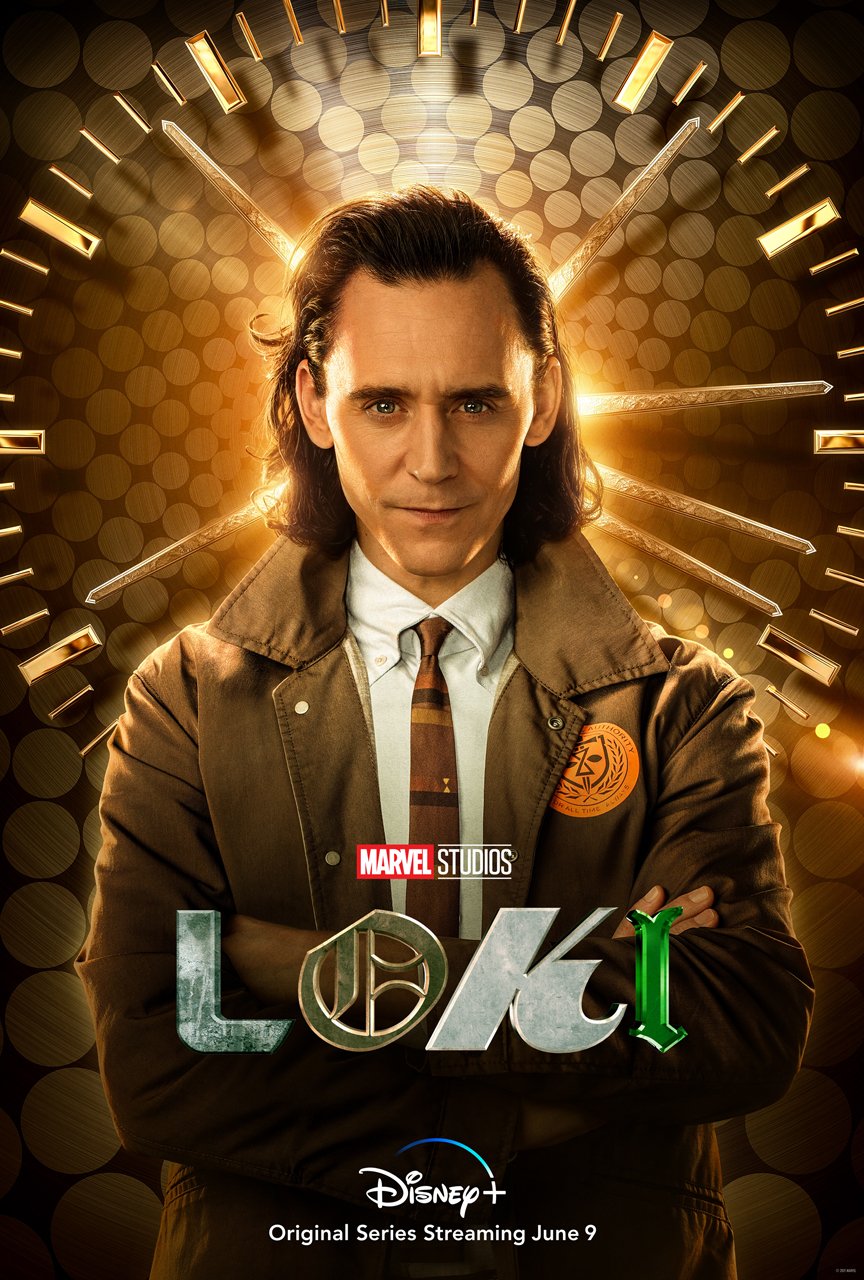
Since his debut in 2011, Tom Hiddleston has consistently stolen the show and our hearts as the god of mischief, Loki. His role as a villain and path of redemption made for one of the best character arcs in the Marvel Cinematic Universe until the end with his (final) death at the hand of Thanos in "Infinity War." But it seems not even death can keep Loki down. Thanks to the Avengers' time travel shenanigans in "Endgame", a version of Loki from after the battle of New York had escaped imprisonment, leading into his very own Disney+ series. And of the three Disney+ Marvel series so far, "Loki" may have the biggest impact on the future of MCU yet.
Despite his escape from the Avengers, Loki is quickly picked up by the Time Variance Authority (TVA) for his deviation from the set course of events in the "sacred timeline". It's at the TVA we learn more about the rules of time travel and the prospects of a multiverse in the MCU; while I still have questions about how certain things work (even more so from what was already established in "Endgame), they still do a good job explaining the main concept. While most variants are quickly erased, this Loki is kept around to help capture another variant of himself that is eluding capture from the TVA; you could see this idea as a mix of "Quantum Leap" and "Silence of the Lambs." Tom Hiddleston delivers probably his most engaging performance as Loki yet. First and foremost, how he adapts to his new surroundings is really fun. He's truly a fish out of water, being treated like a true prisoner with few comforts and dressing in traditional workplace clothes as opposed to the fancy threads we're accustomed to seeing him in. The best parts though are when he needs to come to terms with the destiny that was originally laid out for him and realizing what he truly wants out of life. It shows that despite his villainous nature and his past deeds, there is something of a hero buried deep down, perhaps even more so in this version than his "sacred" counterpart. There are more Lokis besides Hiddleston's "sacred variant" though, as we go full "Into the Spider-Verse" with different versions of the character portrayed by different actors. Sophia Di Martino, Richard E. Grant, and Jack Veal are just a few bringing their own spin to the character while also portraying versions comic fans are familiar with. It's really entertaining watching the different versions play off of each other, with the relationship between Hiddleston's and Di Martino's one to root for.
Something to really think about in the series is how Loki's deceptive nature permeates throughout the whole series and with almost every character. Loki appears to want to help the TVA but he of course has his own goals in mind, but the way Hiddleston plays it makes you really think Loki could be genuine in the former. This spreads to the other Loki variants as well as those within the TVA. Just when you're feeling one way about a character, something happens that flips that switch. The only character Loki and the viewer can really trust is Agent Mobius, which isn't hard given the wholesome performance of Owen Wilson.
Where "Loki" lacks in action (though what action it does include is quite decent), the series at its core is more philosophical. With questions surrounding ideas such as free will, destiny, and morality, the series will give you a lot to think about.
Of course the biggest thing to come out of this series is the official establishment of the multiverse in the MCU, both past and future. The first episode states that wars between worlds in the multiverse were constant until everything was folded into one timeline, with the TVA charged with keeping any branches from forming. From the outside, the idea of alternate timelines is exciting, especially since it's a common trope in comics and general audiences have seen the concept through "Spider-Verse" and DC's Arrowverse; keeping everything to one timeline can seem boring. However, there is a well crafted sense of dread in the final episode as the new multiverse begins to take shape; the way the single straight line of the timestream begins to branch out in various directions make it seem like reality itself is cracking. Despite the excitement of what's to come, it comes across like a real "Oh shit" moment. Because of this though, we can see how the events of "Loki" will reverberate not only when the series returns for its announced second season (whenever that may be), but throughout the MCU as a whole. The "What If..." animated series and "Doctor Strange in the Multiverse of Madness" are prime examples, but "Spider-Man: No Way Home" will take it one step further by most likely giving us an idea of how Sony's partnership with Marvel will lead to crossovers with their their own Spidey related films both past and future. Beyond what we already know is coming, the finale firmly establishes who our next Thanos-level villain for the MCU will be and it's my speculation things will culminate with a film based on Jonathan Hickman's "Secret Wars" event from 2015.
In conclusion, "Loki" brings complex new layers to the MCU with a promise of infinite possibilities. It's creative and thought provoking with a talented cast whose chemistry together play a part in turning out exceptional performances. The combination of concept and execution certainly make this series essential viewing for Marvel fans.
Premiering on Kids' WB! in 2004, "The Batman" was a different kind of animated series for the Dark Knight. Its initial premise focused on a younger Bruce Wayne still carving out his path as a vigilante, facing some of his biggest villains for the first time and evading capture from the police. As the successor to the critically acclaimed "Batman: The Animated Series" (and by extension Batman Beyond), "The Batman" certainly had a tough act to follow. Nevertheless, the show acquired a following and lasted five seasons before ending in 2008. Unlike its predecessor though, "The Batman" has seemed to fall into obscurity. I myself haven't watched it in years, which is kind of a shame since this series played a part in reigniting my love for Batman in conjunction with the release of "Batman Begins" in 2005. I started rewatching the show on HBO Max and found it holds up mostly well. "The Batman" did a lot of revamps to the mythology of the character, with the results being a mixed bag; some changes were done very well while others were iffy at best. Overall, I consider "The Batman" the silver medal in terms of animated series that could serve as an introduction to Batman, even if didn't live up to its full potential in some areas. The series produced one direct to video movie in October 2005, "The Batman vs. Dracula". Very loosely based on the graphic novel "Batman and Dracula: Red Rain", it's pretty much what you expect. The legendary vampire finds himself resurrected in modern day Gotham City and seeks to rebuild his undead army, and only the Batman can put a stop to it. I was going to save revisiting this until October to line up with Halloween, but since I've been rewatching the show, I figured I'd keep the train going and look at this a little earlier. So let's consider this "a midsummer's nightmare." And as it turns out, "The Batman vs. Dracula" is actually even better than I remember.
Essentially the film succeeds at combining the superheroics of a Batman story and the horror elements of Dracula. This is evident right off the bat (yeah, I know what I did there) with the opening credits as the score is a mix of the show's music and something reminiscent of the opening music from the 1931 Dracula film. Those familiar with that classic will pick up other similarities in this film with Penguin filling Renfield's role as Dracula's human servant and Dracula's infatuation with the female lead, Vicky Vale in this case, and making her his bride. As mentioned, the film does have a horror feel to it, doing as much as they can without featuring anything too traumatizing. While it is technically unrated, I'd consider it a PG, which is saying something considering "The Batman" was rated TV-Y7. With the direct to video release, this allowed the makers of the show the chance to push themselves without the constraints of a network Saturday morning cartoon show. While "The Batman" didn't delve as deep into mature themes as "Batman: The Animated Series" and could be considered more kid friendly, that didn't mean it talked down to anyone or ignore some of the franchise's darker elements. One of the things that really stood out to me of the darker atmosphere the film produced was just how grimy and maybe somewhat totalitarian Arkham Asylum really was in this show, as well as how some can play the legal system and get a lighter sentence by pleading insanity in lieu of jail time.
The portrayal of Dracula (voiced by Peter Stormare) is on point with how the character should be, and in this rewatch, I realized that he fits really well as a Batman villain in ways than just having a bat motif. Most Batman villains can be seen as dark reflections of our hero, and Dracula here is no different. Dracula egotistically believes that it's his legend that inspired the modern day Batman of Gotham, and even the people of Gotham are accusing Batman of the growing number of missing people (referred to as the "Lost Ones") who are in reality being turned into vampires to grow Dracula's army. And while Dracula doesn't realize Batman is Bruce Wayne until the climax, this also brings about the similarity of both being seemingly elegant gentlemen to the public while hiding their dark secrets. I also like how Dracula's design is shown to be an anti-thesis to Batman with his cloak having similar scallops and red highlights compared to the blue in Batman's cape and cowl. By extension, I really enjoy how vampirism is depicted in the film. The vampires' designs are shown to have deformed almost bat like features, reminding me somewhat of the vampires from "30 Days of Night". There's also a cool feature where the vampires have this kind of x-ray vision when they sense a beating heart and see the blood flowing throughout it and the body's circulatory system. Lastly, what's also interesting is that despite the supernatural aspects of vampirism, Batman approaches the threat scientifically, eventually producing a serum that cures Dracula's victims. Not only does it allow for the movie to keep a kid friendly tone by reverting the vampires rather than kill them, but it really highlights the power of Bruce's mind as both a detective and a scientist.
Vicky Vale (voiced by Tara Strong) is brought in for her first and only appearance in the world of "The Batman" as Bruce's love interest, and it's the closest the series ever had to romance compared to its predecessor. Vicky and Bruce are shown to truly care about each other, though Bruce's activities as Batman keep him from letting her get to know the real him despite her desire to break down his walls. It's very similar to the 1989 Tim Burton film, even with what may be an homage to it with Vicky looking at old newspaper headlines including the night of his parents' murder. Unfortunately there's no real resolution to their relationship in this film and I feel it's left ambiguous whether Vicky figured out Bruce was Batman during the climax; when the final fight with Dracula began, Batman told Vicky to run, and I kind of think he yelled in Bruce's voice rather than Batman's. I really wish the film had an extra scene to wrap up their story or that they could have brought Vicky back in the proper show.
A real highlight of the film is the use of the Joker (voiced by Kevin Michael Richardson), particularly after he is turned into a vampire himself. After being transformed, he breaks into a blood bank and begins to gorge himself. Batman arrives and the two battle, during which shelves of vials falls against the wall. Blood begins dripping down like rain and completely drenches Joker, who is shown to be in pure ecstacy from it, allowing Batman the chance to incapacitate him with a garlic bomb to the face. And in case you're wondering, the scene is lighted in a way where the blood isn't shown to be red since that definitely would have been pushing the limit of what they could have been allowed to do; still pretty disturbing under any circumstance. Afterwards, the Joker is locked in a far off corner of the Batcave so Batman can use him as a test subject in his goal of creating a cure. These scenes are like watching an addict go through detox as Joker is shown suffering from bloodlust and begging for Batman to "feed him", going so far as to eat a passing cockroach. Aside from the vampire parts, something I noticed this time around is just how complicated Batman and Joker's relationship is. In their first fight of the film before Dracula is revived, the Joker allows himself to fall into the river to avoid capture not realizing his electrocuting joy buzzer is damaged. Once he hits the water, the Joker is shown being electrocuted and convulsing from the shocks until eventually submerging; I honestly forgot how freaky that part was. Batman's reaction afterwards is almost like mourning; despite how much of a monster Joker is, it really shows how sacred life is to Bruce that he wouldn't wish death on even his worst enemy. But of course Joker survived (because the Joker always survives), encounters Dracula, gets turned and then taken prisoner by Batman. Eventually, Batman does give the suffering Joker a bag of his own blood. While Batman may not care for the Joker as much as the other seems to in his own way, this act at least shows that Batman has some sense of pity for the clown prince of crime.
Other things that work about the movie are really things that worked for "The Batman" in general. The voice acting and music are still on point, and the highly stylized character designs and art direction by Jeff Matsuda (whose style you may also recognize from the Jackie Chan Adventures cartoon) make for some pretty good fight scenes and an awesome climax. And while Joker and Penguin were really overused over the course of the show, the roles they played in the film were fitting and did have some purpose.
Overall, it was nice revisiting "The Batman vs. Dracula" with an analytical eye and enjoying it even more now than I already did when I was younger. Unfortunately, this film isn't available on HBO Max at the time of this writing, which means it's probably more obscure than the series it spun off from. Nonetheless, I really recommend tracking down a DVD copy if you can. Whether you're a fan of Batman, Dracula, vampires, or horror in general, "The Batman vs. Dracula" is definitely something worth sinking your teeth into.
WARNING: This post will contain spoilers for both "Rick and Morty" and "Gravity Falls". If you have not watched one, the other, or both, stop reading now.
While only making two canonical episode appearances, "Rick and Morty" fans have speculated much about the backstory and plans of Evil Morty, while also anticipating his return. With the release of a recent "Rick and Morty" animation though, it's possible this character may have some connections to the main villain from one of Disney's best modern animated series, "Gravity Falls" (which I highly recommend checking out on Disney+ if you've never watched it).
In this callback to classic video games, "Rick and Morty in the Eternal Nightmare Machine" features our eponymous duo battle through various characters and easter eggs from the series to fix the corrupted simulation they're in, eventually coming head to head with the final boss, Evil Morty. Throughout this animation, there is a symbol that keeps popping up, that of the eye in the triangle, particularly when it came down to Evil Morty. For fans of "Gravity Falls", it'd be hard for Bill Cipher not to come to mind. For those unfamiliar with "Gravity Falls", Bill Cipher was the main villain of that show, being a demon from the Nightmare Realm that was bent on taking over the real world. Conniving and manipulative, Bill would trick others into accepting deals, even going so far as to possess people, furthering his own goals under the guise of helping his pawns. He was essentially a shifty salesman with an upbeat personality and demented delights.
While the "Eye of Providence" dates back to 1782, connecting the short to Bill Cipher is easy to do when "Rick and Morty" has made multiple hidden connections to "Gravity Falls". This is due to the fact that "Rick and Morty" co-creator Justin Roiland and "Gravity Falls" creator Alex Hirsch are good friends. Roiland also worked on "Gravity Falls", even providing character voices including the time travelling Blendin Blenjamin Blandin. Throughout "Rick and Morty", there have been many 'blink-and-you-miss-it" connections to "Gravity Falls". The most prominent example comes in the episode "Close Rick-counters of the Rick Kind", where a pen, notepad, and coffee mug fall through a portal; these same items were also lost by Stan Pines in the "Gravity Falls" episode, "Society of the Blind Eye" as he was working on a secret portal machine. When it comes to Bill Cipher, imagery reminiscent of Bill and hidden references to him can be spotted in "Rick and Morty" episodes such as "Big Trouble in Little Sanchez", "Rickmancing the Stone", and "Morty's Mind Blowers". Even the "Eternal Nightmare Machine" short that sparked this post (despite its non-canonicity) features similar symbols that appeared in the "Gravity Falls" episode, "Into the Bunker". Hirsch has also returned these references in kind with the physical copy of Journal 3 from the show published by Disney, with silhouettes of a plumbus and a Zigerian from "M. Night Shaym-Aliens!" featured, as well as a hidden message that when deciphered references Rick. Given the interdimensional aspects of both shows, it's also a popular fan theory that Rick and the character Ford Pines have encountered one another.
So given these connections and the imagery that came to mind in "Eternal Nightmare Machine", could there be a connection between Evil Morty and Bill Cipher, or even that they're one and the same? While the two shows did air concurrently for a time before the end of "Gravity Falls" in 2016 and some plot points may not line up perfectly, there's very much left a mystery when it comes to characters from both shows. Rick's and Ford's own adventures through the multiverse come to mind, but for this post specifically, we'll focus on Bill Cipher's machinations. Though Bill had his eye set on Ford's home dimension, it's very possible Bill had back-up plans. After all, when Bill appears to be dying in the "Gravity Falls" series finale, reversing his dialogue reveals a hidden message that could hint at his possible return (and future "Gravity Falls" content at that"):
Now if Ford had met with Rick on his travels, who's to say that Bill couldn't have as well? Or in this case, maybe Bill came across a Morty. Another theory regarding Evil Morty is that he's the original Morty of the main Rick on the show, having been abandoned and most likely left to die. This Morty could have encountered Bill and made a deal, with Bill taking advantage of Morty's situation and stoking a hatred so strong for Rick that he wants to take it out on all Ricks across the multiverse.
When you think about it, there are many similarities between Bill Cipher and Evil Morty. To get the obvious one out of the way, both have yellow in their designs. For real though, when we first meet Evil Morty in "Close Rick-counters of the Rick Kind", he is shown wearing an eye patch, giving him one eye to see, much like Bill. However, the eye patch is a device this Morty was using to control the Rick he had at his side to take the fall had his plans go sideways. This is very akin to Bill who can possess the body of a person he makes a deal with. Sometime later in "The Ricklantis Mix-Up", Evil Morty is able to win the presidential election of the Citadel of Ricks, where Ricks and Mortys of the multiverse can visit or live in. As it seems, Evil Morty was able to win by just means and won the Citadel's heart with his message of hope, but the end of the episode shows he has nefarious plans in mind. Playing to the people in order to further their own goals is classic Bill Cipher as well, as he must offer his potential pawns something they want in order for a deal to happen and use them afterwards.
Despite Bill's defeat in the "Gravity Falls" finale, if he had made a deal with Evil Morty, it could be possible that said deal could keep a flicker of his spirit alive to come back at some point. While we can only speculate on the terms of their deal, it's possible Morty could have given Bill permission to enter his mind as he pleased like we've seen with other characters on "Gravity Falls". My belief is if this kind of deal isn't broken, Bill can retain a tether to his "partners". His connection to Evil Morty could still be in tact and they may actually be working together given their similar mindsets. Whatever Evil Morty's plans are for the Citadel, it could be what Bill wants too, as he only makes deals with people if it serves his whims as well.
Of course, this is all speculation that will never come to fruition. Despite the hidden connections and references between two creative friends, a full-on Rick and Morty/Gravity Falls crossover is almost impossible since they're owned by different companies. But it's fun to think about though, isn't it?
At the end of "Avengers: Endgame", we saw Steve Rogers passing on his shield and the mantle of Captain America to the Falcon, Sam Wilson. Before that would come to fruition though, there would be "The Falcon and the Winter Soldier" series on Disney+. Of all the initial Disney+ Marvel series announced, this is the one I was looking forward to most because of the legacy aspect, as they were no doubt setting the stage for Sam's own solo Captain America film. That in no way means "Falcon and Winter Soldier" is filler to that end though, as the series brings back the cinematic Marvel quality we've sorely been missing even more so than "WandaVision" did.
Style wise, the show is a political thriller much akin to the Russo Brothers' Captain America films with similar effects and fight choreography and even getting Henry Jackman back for the score. You really could consider the series "Captain America 3.5". On top of the political thriller though is a "buddy action film" as Anthony Mackie and Sebastian Stan have great chemistry in the begrudging friendship between Sam and Bucky. Our two stars also shine in their own rights as they're able to show what makes them great characters outside of being supportive or antagonistic roles. With Sam, we finally get to see how he handles situations when he takes point with many fantastic feats throughout the series. His arc is also entertaining as he struggles with accepting the shield and if he's truly worthy of it. As the series goes on, there are many character moments where we see how similar Sam is to Steve and why he was the right choice to become the new Cap. Sam even gives a great speech in the final episode that would surely make his predecessor proud. As for Bucky, we see him in a civilian setting for the first time since before World War II as he tries to live a normal life while also attempting to make amends for his past as a brainwashed assassin. Much like Wanda, there are a lot of issues he's still dealing with; by the end though, he seems to be in a better mindset which is a good start considering all he's gone through.
In regards to the legacy aspect, the show really does seem to have one foot in the past and one in the future. Consequences play a big part in the show. Being set a few months after "Endgame", we see that despite the Avengers' good intentions, bringing back everyone snapped away by Thanos brought unforeseen problems. While we do see things eventually calm down by the time we get to "Spider-Man: Far From Home", it is interesting to see some real world logistics to how such events could play out. Besides that, we see ramifications still being felt from so far back as to "Age of Ultron" and even after the first Captain America film. All this together adds to the good commentary on social and racial inequality. When it comes to the future, the show brings in many characters that Marvel appears to be setting up for the Champions/Young Avengers and Thunderbolts/Dark Avengers (I use the 'slash' because either names could be used for the type of teams that they're gearing up for).
Of course, one such new character is John Walker, played by Wyatt Russell. Even before I started watching, I knew how much hatred he was getting from the viewers, and I certainly get why. Sam had decided to retire the shield and donate it to the Smithsonian, only for the government to disregard that and give it a their own newly appointed Captain America. The government basically gave it to a guy who fits the Steve Rogers but failed to realize that Steve was great not because he was Captain America, but because he was Steve Rogers. Honestly, this MST3K clip fits their thought process and what it ultimately results in perfectly:
Now to be fair though, Walker does seem like a good guy who wants to live up to the job he was given. The problem is he lets it go to his head, acting like the biggest guy in the room and trying to buddy up to Sam and Bucky like there's no problem; it's like a self-insert fan fiction but the characters are aware he doesn't belong there. And I got to hand it to Russell; he plays the role well of the guy you hate to see show up but kind of love it when he gets his ass handed to him. While it would have been easy to have him go full villain by the end, it was actually nice to see him still teetering on the line and it will be interesting to see where he goes next.
Overall, "The Falcon and the Winter Soldier" is a great return to traditional superheroics for Marvel. The acting, character arcs, and action pieces are all done very well throughout as they culminate in an exciting and emotional finale. And with Sam's debut as the new Captain America (with a pretty snazzy suit to boot) and his solo film officially confirmed, I think it's safe to say that Marvel has a handle of passing down the mantles of the original Avengers and that the future is bright.