Since her debut in 2014, Kamala Khan took the comic book world by storm as the new Ms. Marvel with her solo series garnering widespread praise and multiple awards. Does her debut in the Marvel Cinematic Universe rival such accomplishment? I like to think so.
While the MCU has already focused on teen superheroes like Spider-Man and the Runaways, Ms. Marvel is able stand out and put its own take on teen drama while also subverting some of the genre's tropes. Lead actress Iman Vellani does an excellent job as Kamala Khan; compared to someone like Peter Parker, she's really an average kid still finding her path. She's an Avengers and Captain Marvel fangirl, which sort of makes her a surrogate for Marvel fans and introduces us to a cultural landscape of meta proportions as we see people within the MCU idolize and cosplay as their heroes as much as in the real world. She loves her family but wishes they were more understanding of her interests, which makes for nice drama and resolution by the season's end. What I really like is how the show uses visuals that allows us to really get into Kamala's head. She likes to daydream and fantasize with these ideas manifesting themselves in interesting ways for the audience to see (including some music sequences). This also applies to when she's texting friends as the messages take up much of the screen, which I feel represents how important texting can be for teens especially in the moment. What's really interesting is as the series goes, such visuals become less frequent as her fantasies start to become reality.
Much like Black Panther and Shang-Chi, Ms. Marvel has a lot of cultural exploration as we see her Muslim background showcased in a natural and positive way; for example, I greatly enjoyed her brother Aamir's wedding in episode three and the activities shown. The show isn't afraid to shy away from darker subjects though. It touches on post-9/11 racism and delves into the 1947 partition of India; on the latter, it felt similar to how the Watchmen HBO series talked about the 1921 Tulsa massacre in how they're both tragic racially charged events that don't seem to be taught to the degree they should be.
Some die-hard fans of the comics may be upset about how they changed Kamala's powers for the MCU. In the comics, she gains elastic powers like Mr. Fantastic. The show changes this to hard light energy projection which kind of makes her more similar to Green Lantern. Since the MCU hasn't shied away from changing aspects of well known characters in the past, I don't really mind this change. I don't know if her elastic powers may not have translated well to live action, but her hardlight powers do create some nice visuals throughout the series; I'd also like to think it's representative of it being her time to shine.
I'd advise skipping this next section if you want to watch the show without spoilers, but it's a topic that warrants discussion.
**********SPOILERS**********
In the season finale, it's revealed that Kamala is actually a mutant, making her the first one we know of in the sacred MCU timeline. While the specific word used is "mutation", I swear the music afterwards includes a flourish of the 90's X-Men animated theme similar to the one used when 838 Xavier first appeared in "Multiverse of Madness". This changes her comics origin as an Inhuman, which I don't mind. Inhumans were being pushed at a time when the MCU couldn't use the X-Men but the brand didn't take off like they wanted and with the TV series being the final nail in the coffin.
While this reveal is a harbinger for the X-Men's arrival, it's also a signal for dark times coming for the MCU. The show's display of post-9/11 racism goes hand in hand with that part of the metaphor mutants represent. At this point in the MCU (2025 by my calculations), Damage Control is apparently on the look out for unknown powered individuals and are using the Stark Drones appropriated from Spider-Man to track them down. All this sounds like a precursor to the Mutant Response Division and Sentinels, especially when the hunt for Kamala was headed by someone with clear xenophobic tendencies like Agent Deever.
It's crazy to think that Mysterio's actions in "Far From Home" may have created bigger repercussions than we realized. Not only has he wrecked Spider-Man's reputation, but he may have reignited a level of distrust in superheroes not seen since "Civil War". We saw how fickle the public are in the MCU with how Peter got treated in "No Way Home" so it's not hard to see them turning on other heroes despite everything they've done for the world. The fact that Damage Control is using Stark tech in the manner they are is also an insult to Tony's legacy and sacrifice.
**********END SPOILERS*********
While I think an additional episode or two could have been beneficial to help flesh out some supporting characters and villains, Ms. Marvel was nonetheless a true delight and without a doubt one of Marvel's best Disney+ shows. Kamala Kahn is literally a shining example of the next generation of the Marvel Cinematic Universe and I look forward to where that light spreads.
For all intents and purposes, Chris Hemsworth's Thor is the last Phase One leading MCU hero standing with "Love and Thunder" marking his fourth solo film. Following the success of "Ragnarok", it was obvious that director Taika Waititi would return for any follow-up. So does lightning quite literally strike twice here? Well, there's a bit of give and take.
Obviously the tone from "Ragnarok" carries over, but even some of the story beats in "Love and Thunder" are similar to its predecessor. To name just a few, we have Thor briefly working with other heroes who have their own series, a silly side villain (though to Russell Crowe's credit, his depiction of Zeus is more accurate than the Hercules Disney animated film), and a main antagonist with a death motif.
In many regards though, there are many aspects where "Love and Thunder" shines better. For starters, there's the music which continues Waititi's use of classic rock for his Thor films. While "Ragnarok" used Led Zepplin's "Immigrant Song" for two pivotal scenes, we now have quite a selection of Guns N' Roses songs to give more variety and more of an "umph" to certain scenes. More importantly though, I feel there's more emotion to the plot this time around in two particular ways. The first is the relationship between Thor and Jane Foster, with Natalie Portman returning to reprise her role and now wielding Mjolnir herself. While we haven't seen Jane since "The Dark World" and we can only guess about how Portman's relationship with Marvel soured afterwards, I really enjoyed having her back with this film. Waititi does a great job at recapping their relationship, goes into more detail about her and Thor drifted apart, and makes the viewer fall in love and root for them all over again. I will say that of all the Guns N' Roses songs used for the film, I feel it was a missed opportunity not to include "Patience" in regard to the two. Then you have Christian Bale as Gorr the God Butcher, our main villain. Sometimes I forget how much Bale puts into his roles, and Gorr is no different. Bale delivers what is probably the scariest MCU villain to date, both in his look and a performance that can be mesmerizing to take in. With the Necrosword, Gorr is cursed with both his body and mind seemingly being ravaged as he works toward his goal of killing all gods. But there's definitely more of a sympathetic aspect to him compared to Hela, where you understand what's motivating him and still feel for him even as the film reaches its climax.
In terms of the action, I don't think there's one bad fight piece in this entire film with some of the most brilliant choreography and cinematography we've seen yet in the MCU. When it comes to the comedy though, it doesn't always land quite as well as it did with "Ragnarok". It can get a little grating at times with the most annoying aspect to me being the damn screaming goats and I wish that meme would just die off already.
Everyone who's returned from previous films does a great job here but I really have to hand it to Chris Hemsworth. Whenever we see Thor in a Marvel film, it's always different as we see the character progress. "Love and Thunder" shows him still emotionally dealing with events from past films and now that he's passed rulership of New Asgard to Valkyrie, he's looking for purpose. This film is essentially Thor's midlife crisis and Hemsworth does a good job at showing that as his character appears more unsure of himself than we've ever seen him before. With how the film ends and Hemsworth seemingly still on board for more, it'll be interesting to see how Thor will be when we see him again.
While I do seem to be giving more praise than criticism comparing "Love and Thunder" to "Ragnarok" as I hinted at at the beginning, I honestly think "Ragnarok" is still the better of the two. "Love and Thunder" does improve on a lot of what "Ragnaork" did, but it does still feel like a copy in some ways. And to me, "Ragnarok" still serves as a grand conclusion to Thor's original trilogy while "Love and Thunder" makes it clear there's still story to tell. Whichever film you prefer, it's clear that Taika Waititi is the best fit for this corner of the MCU.
It's certainly been awhile since I've talked about Power Rangers. I'm a little late on this one than I thought I'd be, but it's time to talk about Beast Morphers, the first season of the Hasbro era of the franchise and the direct sequel to my all-time favorite season, RPM.
To be clear, Beast Morphers appears to take place in the main Ranger timeline that began with Mighty Morphin'. What connects it to RPM though (in addition to appearances from Dr. K and Colonel Truman) is the return of Venjix (going by the name Evox for a majority of the series), marking the first time that a main villain from a previous season returns to fill the same capacity. When this is revealed, they sell the dread very well and gave me goosebumps. This is the artificial intelligence that all but conquered his dimension's Earth; since his defeat, he's bid his time for years, surely growing vengeful the longer he waited, and his goals now seem multiversal. If anything, Beast Morphers once again sells Venjix as the franchise's most dangerous villain.
It actually seems overall fitting that a bridge was built between RPM and Beast Morphers. For one, the team symbols have very similar designs (hell, even their Sentai source footage have similar names with Go-Onger and Go-Busters, even though those series aren't connected).
But for a comparison with more substance, the plots are also pretty much the same: a Ranger team with a motif of animals and vehicles protecting their world from a computer virus and its army of robots. Even if they didn't bring Venjix back, Beast Morphers can be seen as the main timeline's version of RPM's events and very well could have been similar to what RPM could have been had they taken the light-hearted approach instead of going post-apocalyptic. Hell, Beast Morphers even includes robot animal sidekicks for the Rangers that help pilot their zords, which is similar to what Go-Onger did where their zords were actually sentient and could talk (an aspect that wasn't carried over to RPM considering the route they took). I guess the difference is that considering the main timeline has had far more Ranger teams than RPM's, they've had more experience in preparing resistance to a threat like Venjix but not taking it lightly.
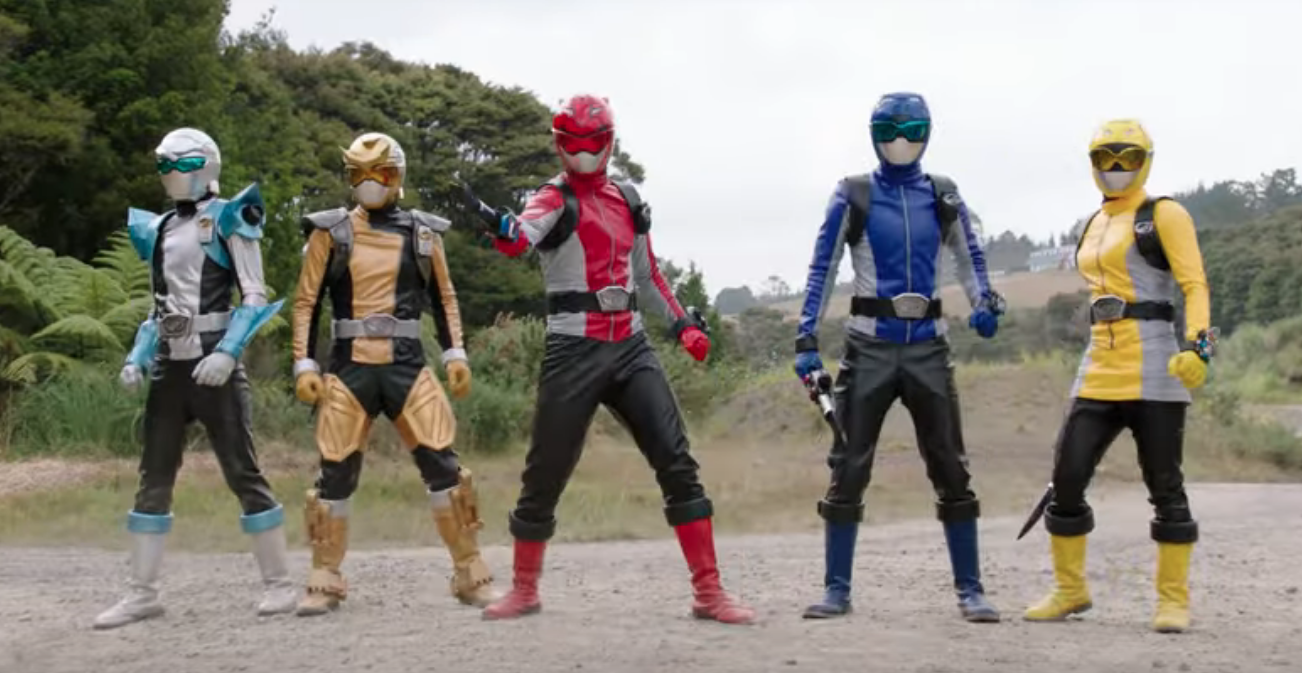
Character wise, there's not too much to say about the initial three Rangers. Red Ranger Devon is a gamer who has a strained relationship with his father but doesn't get much of a character arc once they finally see eye to eye. Yellow Ranger Zoey has a very girl next door personality who has a penchant to help the environment but it doesn't come up too much. Blue Ranger Ravi probably has the most complex arc of the three, being the son of Grid Battleforce's commander and expected to follow in her footsteps but has a passion for painting he doesn't want to reveal out of fear of disappointment; much like Devon and his father though, there's not much arc for Ravi once this is also resolved.
My favorite Rangers of the season though are the ones that join later in Nate and Steel. Nate is a child prodigy and the lead scientist at Grid Battleforce, developing the Rangers' powers, arsenal, and zords. When he's kidnapped by the villains to build a robot body for Evox, he's able to trick them by using the tools at his disposal to become the Gold Ranger. As a byproduct though, the robot body somehow becomes sentient and acquires Silver Ranger powers; and if the science behind that isn't questionable enough, the robot also becomes infused with Nate's DNA and is designated as his brother, naming him Steel. Nate's creation of Steel helps fulfill a wish he had for a sibling given he was an only child and had parents who worked overseas most of his life; there are some clear abandonment issues there and it's something that does get nicely resolved in the series. Steel is essentially Nate's idea of an ideal brother: cool, somewhat smug, but caring above all else. While he is mostly robot, Steel repeatedly points out that he's part human and attempts many times through the series to feel more like one, wanting to appreciate the little things some humans may take for granted like eating or owning a pet; it actually makes for some of the most entertaining episodes. Steel's a very unique Ranger in the franchise in that despite not having facial features to express, the show still does a good job at giving him arcs and character moments; compare that to Sam from SPD where he was always morphed or a ball of light throughout that season and had basically nothing else going for him. Despite their differences, the brothers essentially help each other grow.
The main comic relief of the season are the characters of Ben and Betty, employees at Grid Battleforce who pretty much have jobs because their dad is the leading general. The main schtick is that they're very clumsy with their attempts to help usually resulting in physical comedy. While I guess some found them annoying, I found them very entertaining and pretty funny; I feel like it's what it would be like if Awkwafina and Jacob Batalon were a comedy duo. What I really liked is that they always had this upbeat personality that never faltered despite how things go awry for them so often. There are a few times where they do get a win and successfully contribute help to the Rangers, but I really wish they had a bigger role in the final episodes similar to Bulk and Skull as the Zordon era came to an end.
There isn't much difference production wise as we transition from the Neo-Saban era to Hasbro since much of the same people behind the show carried over despite the change of ownership. The only thing that seems affected going forward is the theme song. The Beast Morphers theme is serviceable if not simple, being another remix of "Go Go Power Rangers" with a few new lyrics. It's also really short and it took me awhile to realize that only the Rangers were featured in the opening credits with none of the other regular cast members serving as supporting cast or human looking villains as all previous seasons have done, which I feel slightly diminishes those characters' importance to the series. The biggest problem though is that the theme song now doesn't start until a third of the way into an episode, basically when the main action has already started. If they're not going to begin an episode with the theme or play it after a cold opening, then why even bother doing a theme anymore?
One of my favorite plotlines of the season, albeit a short lived one, was Devon receiving a Fury Mode that while powerful was corrupting him and his judgment. I found it similar to Spider-Man when he had the Venom symbiote and is something I thought would be a good idea to see in Power Rangers.
Conversely, I have to bring up that I think the worst episode of the season is "Goin' Ape". It's Ravi and his girlfriend Roxy's anniversary and a misunderstanding leads Roxy to believe Ravi is cheating on her, and instead of just explaining things, Ravi turns it around by accusing Roxy of not trusting him. This overdone sitcom/rom-com trope is infuriating enough, but the episode by the end makes it seem like Roxy was in the wrong for accusing Ravi when he was the one who overreacted. I haven't really cursed in a Power Rangers post since talking about Megaforce and Operation Overdrive, but man, f*** this episode.
The season features another major team-up, bringing back the past dinosaur themed teams in Mighty Morphin', Dino Thunder, and Dino Charge. I know what you're thinking; why did a season not having to do with dinosaurs do this? Well, in terms Super Sentai, Kyuryuger (the source of Dino Charge) came after Go-Busters and when it came time for the annual team-up, they decided to celebrate the dino theme by also bringing back the Zyurangers and Abarangers (the sources for Mighty Morphin and Dino Thunder). Beast Morphers decided to adapt this footage, and much like Go-Busters, the team became fourth fiddle for this event, though it feels even worse considering this happened in their own series.
While I would like to say every Ranger of each team came back, Power Rangers unfortunately doesn't have that kind of money. The only Mighty Morphin' alum to return is Austin St. John as Jason while Dino Charge Rangers Tyler, Chase, Koda, and Ivan appear on screen with Shelby and Riley only providing voicework in their Ranger forms. The other Mighty Morphin' Rangers and Dino Thunder team appear only in costume with very minimal dialogue from them in an attempt to not draw attention to the fact it's not the old actors. But I'd be lying if I said I didn't love seeing them all fight together for an extended period of time. I mean, Beast Morphers didn't have to adapt the Go-Busters/Kyuryuger team-up, but I think they knew fans would love some attempt at it if it meant seeing the older teams and even their Megazords working together, not to mention Goldar's own return. And honestly, any kind of effort put in is appreciated after the laziness of Megaforce and their so called "Legendary Battle."
In many ways, Beast Morphers is a culmination season. Along with being an RPM sequel and featuring a team-up with three past Ranger teams, Beast Morphers makes it a point to show that all of Ranger history is connected. Building off the anniversary team-up of Ninja Steel, we see there is regular communication between the different Rangers' timelines, sharing intel and technology. Grid Battleforce even has an archive of past Ranger weapons and morphers donated to study and build off of (in addition to being Easter Eggs for long time fans), an idea touched upon briefly back in SPD.
That being said, I think Beast Morphers is a satisfying season, with good acting and well written episodes with some having real emotional moments. There's nothing to really hate about it (and even the weirder elements I didn't mind this time around), but there's nothing really exceptional either. While there's a lot to like about Beast Morphers in its own right, a lot of what I enjoyed most were its connections and references to past Ranger seasons, which is a problem when you want something to stand out on its own; it'd be like if Tommy kept referencing his old Ranger days in Dino Thunder. Besides that, there were moments throughout the season where I kept seeing similarities and making comparisons to character traits and plot elements from past seasons. I was making a mental list for whenever I got around to this post, but it kind of grew out of control by the end. The few examples I will give are Devon's aforementioned father issues being similar to Wes's in Time Force, Blaze and Roxy reminding me of Jarrod and Camille from Jungle Fury in being able to morph into their own pseudo-Ranger forms, and Nate and Steel joining the team as bug themed Rangers like Hunter and Blake did in Ninja Storm.
I'd say the writing has become uninspired and maybe Hasbro was playing it safe for their first attempt at Power Rangers, but then I had to consider the franchise has gone on for nearly thirty years (and fifty for Super Sentai), so maybe it's becoming harder to come up with new motifs and unique characters; I mean, the season after this one is dinosaur themed again.
Again, I have no ill will towards Beast Morphers. It just seems in some regard that we're at the point where Power Rangers may be showing its age and trying to relive its glory years. We'll have to see if things get better next time for what could very well be the final Power Rangers series...for reals this time. To explain, it was reported in 2020 that Hasbro was cutting ties with Toei, the company that produces Super Sentai, meaning acquiring footage and adapting Sentai will soon be a thing of the past; in conjunction, Hasbro and Netflix are also planning to reboot the Power Rangers franchise with cinematic universe goals in mind (because of course there are). There's also rumors of a 30th Anniversary special next year bringing back the original Mighty Morphin' team to give a proper conclusion to the whole series, but that's getting ahead of ourselves. Between Hasbro working out the bugs of their first production and possibly needing to stick the landing for the whole series, Power Rangers Dino Fury will have a lot to live up to (and I'm hoping to get my thoughts on that season out much faster than this one).
Since its premiere in 2010, "Young Justice" has managed to position itself as one of DC's best animated series with a dedicated fanbase that was able to revive it years after its cancellation. As the show's fourth season (with the subtitle of "Phantoms") finally wraps, the creators prove they're not running out of steam with what may be some of their finest work.
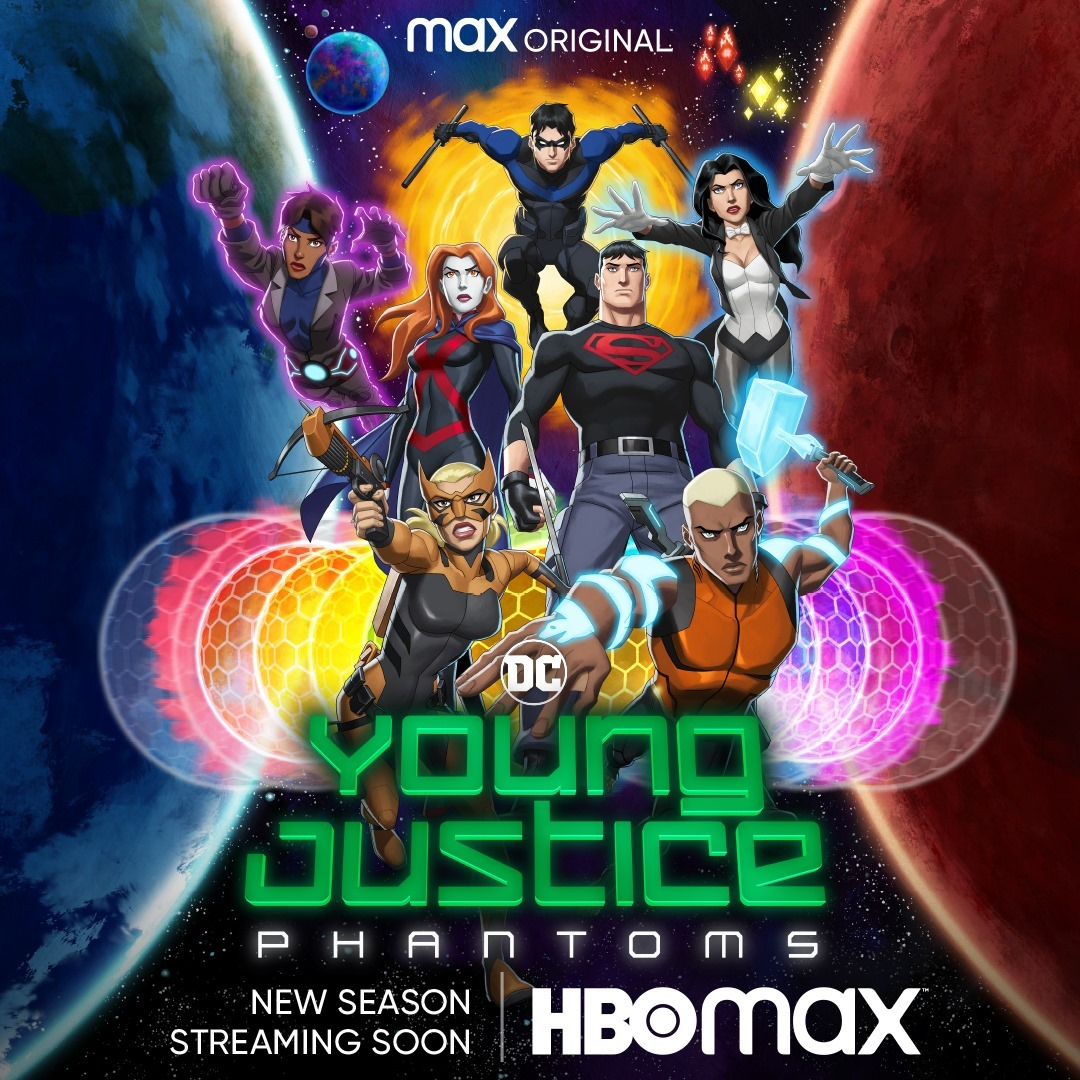
As always, the writing of the show is on point. It's brilliant, compelling, and continues to get an emotional response for the character's personal stories. The mature evolution of the show's tone from last season has only gotten stronger here as it delves deeper into real world topics and makes the universe even more inclusive with some characters being revealed to be non-binary or polyamorous. The animation is probably the best it has ever been this season with great fight scenes and some great visuals in general. What sets this season apart structure wise is that while there is a season long story, it's split up into six arcs, the final arc being a converging point of the previous five. I kind of liked this process as it gives those like myself who prefer to space out their series viewing over a few days clear groupings to watch episodes in. And while the cast continues to be vast, the main focus of the season and each arc is on the original members of the Young Justice team (as seen in the poster above) as they eventually all come together for the final arc. Considering that this season takes place ten years in universe since the series first began, it felt like a nice way to celebrate the show and team's long run with plenty of flashbacks and parallels to boot.
If there's a prevalent theme for this season, it definitely is "Phantoms". While that's true literally, it's even more true metaphorically, as traumas from the past come back to haunt heroes and villains alike this season. When you take into account how much these characters have been through over ten years (not to mention how long superheroes have operated since before the show began), obviously there will be some underlying issues that need addressed. Whether these characters have gone through different kinds of losses, had horrible upbringings, cracked under pressures of the job, or have had relationships that impact or have been impacted by one's wellbeing, this season displays a variety of factors that can impact mental health and how one can get help. "Phantoms" not only does as good as "Steven Universe: Future" at exploring mental trauma with young heroic characters but is a better version of what "Heroes in Crisis" could have been without the murder mystery or pretentious writing. As taking care of one's mental health has become even more of a priority especially over the last two and a half years (and I'll admit that I've had to come to terms with some personal issues myself within that time), I applaud the people behind Young Justice for displaying that anyone, even heroes, can have deep problems and there are ways to try and heal from them.
A few other things that really stood out to me this season:
* Brent Spiner returned to voice the Joker for an episode after playing the character only once back in the first season. When that first episode aired, I absolutely hated his performance. In my latest watch-through of the series on HBO Max building my way up to "Phantoms", I found that Spiner's Joker didn't bother me as much this time and I actually enjoyed his return this season. The only thing I can think of that brought this change is that I found him similar to Jared Leto's Joker in the Snyder Cut. While Leto's Joker is still divisive (and I've made no secret that I'm a fan), is it possible that Spiner's Joker was just ahead of its time?
* During the season's fifth arc, it's established that "Young Justice" and "Green Lantern: The Animated Series" take place in the same universe with the introduction of Razer to the series. Not only does Jason Spisak reprise his role but his story has picked up years after where we left him at the end of the Green Lantern series. Those who remember the old DC Nation Saturday morning block on Cartoon Network in the early 2010's know that the two series aired back to back and were both beloved before their untimely cancellation, so I'm willing to bet that others like myself love there's now some official ties between the two. It makes me want to both go back and watch the Green Lantern series and see it revived for a third season even if it had to transition to 2D.
* Some minor spoilers, but General Zod is our big bad for the season and there's one part where his soldiers in the Phantom Zone are singing a chant/mantra to his glory. I just found it very akin to a Disney villain song like "Be Prepared" for Scar or even "I Go Looney" for the Joker in "The Killing Joke" animated adaptation.
Whatever cons I have are very minor (like story choices and some voice acting), but overall, "Young Justice: Phantoms" is another homerun of a season that celebrates the series and its characters, faults and all. I think season three is still my favorite, but this is definitely a close second. At the time of this writing, the show has yet to be renewed for a fifth season. Before finishing the season, I thought even if it wasn't renewed that this would serve as a satisfying series finale. After the post-credits scene though, I'm really hoping we do get a fifth season. So let's get #RenewYoungJustice trending and keep rewatching the whole series on HBO Max to convince DC, WB, and Discovery not to end this story just yet.
To close this out, whether you're hoping that the series will be renewed or more importantly seeking to improve your own mental health, I'll leave you with words that came to mind during this season:
Coming off the heels of "Spider-Man: No Way Home", there's a lot of hype for the Doctor Strange sequel as it continues to explore the concept of the multiverse within the Marvel Cinematic Universe. As "Multiverse of Madness" attempts to both continue Strange's character journey and build up the inevitable multiversal war, the film does succeed but not without faltering somewhat along the way.
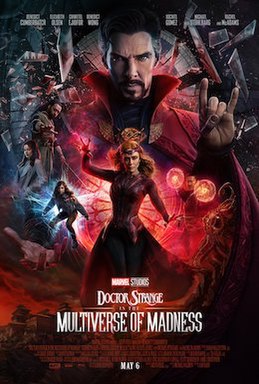
In terms of Strange's arc in the film, Benedict Cumberbatch does a good job at conveying his internal conflict as the character wrestles with the choices he's made across the movies, both personal and for the "greater good". As he learns of different versions of himself, it really raises questions about his morality and based on the ending, one of them will be if it will only go so far. Without spoiling too much, the Scarlet Witch is the main villain of the film as Wanda officially breaks bad. Elizabeth Olsen outdoes herself from "WandaVision" as her character's story seems to come to its natural conclusion. It creates a nice parallel with Strange's story about how far one would go to achieve their goals, again, whether they be personal or for the "greater good". That being said, "Multiverse of Madness" was the first real test for Marvel about whether one truly needs to view the Disney+ series when their plot elements eventually spill over into the films to grasp the story better (taking into account that not everyone has Disney+). Sadly, it fails with this instance. While the film does discuss the events of "WandaVision", you'll have a deeper appreciation of the story and understanding of Wanda's motivation after having watched it since it's without a doubt the most crucial part of her character journey. The rest of the main cast is rounded out well by Benedict Wong once again killing it as Wong, Xochitl Gomez carving out her place in the MCU's next generation as America Chavez, and Rachel McAdams having a more prominent role as Christine Palmer compared to the first film.
Director Sam Raimi is known for his work on the original Spider-Man trilogy and the Evil Dead series. With "Multiverse of Madness", he's able to bring both his lighthearted and demonic touches to the film resulting in some of the most creative imagery seen in an MCU film, especially on the latter category. Marvel succeeds in what they wanted to be their first horror film, with it at times being very graphic, unsettling, and packed with so many jump-scares that they seem bent on giving you a heart attack.
Of course, the main draw and most hype toward this movie was the multiverse aspect as the rumor mill for this movie had people speculating on what new characters would be introduced and what former non-MCU Marvel stars would be returning. It does seem that after seeing all the big screen Spider-Men together in "No Way Home", people were expecting a smorgasbord of cameos; I won't deny I had some thoughts on the matter myself (particularly of the Deadpool variety). My point is, please temper your expectations. With what we do get though, I felt very satisfied with who does end up appearing, but not so much with what happens to them; if anything, it at least opens up sacred timeline versions for some of these characters to appear later on. Going off that though, I'm a little disappointed that Chiwetel Ejiofor's return as Mordo is that of a variant and not the one from the first film. It seems implied Strange did battle with his version off screen, but it leaves the set-up from the post-credits scene still without any real payoff. Which is what brings me to the main issue I feel with "Multiverse of Madness". While it continues Strange's story, it doesn't feel like a continuation of the first film whereas the hype of the multiverse will disappoint those expecting more. While I feel the film does succeed in what it wanted to do and have it both ways, one could see one aspect overshadowing the other.
Overall, "Doctor Strange in the Multiverse of Madness" is a very entertaining and bloodcurdling film bolstered by Strange and Wanda's storylines and another taste of the MCU multiverse. The only advice I can give going in is not to expect another "Endgame" level film just yet.
While the previous Marvel Disney+ series have focused on those could consider side characters in the bigger films, "Moon Knight" marks the first where the main protagonist is being introduced to the Marvel Cinematic Universe. From a first glance, Moon Knight has been compared to Batman, but dressed in white and with even deeper mental issues. He's a very complex but cool character, so it makes sense that his Disney+ series matches up.
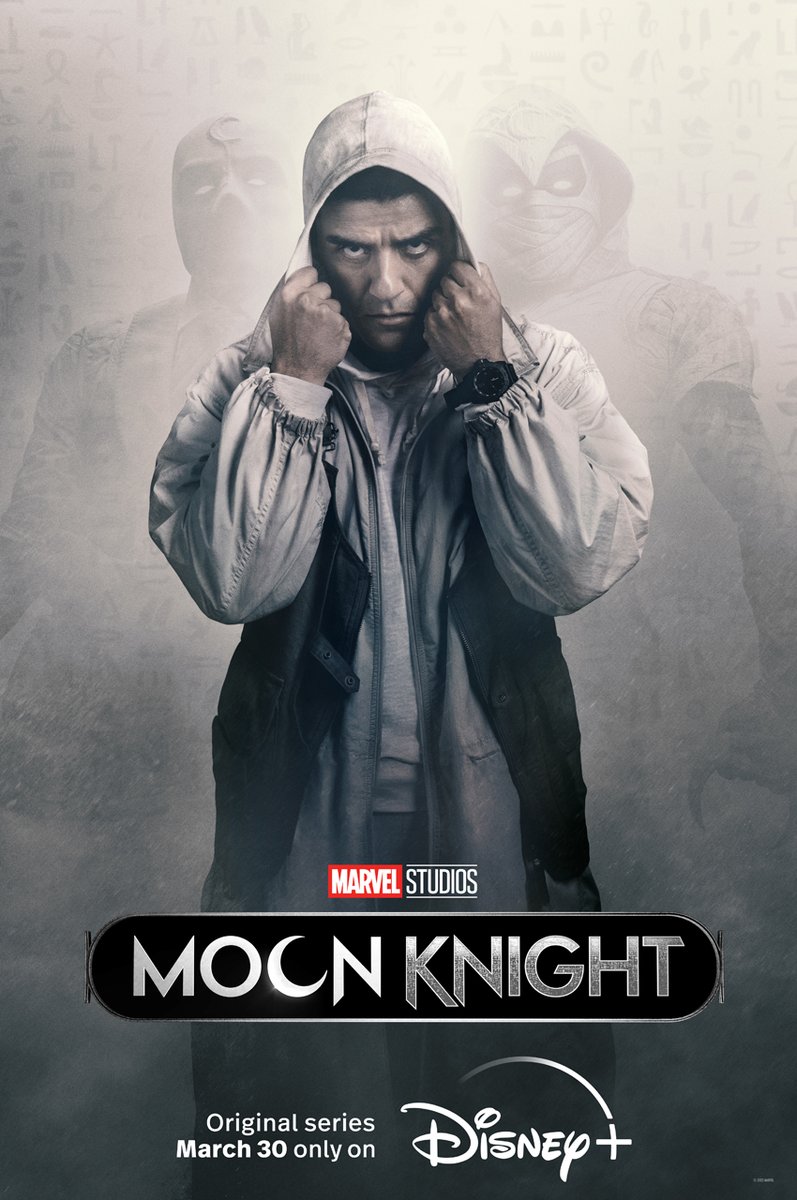
The best way to describe "Moon Knight" is a mix of psychological character study and treasure hunting adventure with supernatural elements. While the latter is done well (if a bit slow at times) and adds more to the MCU's mythos, it's the former where the series truly shines thanks to the lead, Oscar Isaac. For a character with split personality, Isaac does a brilliant job bringing both Marc Spector and Steven Grant to life in such a way that I sometimes forget it's the same actor even when they share the screen at the same time; and in that regard, I have to give props to the special effects team for making said scenes seamless. As the two personalities conflict early in the season, I found myself siding with both at different times where I'm either going "Marc, stop messing with Steven's life" or "Steven, don't get in Marc's way". It's very rewarding by the time they get on the same page, becoming like brothers, and after we learn of their complex and heartbreaking backstory while still leaving some mystery about the character.
Strangely enough, I actually found the series to have similar plot elements to Iron Fist, specifically the second season. Both leads are chosen guardians given powers to carry out a grand mission having to battle an antagonist with similar goals but more brutal methods along with a love interest who may be better suited for the job than the protagonist. In regard to the love interest, I really enjoyed May Calamawy as Layla, who's a strong character in her own right while also having good chemistry with Isaac as both Marc and Steven. The Steven interactions are most enjoyable as it's like watching her fall in love with her husband all over again. As for our lead villain in Arthur Harrow, Ethan Hawke gives a very charismatic performance as a religious zealot who can even fool the likes of gods.
While the series is at its best with its character moments, the action stuff that is present is nothing to scoff at. The best examples that stand out are the car chase in episode one and the final battle in episode six. And when it comes to the show's use of CGI, it's literally 50/50 with the second half of episodes clearly better than the first. Obviously the second half definitely had more need of it, it's a little disheartening to see corners cut when these MCU Disney+ series are supposed to have the same budgets as the films.
All in all, while I don't really hold it in high regard as some may think, "Moon Knight" is still a very solid stand-alone entry for the Marvel Cinematic Universe thanks in large part to Oscar Isaac and I look forward to where Marc, Steven, and company go next.
Since the first trailer dropped at DC FanDome 2020, it was clear we were in for something special with Matt Reeves' "The Batman." And for me personally, there was a certain kind of excitement for the first solo Batman film in 10 years outside the larger scope of the main DCEU. Well, if you still had doubts about this movie because of certain casting or design choices, you can lay them aside. The hype is real as a unique new take on the Dark Knight has arrived.
Director Matt Reeves has delivered on so many fronts. The Gotham City presented is a perfect mix of the gothic nature of Tim Burton's films and the grounded reality of Christopher Nolan's Dark Knight trilogy; it's really the first time since "Batman Begins" where I've felt Gotham had its own landscape and atmosphere. I think the fact that we start the story with Batman already being established also helps make this world feel like its own and not just trying to fit Batman in our's. Story wise, Reeves has crafted a grand mystery and deep conspiracy to uncover; while there's a lot to unpack within this nearly 3 hour movie (which means you can probably get even more out of subsequent viewings), you'll be completely immersed not only thanks to the film's tone, but also to the engaging characters with no performances not to like. I also have to give a lot of praise to Michael Giacchino's score, who joins the ranks of Danny Elfman and Hans Zimmer of iconic Batman movie composers, creating unique themes for Batman, Catwoman, and Riddler. While I've talked before about the film's comic inspirations back in my "Ego" review, my first viewing of the film brought to mind which ones are the most prominent. The heaviest influence on the film from what I could see were the "Earth One" series from Geoff Johns and Gary Frank along with the neo-noir writing style of Frank Miller's "Year One" with a splash of the Telltale video games (that last one making a certain twist in the film honestly not much of shock to me). Put them all together though, and it certainly brings a live action Batman not seen before.
As previously mentioned, I couldn't think of one performance I didn't like from this film. It's such as star-studded cast with Andy Serkis as Alfred, Zoe Kravitz as Selina Kyle, Jeffrey Wright as Gordon, Colin Farrel as Penguin, and John Turturro as Carmine Falcone. But of course, it's our main protagonist and antagonist who shine brightest. * Like Michael Keaton and Ben Affleck before him, Robert Pattinson had a lot of hate to overcome in his Batman casting, mostly due to a certain series of films he starred in (and again, it's really time to get over that). Like his predecessors, Pattinson has risen above and delivered a new take on the character that will stand the test of time. Pattinson's Batman is probably the most intense portrayal of the character yet, as the deep seeded anger of the character exudes whenever he's on screen. There's also this raw realism to his fighting style that brings Charlie Cox's Daredevil to mind, where even if you get a hit in on him, he'll make sure you'll get hit back harder. Plus, while it can be scary for Batman just to appear, there's a feeling of dread that can arise just from hearing his footsteps as he approaches. His Bruce Wayne portrayal is also quite different in that he'd rather not be Bruce Wayne; this struggle of balance is reminiscent of Keaton's version, but Pattinson's Bruce hasn't reached the point of caring about that, wishing to be Batman 24/7. It's a good starting point for this version of the character as future sequels can show how Bruce can change, doing good for the city under his real name while also realizing that Batman has to be more than just an outlet for his childhood trauma. I also loved his relationships with other characters, from his partnership with Gordon (which is probably the strongest we've seen between the two characters before on film), his budding romance with Selina, and the strained father-son dynamic with Alfred (which culminates in a scene between the two that nearly got me chocked up). * Paul Dano delivers a terrifying performance as the Riddler. As a terrorist bringing Gotham to the edge, it reminds me of Heath Ledger's Joker, but not as refined and rough around the edges. Since Dano did study serial killers for the role, I found his performance very believable and how such a person would behave in real life. And while this version is vastly different from Jim Carrey's in "Batman Forever", I surprising found a similarity between the two; whether it was Bruce or Batman, Riddler felt a one-sided kinship with the man he would eventually call his enemy. In Dano's case, his Riddler is inspired by Batman, believing himself a hero and taking the crusade against the city's corrupt further, even becoming a cult of personality himself in the process; I can't recall a villain in a Batman or comic book movie that was able to create a following out of normal citizens.
And while not technically a character, I loved this film's interpretation of the Batmobile. For one, its design is truly believable for an early years Batman in a grounded setting. More importantly though, I can't remember when a Batmobile can stoke as much fear and be as unstoppable as Batman himself, which isn't surprising since Stephen King's "Christine" was cited as inspiration in its depiction. The sound of its engine being the loudest thing you can hear whenever the Batmobile was onscreen and how it reverberated through the theater was a nice touch.
Overall, with Matt Reeves and Robert Pattinson at the helm, it would appear that the future of the Dark Knight on film (and its HBO Max spin-offs) is a bright one.





_poster.jpg)