At the end of "Apokolips War", Constantine convinced the Flash to reset the timeline to ensure Earth's survival. This resulted in the DC Animated Movie Universe being rebooted, both from a production standpoint and what would turn out to be in-universe as well. Named after the initial film "Superman: Man of Tomorrow", the Tomorrowverse would become the shared universe within DC's line of animated films. Initially put off by the change in animation style, I was impressed enough with "Batman: The Long Halloween" to give the rest of the universe a shot. The results have been mixed, ranging from pretty good to so bad that I completely lost interest by the third act *cough*Warworld*cough*. Given "Long Halloween" is the only movie of this universe I've covered, it's felt like such a downgrade from what came before that I can't even muster a post about the other five films. But now we've reached the end of the Tomorrowverse with "Justice League: Crisis on Infinite Earths." Arguably the biggest story in DC history, this warranted not just a two-part adaptation like what's come before, but three. On one hand, it doesn't feel like the Tomorrowverse adapting this story was earned, especially since the Arrowverse spent seven years building up to their version. And yet, they pulled it off spectacularly.
It could be considered a challenge to adapt "Crisis on Infinite Earths" within the context of both the 2020's and a pre-existing universe and still keep the spirit of Marv Wolfman and the late George Perez's original story. The Arrowverse did a good job adapting it in their own ways, paying off its own running plotlines and having tributes to past live action DC adaptations. But the Tomorrowverse hits all the significant points that made the original "Crisis" so memorable, even helping fill some gaps within its own films. The films are full of DC characters not just well known but feature many others that hadn't appeared before in the Tomorrowverse or the DC animated movie line in at all, paying tribute to DC's long history just as the comic did. A good chunk of them have no speaking lines, but there's a good portion who get some significant spotlight. This helps add some weight to the emotional moments and the character deaths. While it's hard to feel anything for death in superhero comics these days (especially when you have characters like Kamala Khan dying and coming back within three months), death has meaning in these films and feels as impactful like they did back in the 80's and early 90's. I think Wolfman and Perez would be proud. There's a sense of epicness these three films have compared to the rest of the DC animated movie line. All three go well past the 90 minute mark that's usually the cap for these films, somewhat making them more feature length by comparison and result in a nearly five hour combined runtime. It's a true film trilogy in the sense of "Lord of the Rings" and has a comic book event feel compared to "Infinity War".
There are minor problems, from certain story elements and what I feel can be attributed to some behind the scenes politics. Going back to what I said about initially feeling adapting the story felt unearned, keep in mind these are the eighth through tenth films of the Tomorrowverse (and seventh story when you combine these three films and the Long Halloween two-parter). There's a sense they were kind rushing toward the end. I would say "Justice League: Crisis on Infinite Earths" is the most ambitious animated DC project in recent memory, and it seemed like it had to be. Not only does this mark the end of the Tomorrowverse and the DC Animated Movie Universe, but the DC Universe Animated Original Movie line of films that began all the way back in 2007 altogether. As James Gunn works to consolidate all forms of media for his rebooted cinematic DC Universe, the animated movie line seems to have reached its conclusion. That's not to say there may not be stand-alone animated films anymore, but just not as frequently. If so, adapting "Crisis on Infinite Earths" allowed them to go out with a big bang.
And in case anyone was curious about my Tomorrowverse Rankings: 1. Justice League: Crisis on Infinite Earths 2. Batman: The Long Halloween 3. Justice Society: World War II 4. Green Lantern: Beware My Power 5. Superman: Man of Tomorrow 6. Legion of Super-Heroes 7. Justice League: Warworld
Lastly, I'd be remiss to say that this film marked the final performance of Kevin Conroy as Batman before he passed away in 2022. This moment ended up being a perfect sendoff (especially compared to a certain video game) and somewhat fitting because the animated movie line began after the conclusion of "Justice League Unlimited" and the original DC Animated Universe that began in 1992 with "Batman: The Animated Series". You'll never be forgotten, Kevin.
"What if?" isn't just a question to flesh out in total works of fiction. The world of professional wrestling and sports entertainment can also have lingering questions of how things could have turned out had creative decisions gone a different direction or outside forces hadn't interrupted well laid plans. With this post, I'm going to try a thought experiment and take us all the way back to 2005. Before I talked about their comic book inspired appearances, John Cena and Batista walked parallel paths as rookie wrestlers in WWE that lead to both winning world championships at WrestleMania 21 in 2005. Two months later with the annual draft in perhaps the biggest shake-up to the brand separation yet, John Cena (and by extension the WWE Championship) was moved to Raw while World Heavyweight Champion Batista became the top star on SmackDown. However, what if these superstars and their championships remained where they were and how would this impact the WWE? For the sake of this experiment, I'm going to cover the pay-per-view events following the 2005 draft up to WrestleMania 22, which is kind of like the season finale to a year's worth of WWE programming.
To start, there's the question of who would fill Cena and Batista's draft spots. I believe the change would be John Bradshaw Layfield going to Raw while Chris Jericho would go to SmackDown. Not only were these the rivalries that played out in actual events, but JBL going to Raw would save us from another few months of his rivalry with Cena which already culminated in their "I Quit" match at Judgment Day 2005. Going into the SmackDown exclusive Great American Bash, Cena would defend the WWE Championship against Jericho, but would end in disqualification for a Jericho victory. This would lead to a No Holds Barred rematch at SummerSlam where Cena would retain the title. At the same event, Batista would retain his World Heavyweight Championship against JBL.
Batista would then enter a rivalry with Kurt Angle over the World title that would last up until November. Their match at the Raw exclusive Unforgiven would end in a DQ in Angle's favor, Shawn Michaels would enter the fray for a triple threat match at Raw's Taboo Tuesday event where Batista would win, and Batista would finally put away Angle at Survivor Series. Over on SmackDown, Cena would retain the WWE title against Eddie Guerrero at their No Mercy event (which would also be Eddie's last PPV before his untimely death). After that, Cena would become involved in the Raw/SmackDown feud that had been brewing in the last quarter of the year. Much like Batista did at Taboo Tuesday, Cena would face Raw announcer Jonathan Coachman in a Street Fight. Following that, Cena would lead Team SmackDown against Team Raw in a 5-on-5 Classic Survivor Series tag team elimination match, which the former would win. Another interpromotional match would occur at SmackDown's Armageddon event where Cena and Rey Mysterio would face Big Show and Kane in a tag team match but ultimately lose.
Going into 2006 with Raw's New Year's Revolution event, Batista would retain his World title in a grueling Elimination Chamber match. But much like the real event immediately after the match, Edge would cash in his Money in the Bank contract he won at WrestleMania 21 that guaranteed him a world championship match at any time of his choosing. Edge would defeat the weary Batista easily to secure his first ever world championship.
Aside from the JBL and Jericho draft picks, you've probably noticed much of this is just swapping Cena and Batista for where they were on the other show. But here's where things get murky and I get a little more creative. In actual events, Batista was injured in a cage match with Mark Henry in January 2006 and had to vacate the World Heavyweight Championship which Kurt Angle would win in a battle royal; Batista wouldn't return to in-ring action until July of that year. For the sake of this post though, and the fact that he's competing against a different set of wrestlers in this scenario, we're going to keep Batista around as if the injury never occurred.
We now head into the Royal Rumble event and the road to WrestleMania 22 beginning. Similar to the actual event, Batista would regain the World title from Edge while Cena would defeat Mark Henry to retain the WWE title. However, in my biggest deviation to events yet, Randy Orton would win the Royal Rumble match to earn a world championship match at WrestleMania. Now I realize in actual events that Rey Mysterio winning the Rumble was a big moment on his road to winning the World Heavyweight Championship at WrestleMania in honor of Eddie Guerrero's memory, being one of his best friends. On the WWE title side though, John Cena retained against Triple H, who got the title match after winning a number one contender's tournament. In this scenario of events, I wouldn't want to do a rematch between him and Batista immediately one year later; their rivalry played out the year before and I think it would take away from their eventual rematch years later at WrestleMania 35. I thought about Batista facing another person involved in that tournament, but each of them were already involved in a match at WrestleMania 22. For the sake of something different, I'd have Orton win the Rumble and move to Raw so he can challenge Batista for the World title; it does help that this was a match kicked around by creative before Batista's injury. And don't worry, Rey would still earn a world title match; he'd just probably win his own number one contender's tournament at SmackDown's No Way Out event for the WWE Championship match at WrestleMania. Also at No Way Out, Cena would retain the WWE title against the Undertaker, partially due to interference from Raw's Kurt Angle.
And so WrestleMania 22 arrives and while much of the matches remain relatively the same, here's where my course of events would bring differences: * After costing him the WWE title at No Way Out, Undertaker would set his sights on Kurt Angle and the two would have an interpromotional match that would be comparable to their bout at the actual 2006 No Way Out, but with Undertaker winning and continuing the streak. * At the actual event, Shawn Michaels was in a feud with Vince McMahon and defeated him in a No Holds Barred match. But with Triple H out of the world title picture in this scenario, he would become involved in the feud and this would instead lead into a tag match with Michaels and Triple H against Vince and his son, Shane. As the two had been enemies for years at this point, Michaels and Triple H would go into WrestleMania seemingly as reluctant partners. But at the event, the two would surprise most everyone by coming out as a reunited D-Generation X (just imagine the crowd pop as the theme music would hit), something that wouldn't actually happen until the summer of that year. DX would go on to beat the McMahons in their grand return. * As explained earlier, former Evolution teammates Batista and Randy Orton would go head-to-head for the World Heavyweight Championship. Batista ultimately wins as behind the scenes, Orton wasn't deemed ready for another world title run yet. * Rey Mysterio would then take on John Cena for the WWE Championship in the main event for what I think would be a good match between friends that would also be in honor of Eddie. Rey would win the title and while it ends Cena's year long reign as champion, the two celebrate along with the crowd as the night ends.
And that's how I think things would have happened. At the very least, I think it would have made an already good WrestleMania even better. I had some fun thinking this through, so let me know if you agree with my creative choices or if you're happy with how things actually turned out.
In the past, I've usually covered Doctor Who with my "Changing of the Doctor" posts, with the last two reflecting on the latest Doctors, their tenure as the character and their regenerations. With the show premiering new episodes in the United States on a streaming service like Disney+, I'm seeing this as an opportunity to change things up by reviewing the series as I would other shows I cover on the blog. It will allow me to give more detailed thoughts as things go rather than try to sum up years of a character's run after it's over. For the first season of the Disney era, we're soaring very high with the Doctor and Ruby Sunday in the TARDIS.
Whether it be last year's Christmas special or the proper season premiere, the first stories starring Ncuti Gatwa as the Doctor serve as a perfect jumping on point for new fans and includes plenty of callbacks for established ones. Right from the get-go, the show continues to feature the fun, scary, and ridiculous elements fans have come to love from the 60-year franchise. Even though it's been 14 years since showrunner Russel T. Davies left, his first proper season with his return has proven he hasn't lost a step and has brought a level of excitement back to the franchise after some tumultuous years.
Series Fourteen is a very imaginative season and makes a point in how important it is to be able to express yourself (Disney backing the budget is boon too). We see this in how the social commentary is presented as well as new villains like the Bogeyman and the Maestro (who reminds me of a mix of Pennywise and DC's Music Meister). My favorite episodes in terms of how creative they were are "Boom" and "Dot and Bubble."
Ncuti Gatwa as the Fifteenth Doctor is just as fun and serious as Ten and Eleven, and there's a scary hint of Twelve when he gets mad. Along with his sassiness, what really sets Fifteen apart from the others is his willingness to feel vulnerable. As I talked about in my last "Changing of the Doctor" post, Fifteen's emergence has to do with the Doctor's mental health. While other Doctors have tried not let their fun-loving and strong appearance falter, Fifteen is more open with his emotions and letting others comfort him during the tough moments.
Millie Gibson as new companion Ruby Sunday is the perfect audience surrogate, full of wide-eyed wonder as the Doctor takes her through time and space. She makes me think of a combination of past companions Rose Tyler and Clara Oswald. Her and Gatwa's Doctor have instant BFF chemistry that shines as they go through the good times and bad times together.
There are two big mysteries throughout the season that do tie in together. One is about Ruby searching for her birth-mother. The other is a staple of Davies' previous time on the show with a subtle overarching thread throughout the season that leads up to the main threat in the final episodes. Personally, I think both pay off very well, though from what I gather, the resolution with Ruby's mom seems to be divisive. All I'll say is I can see people ugly cry like at the end of "Doomsday", but in a happy way.
There are however still some questions to be asked about Mrs. Flood, Ruby's neighbor. She seems to have knowledge about the Doctor, his enemies or at least future events committed by them, and breaks the fourth wall to the audience. I have a few theories on who she could be; two connect with characters brought up so far since last year's specials, one is too predictable to happen in my opinion, and one is pretty left field but could totally make sense. This will probably be Davies' long game story through his new run, so I guess we'll have to see what happens.
If there was anything to be desired with the season, I kind of wish they had balanced out the episodes travelling to the future and the past. There are only two episodes set in the past, "The Devil's Chord" and "Rogue", but they were still very well-done stories (especially the romance subplot in the latter).
The one episode I didn't care for was "73 Yards." While it put Ruby front and center and showed off Gibson's amazing talent, I found it a bit mean-spirited even if that did have to do the social commentary I think they were going for.
Excluding David Tennant's Fourteenth Doctor specials, great acting coupled with imaginative effects and storytelling make this the most fun I've had with a season of Doctor Who since the first season of Jodie Whittaker's run. I can't wait to see where the Doctor will touch down in the TARDIS next when he returns for this year's Christmas special.
Adapted from Kishiryu Sentai Ryusoulger and Uchu Sentai Kyuranger
Hasbro Era
It began in the 1990's when the Mighty Morphin' Power Rangers exploded onto the scene with their Dinozords. The most popular Ranger of that team would return in the 2000's to mentor a new generation with Power Rangers Dino Thunder. We travelled to another dimension in the 2010's to see the battles of the Power Rangers Dino Charge. Which brings us to the 2020's with Power Rangers Dino Fury. It's very clear the franchise loves dinosaurs, and it feels very fitting that the continuity that started over 30 years ago has seemed to have reached its conclusion...for real this time. In terms of execution, they went out on a high note and delivered the best entry in the franchise since Dino Charge and even exceeds that.
I should start by pointing out that I probably technically should be doing separate posts for Dino Fury and its third season, Cosmic Fury. Much like Mighty Morphin' did, this series goes past its own source material from Super Sentai and incorporates elements from an additional Sentai. The difference though is that while Mighty Morphin' built upon each season with how they mixed their Sentai roots, Cosmic Fury does feel like its own entity, especially since the villains Dino Fury started with were dealt with and a mostly new batch were introduced as the main threat. However, since I grouped all of Mighty Morphin' together back when I ranked every season up to Megaforce, I'm choosing to do the same when talking about Dino Fury and Cosmic Fury. Not only do characters and plotlines carry over, but the dinosaur motif for the Ranger outfits remains despite the change in the zords. So I may use Dino Fury as a whole unless specified. And before I get into the meat of the series, I need to be picky about a few creative choices. * "Dino Knights" (and by extension "Cosmic Knights") was right there when coming up with a team name since those were the main motifs for Ryusoulger. Apparently, that was an initial choice but Hasbro saw "Dino Fury" as more marketable. * The theme song for Dino Fury is just as lazy as Beast Morphers', but thankfully more effort was put into Cosmic Fury where it feels like a more proper Power Rangers theme. * The morphing call (if you can call it that) is the most boring one I can remember. They were basically just announcing their actions for the process. Granted, flipping their power orb into their Cosmic Fury morphers was a cool move.
The team building method was very similar to In Space (and I'll be making a lot of comparisons to that season in this post). We have an alien Red Ranger (Zayto) who's joined by Earthlings who take up the Ranger powers from his lost teammates and then later by a sixth Ranger from the previous team (Gold Ranger Aiyon) who was believed to be lost. Along with the aliens getting used to Earth customs, the other Rangers have good characters that bounce well off of each other. Pink Ranger Amelia Jones (I think someone on the writing staff was a Doctor Who fan) is openminded to the supernatural and paranormal while Blue Ranger Ollie is very scientific and always tries to find a logical explanation to situations; and in true "opposites attract", the two eventually become a couple and it happens naturally. The Garcia siblings also contrast in their interests with Black Ranger Javi being a musician and Green Ranger Izzy being a track star. In Cosmic Fury, we see Amelia promoted to Red Ranger, the first female to wear the color in a main character capacity. While there were moments as the Pink Ranger that showed her leadership potential, Amelia really stepped up to keep the team motivated after Zayto goes missing in space and the Dino Fury powers are destroyed. With the creation of the Cosmic Fury powers, the Morphing Grid makes her red, a decision everyone assures her is earned. In one episode of Dino Fury and a majority of Cosmic Fury, Ollie is turned evil/corrupted into working with the villains. Ollie's actor Kai Moya does a good job in playing a bad guy, with his initial superiority complex working well to make it feel natural compared to other times in the franchise where Rangers would get put under an evil spell and it would be so over the top (with some exceptions). Seriously, if Ollie hadn't joined the Rangers, he may have gone full Lex Luthor.
While all the Rangers are enjoyable to watch, I'd say my favorite is Javi. From his first appearance, he just has this natural likability and sincerity that reminded me of Adam.
Like Beast Morphers, Dino Fury has a lot of callbacks to Power Rangers history, with appearances by characters from past seasons, easter eggs, and direct clips/flashbacks. The most prominent example is Billy returning as the Mighty Morphin' Blue Ranger in a main character spot for Cosmic Fury. Compared to how Beast Morphers felt bogged down by this though, I think it makes more sense for Dino Fury to do this given its status as the final entry in the series and celebrating the 30th anniversary. And while many tropes the franchise is known for are present, the writing for Dino Fury is done so well that you can overlook them. There's a good balance of fun and drama with plenty of feel-good moments between the characters.
Much like with In Space and RPM, Dino Fury was being treated as the end of the series before it became official so it had a little extra effort put in. The move to Netflix beginning with season two helped with this, lifting some restrictions they may have had on a cable channel like Nickelodeon. It's still family friendly, but I found some of the language and violent imagery a little suggestive compared to what we've seen before with Power Rangers. The biggest example of this is Javi losing an arm activating the Cosmic Fury Zords while under fire from the enemy. We've seen Rangers die and come back (hell, it happens to Zayto twice), but seeing a Ranger maimed like that was pretty shocking. While Dino Fury has a traditional Power Rangers tone, Cosmic Fury takes things in a darker direction much like In Space did to what came before, particularly in the beginning with the villains having the Rangers on the run after destroying their powers. It especially does well in capturing the tone of In Space's two-part finale "Countdown to Destruction", something Megaforce tried and failed to do. And on that note, when a character from the past says something along the lines of being honored to work with the Dino Fury Rangers, it doesn't feel forced.
It's worth noting these are probably the most progressive years for the franchise. We have a character with an intellectual disability in Javi and Izzy's cousin Lily, who has CHARGE syndrome. I really liked that they don't make a big deal about it; she's happy with who she is and always wanting to help her family and others. And of course, we have a major milestone with our first LGBTQ+ Ranger in Izzy, with her girlfriend Fern joining the team in Cosmic Fury as the Orange Ranger. Their relationship feels as organic as other prominent ones in the franchise; love is love, people.
The main source of comedic relief are the Rangers' boss at the Buzzfeed like company they work/hang out at, Jane, and her android assistant J-Borg. Most of the time, their antics don't play much into the main plot, similar to Bulk and Spike's bits in Samurai. They actually kind of reminded me of the Mads from Mystery Science Theater 3000. That being said though, I like that Jane isn't a mean boss or an idiot where the slapstick feels deserved. She's genuinely a good if silly boss who knows how to run a business and wants everyone to have fun too.
The main villain at the beginning of the series is Tarrick, the Void Knight. His motivation is very much like Mr. Freeze, wanting to revive his cryogenically frozen wife Santaura using the power of the Sporix beasts (the name for the monsters of the day); it's actually kind of cool to see a villain not motivated by power or revenge. Though he does succeed in reviving her, Santaura's ambition outshines Tarrick's as she wants to destroy humanity for the pain they've endured on Earth. She uses more Sporix energy to transform into the Void Queen and brainwashes Tarrick to obey her after he attempts to work with the Rangers to stop her violent crusade. There's also a twist in their identities that I won't spoil here. You can see it coming if you're paying attention to the clues but I like that it's not telegraphed, being done in a way where the reveal moment is still impactful. Along with robot generals the Voids build to aid them, they're also assisted by a Sporix beast named Mucus through the series. She reminds me a bit of Harley Quinn when she first appeared in Batman: The Animated Series, silly but wanting to earn her boss's respect. She was a fun character to me. Much like Venjix in Beast Morphers, we have the return of another main villain from the past in a prominent capacity: Lord Zedd. After having his evil essence resurrected by a Sporix beast and placed under its control, Zedd breaks free and escapes to plot. He would return for a multi-episode arc in season two and become the main villain for Cosmic Fury. Bringing Zedd back was a great move in my opinion, especially when you see the significance of the first American-made villain being the series' final boss. The threat of Zedd is sold well, that despite all the villains that came after him, he's still a force to be reckoned with. Zedd's original voice actor, Robert Axelrod, unfortunately passed away in 2019, so Zedd's voice would be provided by Andrew Laing in Dino Fury and Fred Tatasciore in Cosmic Fury. While it would be impossible to match Axelrod's menacing tone, both Laing and Tatasciore give their all in trying to recreate it, even if the voice filter can feel off sometimes. While Zedd is assisted by a new set of villain in Cosmic Fury, I really don't have much to say about them. Considering Cosmic Fury only had ten episodes, they honestly didn't have much impact on me compared to the forty-plus we had with the Voids and Sporix.
Overall, Dino Fury succeeds in its own right, as an anniversary season, and as the conclusion to the continuity that began with Mighty Morphin'. I've had a wild run with this show. I started watching as a kid, fell out of it, came back and nearly gave up a couple times. Power Rangers has endured for three decades and it's hard to believe it's finally reached its end.
True, Netflix is rebooting the franchise with a 2025 target date, but between the end of the Toei partnership and moving production out of New Zealand where they've filmed since Ninja Storm, it's truly the end of an era. It's tough to say whether they'll redo Mighty Morphin' like the 2017 film did or if they'll do an entirely original premise independent from Super Sentai. I'll have to wait for more info on it and see if it piques my interest. Before I leave my final seasons rankings, to my fellow Ranger fans who've been along for any part of the journey the last thirty years, may the power protect you.
Some franchises have such longevity because they revitalize themselves every decade, bringing the concept into a then-modern setting that allows them to be different from before and add something new to enjoy. Teenage Mutant Ninja Turtles is one such franchise, specifically their animated adaptations. From the late 80's/90's series to the 2003 and 2012 versions, the past three decades have had their own Turtles kids could grow up with; and even if you've watched all three, you can see how each have their merits that any could be someone's favorite. The 2020's begin the cycle again with the film "Mutant Mayhem". In addition to being declared the best TMNT film by a wide margin (and I totally agree with the sentiment), we can bid welcome to the Turtles for a new generation that can also be enjoyed by the older ones.
A good way to look at "Mutant Mayhem" is kind of like a "Year One" story. While we see the Turtles here trained in martial arts and their iconic weapons, it takes them awhile to get in the groove of battle since they've been sheltered their whole lives and never been in a real fight. This plays well with the big draw the film has compared to past adaptations, that being more emphasis on the "Teenage" part of the title than ever before. In addition to giving the Turtles real teenage problems like dealing with an overbearing parent and trying to find their place in the world, actual teenagers voice the characters for the first time ever. The cast recorded their lines together and would improvise things that made it into the film, giving the brothers such natural dialogue and feel like their age. It even makes the pop culture references not feel so forced; they're teenagers in 2023, of course they'd be making these references. Joining these fresh faces is a good cast of established actors who bring just as much fun to the film, including Paul Rudd as Mondo Gecko, Rose Byrne as Leatherhead, Natasia Demetriou as Wingnut, and Jackie Chan as Splinter. Ayo Edebiri and Ice Cube also do well as April and main villain Superfly, respectively. April fits right in with the Turtles while Superfly initially gives them a sense of belonging before he goes full Magneto.
"Mutant Mayhem" uses the same animation style as the "Spider-Verse" films, which naturally ensures some dynamic action scenes. To help it stand out though, I notice they give it a gritty and scratchy style that evokes the original TMNT comics. There's even some nice artistic choices of including stray pencil/marker lines and painted looking backgrounds. And while it's in 3D, there were times where the movement and character designs kind of reminded of stop motion films, with "ParaNorman" the one most springing to mind.
Without going into spoilers, this film takes the Turtles in a very different direction some may be used to. But like I said, new interpretations need to do something different from before while still maintaining the spirit of the franchise. "Mutant Mayhem" does that and Paramount and Nickelodeon are going all in with this version; along with a sequel being greenlit, an animated series and video game are also in the works. All in all, it's a safe bet that the Turtles have a bright future ahead of them.
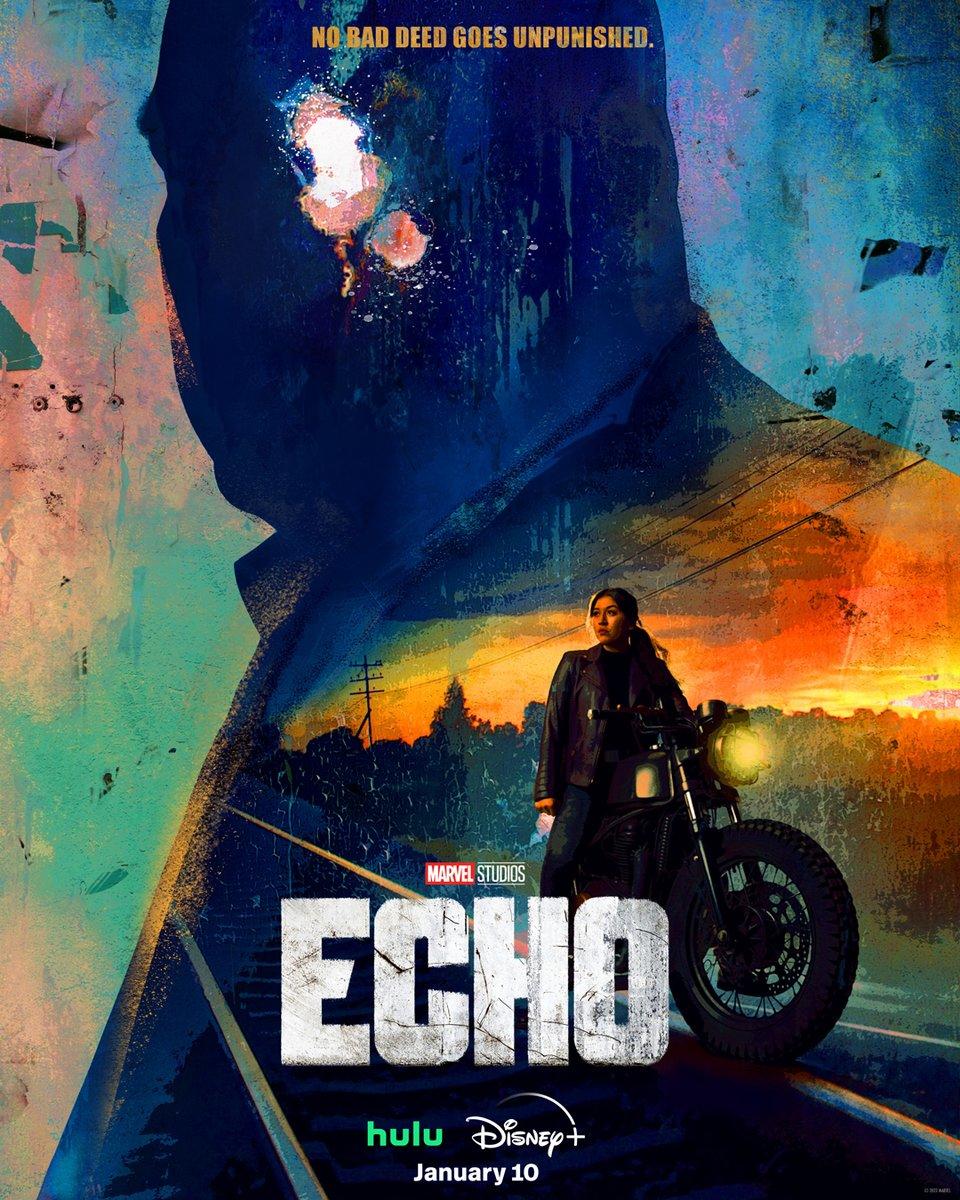
2023 was a rough year for Marvel Studios, as I explained in my review for "The Marvels". 2024 was looking to continue said rough patch with the first project of the year, "Echo." Along with reports of a troubled production, the Disney+ series was breaking the pattern by only having five episodes rather than six or nine and dropping all episodes at once rather than weekly; it seemed they were just throwing it out there to rip off the band-aid of another dud. As it turned out though "Echo" is the shot in the arm Marvel has been in need of.
As part of Marvel revitalizing their plans, "Echo" is the first series to be released under the "Marvel Spotlight" banner, designed to tell grounded stand-alone stories. Based on what we've seen with this series, this could be Marvel's way of bringing back the type of tone not seen since the Netflix line of series. Being the first TV-MA rated production from Marvel Studios, "Echo" breaks the mold and evoked the same feelings I had when "Daredevil" first began nearly a decade ago. The grittiness and ultra violence that helped each Defender series stand out has returned here, giving us some down and dirty action that will get your heart pounding; there's even a long tracking shot involving Daredevil in the first episode. While Marvel Studios has delivered (mostly) great series, "Echo" shows they can stray from the family friendly tone and still deliver the goods. The release strategy was probably beneficial as well. This was a story that needed to be told all together (another Netflix comparison), and much like season two of "Iron Fist", cutting the episode count down shows they know when a story doesn't need to be stretched out if there's no substance.
Reprising her debut role in "Hawkeye", Alaqua Cox shines as Maya Lopez. As a deaf actress and character, she does so well at conveying her feelings and emotions without saying a word. It's rare for a movie or series to have a main character like that, but it's nonetheless easy to become invested in her. I especially like the moments where all the sound goes away to experience things from Maya's perspective, which seems to happen during pivotal moments such as her (presumably) first kill. What makes Maya's arc so interesting is that she's not initially heroic. Her goal at the start is to usurp control of Kingpin's criminal empire and she doesn't seem to care about putting her family in the crossfire to achieve that. As the series goes on though, Maya learns to break free from Kingpin's influence and embrace not just her living family, but her ancestors. Like their projects with diverse leads before, Marvel once again does a great job at portraying cultural heritage, this time showcasing Maya's Native American roots; it plays a part in her powers manifesting as well as receiving her "supersuit" and the Echo codename in the final episode. Maya's interactions with her family are enjoyable as well, with good performances from each actor in their respective role. They also each played an important part of the series' climax, further cementing the theme of familial bonds; the grandfather (played by Graham Greene) isn't present for that, but he's still a great character throughout the series.
Vincent D'Onofrio still casts a terrifying presence as Wilson Fisk. The series dives deeper into his father figure role to Maya, evoking a Thanos/Gamora like relationship. He cares for her and will go to any lengths to protect her, but goes to even greater lengths to avenge her betrayal. Looking to the future with projects like "Daredevil: Born Again" and "Spider-Man 4", Marvel is definitely building Kingpin to be a street-level Thanos, making my earlier comparison apt. The post-credits scene sets the stage for that, though I feel they'll be somewhat retreading ground from season three of "Daredevil."
"Superhero fatigue" may be affecting some, but "Echo" will give fans of all kinds a unique character along with what's been missing from Marvel lately. If you're a fan of what came before from Netflix and wanting something new of that variety, "Echo" should sate your appetite.
The end of 2023 also sees the end of the DC Extended Universe with "Aquaman and the Lost Kingdom". I still think the first Aquaman film was the best entry of the DCEU, but I was entertained with its sequel, even though they seemed to play it safe for the most part.
In a way, it's more of the same from the last film. There's no major new character additions, at least not ones that are fully fleshed out. Though I will say a lot of the returning cast still turn in good performances, particularly Jason Momoa's Aquaman. I really enjoyed seeing him as a father and how he's able to reconcile with his brother, Orm (played again by Patrick Wilson). Anything new that is added doesn't feel fully original. I noticed a lot of story beats and imagery reminiscent of Taika Waititi's Thor films. They even seem to go for "Star Wars under water" vibes with Black Manta (played again by Yahya Abdul-Mateen II) getting an elaborate ship with crew members in uniform ala Darth Vader commanding a Star Destroyer and a Jabba's Palace like scene with Martin Short playing the Jabba like character.
The CGI in the film is about half and half. Most of the time it looks good with great imagery that once again leans into director James Wan's horror style. Other times though things don't look fully rendered, like how some bodies look rubbery during the action scenes. And I don't know if it was a theater issue, but there were a couple scenes under water when characters are talking where they seem to shake, like there was a glitch they didn't catch before release.
For the most part, the climax was fun. I enjoyed the action and I could swear the part with the whales was somehow a callback to a joke from the first season of Dragon Ball Z Abridged. The only gripe I have with it is the big bad seemed to be beat a little too easy after all the build up to what a threat he was. While the film doesn't give a grand finale to the DCEU, it at least brings Arthur's story some closure. The character gets a happy ending and accomplishes the goals his loved ones hoped for him.
After "Blue Beetle", I'd say "Aquaman and the Lost Kingdom" is the second best DC film this year. It's not groundbreaking like the first film, but there's still some entertainment value that allows the King of Atlantis to go out on a good note and the DCEU on an okay one.


.png)