Before I begin the review proper, I'd like to say we are nearing the end of an era. Despite its high praise and my hopes it wouldn't be, Daredevil was indeed cancelled after season three, meaning all the Marvel Netflix shows are nearing the end. While I theorized this was Marvel's doing since Disney was beginning their own streaming service, another plausible reasoning is Netflix being petty about the coming competition. With everything that's come out about the subject, I myself lean towards Netflix being at fault. Even though things are winding down, it doesn't mean we can't enjoy what we have while we can. That being said, let's talk about season two of the Punisher.
The first season of Punisher for me ranks among the best of the Marvel/Netflix shows alongside Daredevil and Jessica Jones. Season two continues what makes the show unique with some new elements added in, though it doesn't quite leave the same impact as before.
I'll start by saying that Jon Bernthal continues to kill it as Frank Castle (pun intended), with the most human portrayal character yet. The range of emotion he shows and the amount of damage he goes through will make you care for what happens to him on different levels.
When we last left Frank, he was given a new identity by the government after helping capture Billy Russo, Frank's former friend and the one ultimately responsible for his family's death. Season two begins with Frank on the road travelling the country, as he attempts to let the past go and find some peace. But in true "just when I think I'm out" fashion, Frank finds himself back in the fight, yet he finds it liberating. Part of Frank's journey this season is accepting who he truly is and what he needs to go on.
Ben Barnes returns as Billy Russo this season to fulfill his villainous destiny as the villain Jigsaw, though it is quite different than one would expect. For one thing, he isn't technically called Jigsaw, though the way things go with the MCU, many villains don't get their comic book name, so it's not a big deal. But the most notable difference from the comics is that his face isn't that cut up despite what Frank did to him in the season one finale. He does still have scars, and while it's not horrific, your eyes are still drawn toward them. Instead, the real damage done to Billy is psychological. After the beating Frank gave him, he suffers from PTSD and apparent memory loss. To me, this makes him even scarier than last season. You never know when he'll go off the rails. It's similar to how I felt about Bullseye in Daredevil. What makes him a deadlier adversary though is that he knows his opponent, Frank, well, and one of his goals is to make him feel as he does and bring him down his level. He also wears a mask he designs to reflect how broken he feels on the inside, which is a real therapy technique some soldiers use to deal with their traumas. A lot of people will be upset that this isn't the Jigsaw they were expecting, but considering the overall theme of PTSD and how a majority of the characters on the show suffer from it, I see it as a clever twist on the character.
Of the new characters this season, the breakout star for me was Giorgia Whigham as Amy Bendix. A teenager caught up in a conspiracy that got her friends killed and now being hunted, Amy is able to find protection with Frank. I love the relationship between the two and how it grows throughout the season, from trying to trust each other to forming a surrogate father-daughter relationship. I also kind of find it similar to the Batman-Robin dynamic. Like Frank, Amy lost everyone she cared about, and while it's not like he's molding a sidekick, he wants to teach her how to defend herself when needed, as well as making sure she can have a more peaceful life in the end compared to him. As a character in her own right, she acts like a teenager would, being impetuous and making stupid decisions, but you can tell she's good at heart.
Besides Russo, we have another main villain in John Pilgrim, a hired gun for a far right church group run by corporate parents of a US senator. On one hand, I like how Punisher is the only other Marvel property besides Captain America to include political conspiracies and corruption, and the nature of the church is almost cultish, which is something new for the MCU. And while I do like Pilgrim's character from his complexities to where his journey ends up and the fact he is able to combat Frank in hand to hand combat, I fear he suffers from the same issues that were present from "Thor: The Dark World." Much like how Loki overshadowed Malekith, I found myself much more interested in the Russo storyline compared to Pilgrim's. Yet between the two, I felt Pilgrim's storyline had a much more satisfying conclusion than Russo's, and I feel like that's a disservice since Jigsaw is considered Punisher's biggest villain. This is my biggest problem with this season; when you mix two different storylines, your audience will be more invested in one than the other. I think what would have helped is if they gave each their own half of the season; have Frank protect Amy against Pilgrim in the first half while building up to Jigsaw for the second half.
It's hard to top the violence that was present last season, but the show creators found new and creative ways to keep things interesting. Episode three features a siege by Pilgrim and his followers on a police station Frank and Amy are being held at, with Frank having to help the officers make it through alive. Episode ten shows Russo trying to make Frank experience the nightmares he did, mixing a physical onslaught with a psychological one. And the finale has a shootout between Frank and Pilgrim through the walls in a hotel; they can't see each other at all but it's almost like they can with how they're able to avoid each other's close shots.
While the first season is definitely better, I don't see season two as a major drop in quality. The direction may get a little zig-zaggy, but I still consider Punisher to be one of the best things to come from the MCU. And for what's most likely the series finale, the show does end on a positive, albeit ironic note that Frank's crusade will continue. If we're lucky, maybe we'll see Jon Bernthal's Punisher return one way or another.
5 down, 1 to go. The last Marvel/Netflix series remaining is Jessica Jones with its third season. Here's hoping this line will go out with a bang as much as it began.
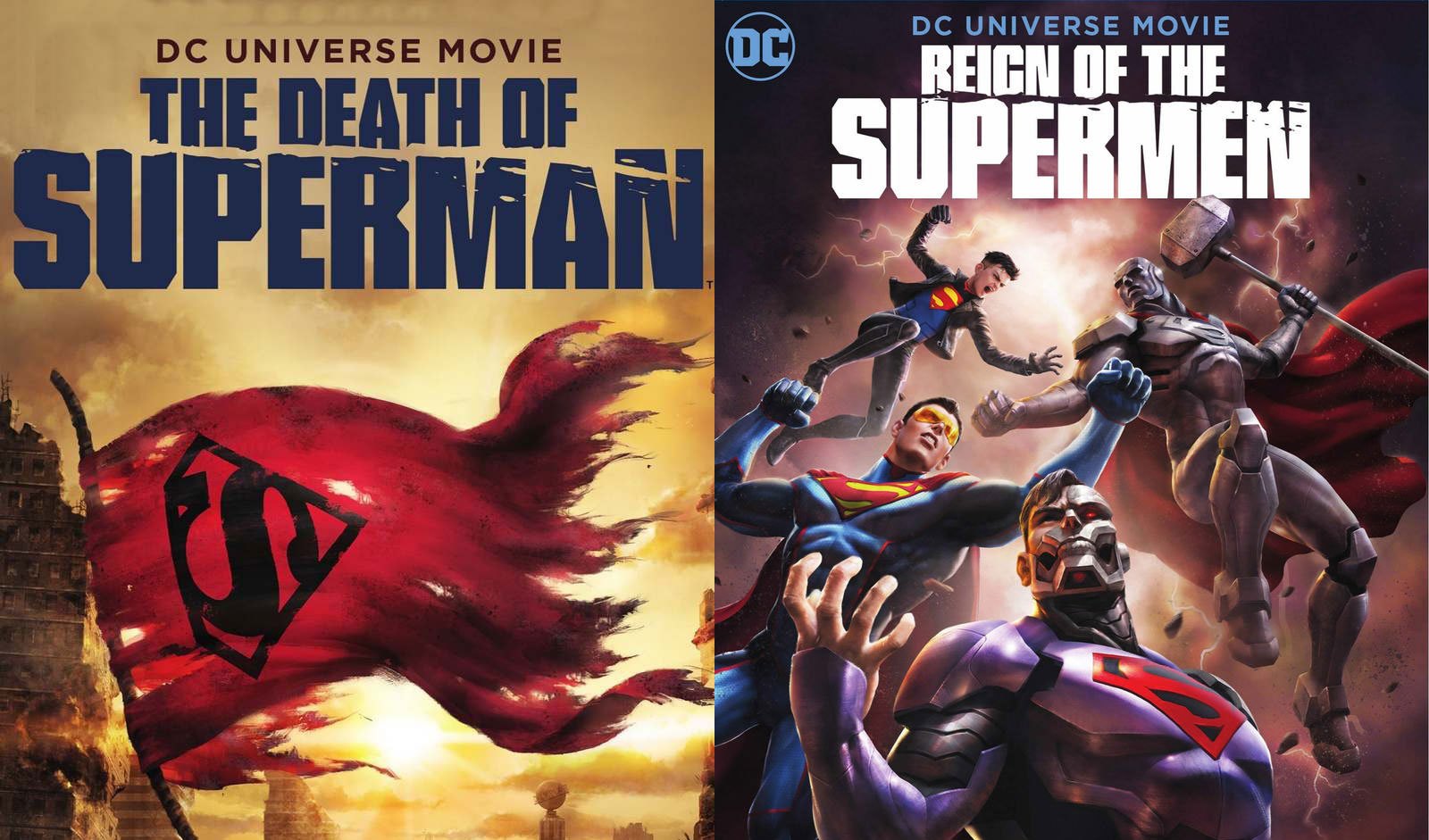
When the DC Universe Original Animated Movie line began in 2007, the inaugural film was "Superman: Doomsday", an adaptation of the classic Death and Return of Superman storyline from the 90's. Now we have come full circle with yet another adaptation, though this time it was given the two-part treatment, with "Death of Superman" and "Reign of the Supermen". While the "Doomsday" version was more condensed, the new version allowed for the story to be more faithful to the comics and include various characters that originated from the storyline. When this was announced, I wasn't too keen on DC redoing an animated film they already produced; if it wasn't for it being part of the DC Animated Movie Universe that began with "War", I may not have been interested. "Death" had come out at the end of last summer, but I wanted to wait until "Reign" came out to get the full story at once. Then special double feature screenings of both films were announced, which meant I could get the most out of it by seeing it for the first time on the big screen. The wait was definitely worth it as I had an epic time viewing these films, as they succeed on many different levels.
If anyone is going to get the most out of these movies, it's fans of Superman. I know that probably goes without saying, but these are the first animated Superman centered movies since "Unbound" in 2013. After so many Justice League and Batman movies, it's honestly nice to see DC branching out like they have recently with Teen Titans and Suicide Squad and finally giving Superman the spotlight again. And while Superman has been present in the DC Animated Movie Universe, he hasn't actually had much focus having to share the screen with others in the Justice League movies. The most we've gotten out of him is his romance with Wonder Woman. Though other Justice League heroes are present here, this story is all about Superman. Being a two-parter gives them plenty of time to flesh out Superman's world than ever before in this universe, as we're given proper introductions to characters like Lois Lane and Lex Luthor, who are voiced fairly well by Rebecca Romijn and Rainn Wilson, respectively. It was also nice for them to include both Jonathan and Martha Kent. In my opinion, it's the best dynamic when it comes to the Kents. I enjoy seeing Clark have two parental figures to look to for guidance, instead of just his mother or both of them being dead. All these factors tie in to what is the most important theme of the movie: Superman himself. We see how vital Superman is to Metropolis, the world, and the Justice League. When the moment of his death occurs, it's a real emotional moment, with Lois, Jimmy, and the League at the scene while the rest of the world watches on their TVs and devices. In my view, this adaptation succeeds in capturing what made the original storyline so memorable to people.
While this is a closer adaptation of the original storyline compared to "Doomsday", much like "Judas Contract", there are several changes made to have it fit within the DC Animated Movie Universe, though it is mostly faithful. Though being part of this animated universe lends itself to one of the elements I loved about this film: the callbacks to continuity. The films build upon and refer to several events and characters from the previous films in this universe, going all the way back to "War". It's like "Infinity War" and "Endgame" in a way that it's pay off for following the universe since the beginning. Coupling that with watching "Death" and "Reign" as one long story really helps with the epic scale they set up here.
The action is top notch and some of the best to come from the DC animated movies. When it comes to Doomsday, it gets downright brutal. It's definitely a lot more bloody compared to the original animated adaptation, but it helps build up how deadly Doomsday is. When the League attempts to fight him, there's a real sense of dread. From breaking through Green Lantern's force field to shattering Wonder Woman's sword with a punch, even though you know they'll make it, you're still scared for them. Then of course, it's the showdown between Doomsday and Superman. This is a fight for the ages, outdoing every adaptation of their fight that came before, both animated and live action. The fights between all the various Supermen are also entertaining as well with how destructive they can be.
Of all the new characters introduced, the breakout star to me was Superboy, a clone created by Lex Luthor. Steel is always a fun character, Cyborg Superman was an interesting villain with a good motivation, while Eradicator was kind of meh to me. Compared to all of them though, Superboy really stands out. While he's trying to be his own Superman, he's still just a teenager who wants to find his place among the heroes and be liked by the public. It's clear he needs proper guidance, and he's sure to find it with Superman and his family. I hope to see him more in future films, especially if he joins up with the Titans; just imagine the interaction between him and Damian.
Much like my "Spider-Man: Homecoming" review, I'm including a spoiler section that you can skip if you don't want to read it.
**********BEGIN SPOILERS**********
Bringing Darkseid back and being the mastermind behind both Doomsday and Cyborg Superman was a stroke of genius. Not only does it help tie everything back to "War" like I've been saying, but they do his character a lot more justice, since I had a bit of a problem with him in that first movie. He shows a lot more personality and the ability to plan things, rather than just "I'm evil and taking over your planet just because". It also helps that he's now being voiced by Candyman himself, Tony Todd (who also did Zoom's voice on the Flash TV series). Darkseid should have a booming dark voice, and Todd is a good choice. The post credits scene of "Reign" also hints that we may be getting an adaptation of the "Darkseid War" storyline soon, especially with Lex Luthor asserting himself onto the Justice League like he did in the comics prior to that. Though they may have to call it something else so people won't get it confused with "War".
I had a feeling it would happen beforehand, but they finally retired the New 52 look Superman has had since this universe began. Now he's wearing his second Rebirth suit.
->
Considering they went back to the classic suit in the comics, I figured the movies would follow suit. It doesn't have the red underwear, but honestly, this is a better fit. And comic wise, I wish they stuck with this look, since it still looks like classic Superman sans the underwear and works as a modern take. I know people make a big deal about the underwear, but I can take it or leave it.
********** END SPOILERS **********
Overall, "Death of Superman" and "Reign of the Supermen" not only creates an epic story on par with its source material, but also plays to the strengths of being part of a larger universe between having build-up from the past and good set-up for the future. It's a must see for current Superman fans and I see it as a way to make new Superman fans out of people.
I've been playing Spider-Man games since I was 10 years old, starting with Activision's first game on PC. After that, I got every major Spider-Man game released on Xbox and Xbox 360, enjoying them all to some degree; even the bad ones had positive elements. Then came the announcement of a new game being exclusive to the PlayStation 4. Considering Spider-Man's my favorite superhero, you're damn right I'd cross gaming platforms to experience not just the best Spider-Man game of all time, but the best superhero game period.
If the trailers weren't any indication, from the very start of the game, there's a real cinematic quality to it. While there's clear influence from the Batman: Arkham games, what places Spider-Man above those is that you deal also with Peter Parker and his personal problems, and that it happens over a longer period of time rather than one night. It gives you time to breathe and really get invested in the characters and their relationships. And it's that investment that delivers the powerhouse of emotion that comes from the ending, both in the final boss battle and what happens afterwards. No other superhero game ending has brought me close to tears as this one.
Going back to the cinematic approach, a keen observer can notice elements that homage or were inspired by all the live action films. We have Spidey stopping a train like in "Spider-Man 2", as well as the more tech-savviness of the MCU. And without spoiling anything, I can't help but think they reworked ideas used in the Marc Webb "Amazing" films, and actually did them a lot better. Also, even the score to the game rivals those from the films.
I once considered that "The Spectacular Spider-Man" animated series was the best adaptation of the character. Now I believe this game has usurped that position (though "Spectacular is still the best animated series). As stated before, there's real investment to be had in the characters, and that's due to the great writing on display as well as the voice actors. Even the minor villains have some entertainment value. But it's the main villains that are greatly approved upon: Mr. Negative and Dr. Octopus.
In the comics, Mr. Negative was just a guy who had a split personality, with the dark side having the powers. Here, the character of Martin Li is given a more sympathetic backstory, proper motivation, and more complexity. He's a man who does a lot of good, but just can't let go of his quest for vengeance on those who wronged him.
And of course, you have perhaps the best version of Dr. Octopus yet. It mixes the best elements of "Spider-Man 2" and "Spectacular Spider-Man"; he's a man that only wanted to do good, but was pushed too far by those hindering his work and driven to do terrible things. It's certainly more dramatic than his arms telling him to rob a bank. The fact that he's Peter's mentor in the game even adds that extra punch in the final battle. I also have to give props to his voice actor, William Salyers (Reverend Putty on "Moral Orel" and Rigby on "Regular Show"). He has great range from an inspiring mentor to vengeful supervillain. Finally, there's hints that "Superior Spider-Man" situation will occur in a future sequel (hence why we didn't get that skin in the game).
The last thing that helps give this game a more realistic cinematic quality is that it isn't afraid to get serious. Spider-Man games are usually rated T, like this one is, but they've always stuck to being kid-friendly. There are actual terrorist attacks from bombs and epidemics, and clear acts of murder. Of course, some of these elements have appeared in Spider-Man games before, but the fact that these are the best and most realistic graphics than any of the previous ones gives it that extra oomph.
On to the gameplay. The most fun part one can have is the web-swinging. It's probably the most realistic the mechanic has ever been, and you can just swing on and on and not get bored, especially with all the momentum you build up as you go. It's quite comparable to the Amazing Spider-Man films, which I still think had the best web-swinging of all the live action films.
The combat, to me at least, was quite a bit of a learning curve. Honestly, the hardest part was remembering the X button is placed different than an Xbox controller. But even then, it took me quite awhile and dying over and over to realize that I couldn't just dive in headfirst. Batman may be a skilled combatant, but despite operating for years, Spider-Man isn't. He's a thinking man, and that's how you need to operate when it comes to the fight. I'll just say that dodging is your best friend (especially when you fight Taskmaster), and throwing objects will help as well; both will help build your focus bar you can use to heal or perform finishers.
There are times in the game that allow you to play as Mary Jane Watson and Miles Morales, allowing players to think on their feet (since they're basically stealth missions) and see these characters can do just as much good as Spider-Man and not just need to be saved.
While this isn't the first open world Spider-Man game, this is the first one that really feels like a living, vibrant New York City. There's a real sense of community and the idea that Spidey's a true New Yorker. Along with hearing citizens praise or heckle you, Spidey can even walk down the street and interact with people, who you can give high fives to and take selfies with.
As a staple of most Spider-Man games, there's a variety of different costumes one can wear, and it's probably the most than any game before. In addition to adapting the movie suits, I give props to the game designers for taking fan-favorite comic suits and reworking them just enough to help them fit the aesthetic of the game's universe. The detail in them shows with reflection showing in the eye pieces, and suits with glowing aspects (like the Stealth suit) will shine on other objects. My favorites to use were the MK IV Spider-Armor and the Resilient suit; both were very pleasing to the eye when using them during story missions. The game even added on the original movie trilogy suit, and while I didn't care if it was included or not, using it did bring back some memories of the old movie game days. In addition, almost every suit came with its own special ability, which can be usable for all the other suits. My favorites were the Iron Spider legs, getting assisted by "Droney" from "Homecoming", and a special move that allows you to blanket the area in webbing, trapping any thug in the vicinity.
There is one thing that does bug me about the game. You know how J. Jonah Jameson always goes on about Spider-Man being a menace? Well, he may have some merit to that claim in this universe. In a number of instances, whether by his fault or not, Spider-Man causes A LOT of collateral damage via planes, trains, and automobiles (though technically it's a helicopter and not a plane, but you get the idea). Hell, Spidey can't even rip the door or trunk off a car to free a trapped civilian without throwing said parts into a crowd on the street, who are thankfully quick enough to move out of the way.
Part of the reason this review is way past the high point everyone would be talking about this game is because I wanted to play all "The City That Never Sleeps" DLC missions (then there were the holidays, and I had to watch and review "Runaways" and "Titans"). What I really liked about this DLC is that it wasn't just additional missions for a quick buck. They actually included new types of foot soldiers to up the difficulty during combat, and story wise, it furthers certain characters that will most likely play major roles in future sequels. It's just a shame that the new suits included didn't have their own special abilities; it would have been cool to have Spider-Stingers for the Kaine/Scarlet Spider II suit. Lastly, the DLC came with challenges involving the villain Screwball, and my word is she the most annoying villain ever. If we do get a "Superior" storyline in a sequel, I wouldn't mind reliving a certain moment from issue 6 of that series.
Overall, the new Spider-Man game was well worth buying a PlayStation 4 for, giving both Spidey fans and gamers an extravagant experience on par of the various film series. I greatly look forward to the sequel and the villains set up in the post-credits scene and DLC.
Teen Titans has been a recurring topic on my blog for the last few years, from top tens lists of the worst episodes of "Go!", animated movie and comic reviews, and my thoughts about how they should be brought into the DCEU. In regards to that last part, because of the TV show, a movie doesn't seem likely. DC has this thing about not wanting different depictions of characters happening at the same time, thinking it will cause confusion. It's crap reasoning, but it's something fans have to begrudgingly accept. But that brings us to "Titans", the first live action original show of the DC Universe streaming service. Even before the show's debut, it got a lot of flack, ranging from stupid things like racists complaining about Starfire's casting, to legit concerns like set photos revealing character looks. Then the trailer hit, and many were taken aback by the dark tone, from harsh violence and the infamous "Fuck Batman" line coming from Robin. Considering most adaptations of the Titans have been kid friendly, it is a surprise this is the route DC decided to go with their first live action depiction. Despite everything though, "Titans" has won over critics and fans. So now that I've finally gotten around to watching the whole first season, what do I think? Well, it has a lot of positives, but quite a few negatives that can be seen to hurt it overall.
Right off the bat, I will say that the story is good, albeit the pace is slow at the start, with Beast Boy not really factoring into the story until episode 4 and Dick not telling them he's Robin until episode 5. It's basically a combination of the team origin story and the Trigon storyline. While the latter has been done before in animation, the realistic setting of the live action series gives us a unique take on it. And despite the seriousness, they do give us time to breathe so that we could enjoy the characters getting to know each other, as well as get some laughs in.
When the series begins, Robin is the only established hero of the team, with Dick Grayson trying to make it on his own after leaving Batman and Gotham. Therefore, this is also the origin story for Rachel/Raven, Kory/Starfire, and Gar/Beast Boy, meaning they don't have legit super suits yet. Nonetheless, the costume designers did a good job creating looks for the characters that still have some semblance of the classic depictions. You have direct homages like Gar's jacket being red and white and Rachel wearing her hood at times (you know she has to have the hood), but you also have minor details one may not notice, like Raven's forehead gem on a necklace and orange make-up on Kory's eyes. People will probably complain about Starfire and Beast Boy not actually being orange and green, but not all TV shows get the same budget as movies.
Brenton Thwaites does a really good job as Dick Grayson/Robin. As Dick, we see this guy wanting to leave his past behind for a normal life, but still feeling pulled to his old ways. As Robin, we see the legit protégé to Batman who can kick a ton of ass. On that note, there's a lot of brutality to his fighting style; while this isn't part of the DCEU, I kept picturing Ben Affleck's Batman as the one he worked with considering how similar they fight. And going off of that, what's really interesting is that we learn about Bruce/Batman through Dick's eyes and how he feels about him. In many versions, Bruce and Dick's relationship is strained, especially after Dick leaves, but we usually see it from both sides. Here, it's all Dick, and I can actually agree with the problems he has with Batman, like taking on young sidekicks like him and Jason Todd, or even putting trackers in their arms. A lot of Dick's struggle in this series is trying not to be like Bruce, even though at times he goes as far as Bruce would. While Dick can blame Bruce for his problems, it was in episode 6 where I started to see it as about half and half. Without spoiling too much, Dick goes too far in a certain situation, and while that's on Dick's head, I can't help but feel Bruce failed Dick in a way; Dick was going through a tough time and Bruce should have done more to help him.
Two characters give a good contrast to Dick in different extremes. The first is the aforementioned Jason Todd, the new Robin. He basically embodies all the negative aspects Dick believes happens when being a sidekick to Batman. While I wasn't around during the time Jason was Robin in the comics, if he was anything like he was in this series, I see why fans at the time voted for Joker to bash his head in with a crowbar. Of course, it's obvious that was the intent with what Curran Walters brings to his portrayal as the character, and he does well making Jason so unlikeable. It also does well showing his potential future as the Red Hood should that ever happen in this series.
The other extreme is Donna Troy. As kids, she was Wonder Girl to Wonder Woman and was a friend to Dick. Now grown up, Donna has left behind the superhero life but still seeks to do good as an investigative journalist. Basically, she's the more well-adjusted former sidekick between the two. Of course, having Wonder Woman as a mentor is probably less stressful compared to Batman. She and Dick have a good back-and-forth with each other, showing a strong friendship, and she plays a big role in the last few episodes of the season, and I hope that continues to be so in season two.
Despite Dick getting A LOT of focus, I think the show tends to forget Rachel/Raven is the most important player here. She's the target most of the show's villains are after, all working in some way for her father Trigon, and the reason the Titans come together to begin with. Unlike the animated depictions, this is the youngest we've ever seen Raven and she's just discovering her powers. It's interesting to see her in a vulnerable state as she's realizing where she came from and trying to remain good despite the darkness inside her, along with the nice moments where she finds comfort in the other Titans; in Dick's case, it reminds him of when he lost his parents and how Bruce took him in. I've said before how Raven's powers would do well in live action with a horror flare to it, and man, they do not disappoint on that. There were times where her visions, powers, or outbursts really did scare me.
This depiction of Starfire is quite different and I'm not sure how I feel about it. She's still an alien from Tamaran, though it's unclear if she's a princess. Considering in this version she was sent to prevent Trigon's rise, I'm going to have to say "maybe", as it's possible either her sister Blackfire sent her or she felt the need to go herself. I'm guessing this is something that will be explored next season. As for what we know now, Anna Diop does a good job of showing her caring attitude and her warrior nature; she's a partner to Dick (helping reign him in at times), a big sister to Gar, and a mother figure to Rachel.
Besides Dick, if anyone is closest to their traditional depiction, it's Gar/Beast Boy. Ryan Potter brings a cheerful attitude that helps bring levity to a serious show. He likes to have fun, make jokes, and has a lot of geeky tendencies, which I think a lot of us can relate to. It's his relationship with Rachel that I enjoy the most though and how far the both of them will go to protect each other. The one complaint I have though is that he can only turn into a tiger. Granted, he's still new to his powers and maybe it's a budget thing, but I little more variety would have been nice. Prior to this, Potter was lobbying to play Tim Drake/Robin in the DCEU, and while I think he would have done well there, it's still nice to have him part of the DC universe.
Besides our main heroes, we have two other groups introduced this season. * Doom Patrol: Gar at first lives in a mansion with a few other odd individuals, whose lives were saved but appearances drastically changed by scientist Niles Caulder. This includes Robotman, Negative Man, and Elasti-Woman. The episode they appear in was a lot of fun, making me think of an amalgamation of X-Men and Fantastic Four with how they interact with each other. There's a good mix of practical make-up and CGI, and I give a lot of props to them having a full-on Robotman suit instead of being computer generated. The Doom Patrol are getting their own series this year, and after seeing them here, I'm definitely looking forward to it a lot more. * Hawk and Dove: Old friends of Dick, Hank Hall and Dawn Granger are partners in crime fighting and in real life. Hank's a hot head (which is very faithful to the source) while Dawn's this sweet girl, and it made me wonder how these two could have ever become a couple. Then there was a flashback episode showing how they got together, and it was one of the best of the season, showing how something beautiful can come from tragedy. On that note, like in the comics, Hank's brother Don is the original Dove who dies. But unlike the comics, his death here is just a freak accident having nothing to do with superheroes and villains. It's a nice subversion of expectations considering how superhero death in comics nowadays has lost the impact it used to have.
I figured I'd get all my positive thoughts and character analyses out before I dive into the negative.
I guess the biggest issues I had with the series is how far they took with the dark tone. When the first trailer hit, I said that this was DC's answer to Marvel's Netflix series. While that is the case, much like "Suicide Squad", this is another instance of DC trying too hard to be like Marvel. In this instance, they take more advantage of the TV-MA rating, and it gets to immature levels. "Hey, we're using the "F" word a lot! Robin just stabbed that guy in the crotch! We're so edgy!"
My other major issue is how the season ends. See, the season was originally set for 12 episodes, but ended at 11, with episode 12 going to act as the season two premiere. The problem there is that the final episode is a fantasy episode that is so clearly fantasy that there's no investment to be had in it. Even then, there's no proper conclusion to this season's storyline, plot threads were set up that won't go anywhere until next season, and I'm left with many other questions about characters' pasts. While there's nothing wrong with ending on a cliffhanger, there still has to be some resolution. It's just a crappy way to close things out, and it boggles my mind why DC would do it this way.
Overall, despite the difference in tone, I feel "Titans" is a worthwhile adaptation of the superhero team. The positive traits outweigh the negative, but the few negatives it does have are hard to ignore, and that's not including the lack of proper ending.
I started out this year with "Runaways", and it seems I'm ending the year on it too. I praised the first season of the show and how it made me invested in a Marvel property I generally had no knowledge or interest in before. As usual, I always wonder whether the second outing of something will be able to catch lightning in a bottle as the first did. Season two is quite different than the first, in ways that help it stand out, but also in ways that make it inferior to the first.
Unlike my season one review, I won't be vague this time around. Since it's been almost a year since season one and hopefully the show has gathered an audience, I will be going into more detail this time around.
Picking up from the end of the last season, the Runaways live up to their namesake after confronting their parents about their murderous nature, but their plans to leave town are hindered when their parents put out a news report making them look like the killers of one of their victims. So right off the bat, we leave behind the traditional tropes of teenage home and school life as our main characters adjust to their new normal.
While this is a dramatic show with many big moments and development, the parts I enjoyed the most were the small ones. Despite leaving their old lives behind, we still have teenagers dealing with teenage things. We have relationships that develop and have their ups and downs, such as Nico with Carolina and Gert with Chase. You'll become quite invested where you'll enjoy the sweet times and feel sad when things seem to start breaking down for them. Besides that, you see the characters making the best of their situation and still have fun, like when they throw a quinceanera for Molly. There's a clear message here that even through the dark times, you have to stop enjoy the brief moments of joy and the ones you share it with.
After two seasons, I have to say my favorite characters of the series are Nico and Molly.
While Alex may be the tactician of the group, Nico is very much the field leader. She's able to take charge and get the others to listen to her, showing much strength in her character. Through all this though, she struggles by keeping her relationship with Karolina in a good place as well as trying not to be as domineering as her mother is in her own group. On another note, I just love her fashion sense. From a Black Parade style jacket to some Victorian style dresses, her goth attire helps her stand out as the best dressed of the group.
As for Molly, she has really grown over these two seasons. Being the youngest of the group, she always feels like the outsider with the most to prove; even in season one, no one would even listen to her when she tried to tell them about her super strength until she finally displayed it. This season, it finally occurred to me that she has suffered the most out of the whole group. Her parents were killed when she was young and she was taken in by Gert's family, so unlike the others, she has no blood relatives left. This motivates her to make sure no one suffers like she has, saying that they should use their abilities to do good outside their own problems, as well as put her on a journey to realize that the Runaways are the family she needs (her and Gert also grow closer as sisters this season as well). I've much enjoyed watching her go from this insecure kid to one of the strongest characters on the show.
I do have to give props to Alex's character this season too. He's kind of the odd man out of the group since he doesn't have any super technology, alien genes, or even a dinosaur. He's essentially the normal one, and at the beginning of the season, he's still tempted by some semblance of a normal life. He grows close with his father's old friend Darius, as well as strike up a relationship with his young sister-in-law Livvie; he wants to fill the void left from last season in terms of family and romance. It just makes it all the more crushing when he's forcibly snapped back to the reality of his situation, fueling his desire to see his parents brought to justice even more. You could say it conflicts with his role as team leader, with his own vendetta getting in the way of what's good for the team. It makes for good character complexity, showing he's not perfect but you still hope he realizes the right thing to do.
As for the PRIDE parents, while there were definitely shades of gray last season, I found there was a lot more black and white this season. I liked only a few of them since they seemed to genuinely have good intentions even until the end, some of them are still in that gray area, but many of them act so reprehensibly that I can't see them as anything but villains. While I guess some could still feel some sympathy for the ones in the last group, I just didn't feel the same about these characters like last time where I could still see a hint of reluctance in their actions.
Speaking of villains though, Julian McMahon returns as Jonah, the leader of PRIDE, who we later learn also goes by "The Magistrate". McMahon continues to provide a great villainous and at times creepy performance, and we get to learn a lot more about his past, nature, and goals. Though perhaps we learn too much; not to go into spoilers, but let's just say he has something in common with Jacob from "Twilight", and it's not a good quality. Unfortunately, McMahon is out of the show two-thirds of the way into the season. While the character is still around in some way, losing McMahon means the show losing its most charismatic villain.
McMahon's departure brings me to another point that this season reminds me a lot of Luke Cage's first season. It feels like the overall season is comprised of two smaller seasons, with one episode at the half-way point feeling a lot like a finale, and the second half not being as strong as the first with characters making some really dumb decisions. That said, the second half still has some interesting and entertaining plot lines, going into the season's true finale, which promises a third season even more different than before.
Special effect wise, it's about half and half. A lot of the effects are still on par with the first season, like Old Lace and the powers of the characters. Other times though, the fakeness is glaring with scenes that are clearly set in front of a green/blue screen. This is just a minor problem I had though since it's the characters that are the driving force of the show.
It's worth mentioning that this season appears to have more connections to the broader Marvel Cinematic Universe. There's a brief mention of Wakanda, but perhaps the biggest connection is to "Doctor Strange" during the last third of the season. I won't go into details, but it appears to have to do with the Dark Dimension.
And while not necessarily a connection, there's one thing that happens that really bugs me. In episode eight, the PRIDE parents talk about Jonah as if he's the first real proof of alien life. I know it's harder to place the TV shows in terms of where they happen in relation to the films of the MCU, but I feel like it should be safe to assume that the first Avengers film happened already. That said, did they all just forget the Chitauri invasion in New York? You can't even say that Runaways happens before that since much of the technology and references are very modern. I know it's a minor detail, but it's just baffling that the Chitauri invasion was such a huge event to the world that it gets referenced in almost literally every MCU TV show, and yet it seems to be ignored here.
Overall, season two of Runaways isn't as groundbreaking as its first. But in terms of the second chapter of a larger story, I'm still enjoying these characters, the journey they're on, and the trials they'll all continue to face. The cliffhanger this season ended on has me itching to see what happens next even more than the previous season's finale. Unlike the Netflix shows though, I don't think we'll have to worry about this series being cut short and a third season announcement should be soon.
The last time we looked at the DC Extended Universe, it was with "Justice League", which while not terrible was met with some disappointment. This may have meant the end for the franchise had it not been for multiple films already in production, including "Aquaman", with Jason Momoa reprising his role from "Justice League". After the debacle of the previous film, I felt that as long as DC focused on making good movies and not worry about crossovers and future sequels, things should get back on track. "Aquaman" is the first film with that mindset. After seeing it at a special Amazon Prime member screening, I have to say that it was even better than I thought it'd be, and dare I say, it may have been even better than "Wonder Woman."
That being said, there are quite a few similarities between the two films. We're exploring a realm widely regarded as myth, with a protagonist whose journey is aided by a parental figure, mentor, and love interest, and facing two adversaries, one being a pawn and the other being of relation to the hero. Despite all that though, "Aquaman" does enough to help the film stand out on its own, making some twists and subverting expectations in ways I didn't expect.
Like "Wonder Woman", we have the "fish out of water" scenario (pun intended), but there are actually two in this film. Between Arthur and Mera, they're both exploring the other's world. Mera spends an extended amount of time on the surface world and grows a deeper appreciation for it despite its faults. As for Arthur, this is his first time actually seeing Atlantis and learning of its ways.
Much like Arthur, this is the audience's first time seeing Atlantis of the DCEU, and I found it absolutely gorgeous and it's a shame the screening wasn't in 3D. Like I said in my "Justice League" review, I really wish "Aquaman" had come out beforehand so we can really appreciate the side of Arthur where his powers come from. Granted Arthur is in a much different place by the end of the movie compared to how we see him in "Justice League", but I feel it would have been altered easily without effecting the overall narrative of both films.
Aside from the city of Atlantis, there are plenty of other visual treats to entice people. The scenes set in the sea are so well done that you'll actually feel like you're under water, from the waviness of the screen, the distortion of the actors' voices, right down to dust floating around. There are also a variety of different creatures besides the Atlanteans, from the sea creatures they use to fight and travel (including giant seahorses), tribes like the Fishermen and the Brine, and the giant Karathen. The most terrifying creatures though are the Trench, savage creatures that allow director James Wan to make use of his horror roots in a scene where they're chasing after Arthur and Mera on their boat and in the water; even though you know they'll make it, you're still scared for them. And while it's a minor effect, I was just so happy to see the telepathic ring that appears when Arthur uses his telepathy to communicate with sea life just like in the cartoons. Combining all of this makes for one of the most visually stunning action climaxes I've seen in film.
The fight scenes aren't just limited to the underwater scenes though, as there's plenty of action to be had on land as well. The opening fight scene with Arthur making his way through pirates hijacking a submarine is brutally fun, and I find it comparable to Batman's warehouse fight in "Batman v Superman" and Diana's No Man's Land scene in "Wonder Woman"; just a brilliant showcase of the hero's abilities. Much like Arthur, both Mera and his mother Atlanna are shown to be capable fighters themselves, proving them to be certified badasses.
While Jason Momoa was entertaining in "Justice League", a lot of people weren't too keen on his performance as the so called "Aquabro." I feel like this film will help him win some people over though, as we view Arthur's journey to becoming the hero and king comic fans know him to be, and I definitely see why Momoa was picked for the role way back for when it was just a cameo in "Batman v Superman". Also, I felt a lot of joy seeing him wear the classic Aquaman suit and him riding a seahorse.
As I said, Mera is just as capable a hero as Arthur, and it's helped by Amber Heard's portrayal of the character. Her development is much like Arthur's as we watch her drop the armor of her Atlantean ways and her views broadening. Watching the two progress together helps add to their chemistry, making for a literal king and queen powerhouse couple for the DCEU.
Momoa's chemistry also expands to his father Thomas, play by Temuera Morrison (who played Jango Fett in "Attack of the Clones"), and his Atlantean mentor Vulko, played by Willem Dafoe (who played Norman Osborn in the original Spider-Man trilogy). Seeing them act with Momoa's Arthur really made me believe the history they shared together, whether it be father and son drinking together, or a mentor trying to help his pupil reach their full potential. Also, I give props to the people who worked on their digital de-aging to make them look younger for flashback scenes; it's amazing how far special effects technology has come.
King Orm/Ocean Master, played by Patrick Wilson isn't really a standout villain to me, but he offers a good foil to Arthur. Besides their appearances and tolerance to accept others, while Arthur knows how to have some fun and has never really had much obligation to anything, Orm is very serious in his role as king and nothing is off the table in his goal to see his people flourish. Their differences are best exemplified in the interaction the two have just before their duel surrounded by a ring of underwater lava. Without spoiling much, the film does seem to imply potential redemption for Orm in future films.
When it comes to villains though, that show is stolen by Yahya Abdul-Mateen II as Black Manta. His motivation for revenge against Aquaman is established from the submarine hijacking scene mentioned before that ends with his father being killed. Already working for Orm, he forgoes any monetary payment, only wanting revenge for his father. He's given Atlantean technology, which he fashions into the costume he's well known for. This leads to their battle in Sicily, and he looks spectacular in action. I look forward to him appearing in future Aquaman films, and maybe even part of the Legion of Doom if we ever get a Justice League sequel.
Overall, "Aquaman" is a fun ride with great visual effects and amazing chemistry between actors, boding a promising direction for the future of the DCEU and proving how much success can be had when filmmakers' visions aren't interfered with by the studio. If you see one more movie before the year is out, make it worthwhile with the king of the sea.
My DC Extended Universe Film Rankings:
1. Aquaman
2. Wonder Woman
3. Batman v Superman: Dawn of Justice
4. Man of Steel
5. Justice League
6. Suicide Squad
After looking back at "Batman: Hush", I wanted to give the same treatment to another year long mystery involving my other favorite superhero, Spider-Man. In 2004, a new Spider-Man title was launched under the Marvel Knights imprint, written by Mark Millar (famous for other Marvel stories like Civil War and Old Man Logan as well as his own content like Kick-Ass and Kingsman) and drawn by Terry Dodson. The timing for this write-up works out well because this year marks the 20th anniversary of the Marvel Knights line. Marvel Knights was meant to tell darker stand-alone stories with characters while still remaining in continuity with the main universe, until 2006 when it was reformatted to tell out of continuity stories. While the moniker has been associated with street level characters or anti-heroes like Daredevil, Punisher, Ghost Rider and Blade, the more outlandish characters like Captain America and the Fantastic Four have also had titles under the line. As Spider-Man is sort of the bridge between the two extremes, it's not that far-fetched for the web-slinger to join the Knights crowd. While the title did continue after Millar's run, this story is generally what comes to mind when comic fans think of "Marvel Knights Spider-Man".
When this story was coming out when I was young, I was pretty invested. Much like Hush, it's been a long time since I read it, so I wanted to see how well it holds up. I'm going to take a different approach compared to Hush though. While it was a year long story, it was divided into three 4 issue acts: "Down Among the Dead Men", "Venomous", and "The Last Stand." This post will talk about "Down Among the Dead Men", and I'll return to the other two stores as soon as I can. I'll also be going through the story itself, pointing out details I like or don't. So let's dig into "Spider-Man: Down Among the Dead Men."
Issue one begins with two guys opening up a deli while arguing which is better between VHS and DVD, so that should tell you how dated this story is. The two continue arguing while taking out the trash where they discover a beaten down Spider-Man in the alley, followed by the Green Goblin showing up. He throws pumpkin bombs, and after throwing the two back into the shop for their own safety, the two battle it out, with Spidey hitching a ride on his glider for a good while. Spidey's narration states that the Goblin took people hostage in a church, threatening to kill them if Spider-Man didn't show, which is where their battle started. He also references a "truce" they had made in an earlier story, and that Osborn broke it with this act simply because he was bored. The two eventually crash and start fighting on the street, where Spidey gets the upper hand and starts screaming "Who's your daddy now, Osborn?!" Considering a line that occurs later in the story, Peter saying it to Norman is little cringey. Spidey starts looking around for something heavy, and someone in the crowd suggests the mail box. Spidey does hit the Goblin with the mail box, which the guy who suggested it found pretty brutal. He thinks Spidey could have caused brain damage, but the way it was drawn makes it look like he hit Goblin in the back down below his head. It's also worth mentioning that the guy kind of looks like Kevin Smith (of Clerk and Jay and Silent Bob fame), which is probably an intentional homage because Smith was originally intended to write the book but dropped out due to scheduling conflicts. While Spidey's webbing up Goblin, some idiot start poking at some pumpkin bombs that were scattered on the street, one of which goes off, hurting his leg. The idiot asks Spidey to FLY him to the hospital, prompting Spidey to see if anyone in the crowd can call an ambulance, to which one guy says he's calling the police to arrest Spidey and his "friend", the Goblin. As police are already showing up, the idiot starts mouthing off to Spider-Man about how he'll be thrown in jail, only Spidey's already made his exit. Ah, classic Spider-Man. Stops the bad guy and gets no thanks for it.
Peter heads back to Aunt May's house where before the Goblin's hostage situation, he and his WIFE Mary Jane were helping her pack things up, as they had gotten her apartment near the two of them. I emphasized "wife" there to make it clear that this was before the dark times. Before "One More Day" and the deal with the devil that erased their marriage. Peter's in bad shape after the fight (even throwing up in the sink), and while Aunt May's very concerned, Mary Jane says this is normal. At this point in time, Aunt May had finally discovered Peter was Spider-Man and the two became closer because of it. This was another thing that was undone with "One More Day" and another of the many mistakes that came of that story. Considering how Nick Spencer's current run on Amazing Spider-Man kind of feels like the stories before Civil War to me, I'm somewhat hoping Aunt May once again finds out Peter's identity. There's a nice scene with Peter and May packing up, even finding the engagement ring from when she almost married Doctor Octopus (seriously, Amazing Spider-Man #131; look it up). They talk about that despite losing Ben there, the house had a lot of good memories. Unbeknownst to them though, they're being watched by someone in shadows hanging upside down in a tree across the street.
Later on, Peter is at his job as a high school science teacher (that was something that lasted a good few years before he outed his identity in Civil War) in a scene where his students are talking about how he used to take Spider-Man's pictures and how he's married to a supermodel/actress, while referencing their brief separation. This part honestly felt like exposition for some readers to play catch up on recent events in the Spider-Man books. The principal then comes to Peter's classroom that he has a call from the city council, where we then cut to the cemetery, where the caretaker shows him the shattered tombstone of his Uncle Ben. Peter then receives a call on his cell from the mysterious upside down person (he's seriously hanging upside down while watching TV). The mystery man congratulates Peter, referring to him as Spider-Man, on bringing in Osborn. Peter tries to brush it off by saying he made a mistake, only for the man asking him what else he has to do to take him seriously besides defile his uncle's grave. He then taunts Peter about how bad things can get when someone knows Spider-Man's name and then mimics Aunt May by saying "Care for a wheatcake, sweetie?" Knowing what this could mean, Peter rushes off to Aunt May's apartment, swinging through the city in his civilian clothes. Peter knows the risk but knows there's no time, hoping he 's moving fast enough that no one will recognize him. Peter crashes through the apartment window to find the place in shambles, though I'm willing to believe Peter came in so hard that he did the damage himself.
As far as first issues go, it's not bad. It has a good fight scene, establishes Peter's relationships and the current status quo for new readers, setting up the mystery and makes you feel genuine concern for Aunt May.
Issue two begins with Peter begging Mary Jane to leave New York for her own safety. She reluctantly agrees as Peter assures her it's nothing he can't handle, basically lying to her and himself. He calls Black Cat for her assistance since she already knows his identity, but is down in Florida working a missing persons case, and wouldn't be able to be there until the next night. She suggests narrowing it down to those who know his identity, and Peter's mind jumps directly to Osborn.
It's worth noting that this was the first time in over 40 years that Norman was actually brought in for his crimes as the Green Goblin (which he probably feels stupid for because this happened all because he was bored). So when Spidey sneaks into the prison holding him, Osborn reveals he had a plan in case he was ever finally thrown in jail, that he revealed Peter's identity to someone they both know and to capture his oldest living relative. Of course, Norman also taunts Peter that he could be lying to him, messing with his head in his fragile state.
Spidey then heads to Avengers Mansion hoping they could connect him with Nick Fury, who also knows Peter's identity. Again, it's worth noting that at this point in time, while Spidey had his superhero connections, he was still much of an outsider in the community, preferring to work solo and in the case of this story, keep a close circle with those who already know his identity. He goes to the front door and talks with Jarvis through the intercom, who is skeptical that he's really Spider-Man. It's too bad that Tony Stark couldn't have put in some cameras by the door; you know, so Spidey could shoot a web or stick to a wall to prove who he is. Spidey's then confronted by armored SHIELD guards; at this point in time, Tony Stark was appointed secretary of defense and that entailed extra security. Having to do this the hard way, Spidey fights through the guards into the mansion until he's finally stopped by Quicksilver. Captain America arrives to defuse the situation as Spidey explains his aunt has been kidnapped and looking for Nick Fury to help. Cap tells him that Nick is in a parallel dimension for a week and can't be reached; only in comics would that be a believable excuse. Cap offers the Avengers' help, but Spidey's wary about his identity being revealed to them, even if by accident, pointing out that his secret being out is the reason for his aunt being in danger in the first place. Both Tony and Cap point out how their secret identities are public and how it's not so bad for them. Oh if only all three of them could see into the future and see how Civil War proved Peter to be so right. Spidey leaves frustrated with the Avengers and himself and takes a different approach. He pays a visit to crime boss the Owl, hoping his criminal connections could give him a lead, saying that he'll owe Owl if he helps him. As the Owl leaves to see what he can find out, Spidey checks on a bodyguard he took down when he arrived, as he reveals he had an operation recently due to Crohn's disease. I really like this scene because it shows that Peter doesn't want to seriously hurt anyone, and he is able to connect to even criminals on a human level, going so far as to offer to get the guy a glass of water. Owl returns stating that Electro and Vulture were the ones who kidnapped May, as Spidey leaves happy with the information.
We cut to Electro/Max Dillon and Vulture/Adrian Toomes in their civilian clothes talking about how they're leaving town in the morning after scoring twenty million dollars (which Vulture is carrying in a briefcase), but Max drags Adrian to a brothel he goes to for one last night of fun. Adrian is uncomfortable, stating "I find this whole thing very distasteful and exploitive." Considering this is Mark Millar writing and the kinds of scenes he's come up with in his work, I can't help but feel he's being self-referential. No disrespect to the man, but sometimes his writing goes to very extreme places. Max then meets up with his regular girl, who is a shape-shifting mutant, asking her if she missed "daddy". (See what I mean about Peter asking Norman who his daddy was being weird, now?) She asks what he's in the mood for, offering Invisible Woman and Scarlet Witch for example. He starts saying that he's wanting something a little unconventional. But before we can find out what he wants, they open the door to find Spider-Man waiting, crouching in a web he made that covers the whole room. All I'm thinking is he's lucky he got the right room; it could have been awkward if it wasn't Electro or Vulture walking in.
Issue three begins with Electro suiting up and he and Spider-Man beginning their fight. Spidey leaps out at him into the hallway for Vulture to see, who apparently wasn't uncomfortable enough to pick up a girl, himself. Seeing Spider-Man and still wearing his flight harness, Vulture jumps out the window to escape. Spidey shoots a webline at him, snagging the briefcase, causing the twenty million in cash to spill out in the streets. This infuriates Electro to wear he blows a hole in the side of the building. Electro tells Vulture to go grab get his wings so he can help deal with Spider-Man, who believes the twenty million dollars was what they were paid to kidnap Aunt May and that there's a third party involved.
Electro brags about his new costume, and it's honestly not that different from his usual one. The only big difference I notice is that his lightning bolt star mask thing folds down on his head when he's not using his powers. I know classic looks stick around for a reason, but they do get modernized as time goes by, so why not just keep the lightning bolts around the head? It still looks like the classic, but a lot less silly. This is then followed by Spidey saying "Looks more like Queer Eye for the Straight Guy anyway". One, it's still not that different from the classic Electro look. Two, that's a joke that's aged about as well as the one from the first Sam Raimi movie where Spidey asks Bonesaw if his husband made his outfit.
Electro also reveals he's learned how to act as a conduit to throw metal objects, eventually leading him to throwing multiple cars down on Spidey, exploding on impact. Spidey SOMEHOW escapes this and really starts laying into Electro, with their fight ending up in a building containing gas and propane. Once Electro lights a spark, he realizes too late where they're at when a huge explosion takes out the top of the building. And this is where main character shields are really blown out of proportion, as both of them are scathed but relatively uninjured. Spidey finally asks Electro where May Parker is, confusing Electro until Spidey reveals Owl told him it was him who took her. Electro just laughs and reveals that he and Vulture had stolen the twenty million dollars from Owl. So yeah, Spidey got played, and it's not that unbelievable. Peter's desperate and has been running himself so ragged that even Electro noticed that Spidey wasn't bringing his A-game in their fight. Of course he would have believed anything Owl told him.
As Spidey realizes this, Electro takes advantage by running a charge through a puddle of rain Spidey was standing in, sending him off the building and landing on a police car. The cop in said car says "Jeez, somebody wanna call 911?", despite the fact there are five other police cars around him. He probably means to call an ambulance, but I'm left thinking "Dude, you ARE 911". Spidey is then taken to a hospital, where his mask is removed so the doctors can do their work.
Elsewhere, Mary Jane tries to call Peter only to reach their answering machine. She says she's coming home as she's feeling paranoid being all alone and that she'd be a target wherever she is, so she might as well be with him. She then notices a TV news report with a reporter holding up the tattered Spider-Man mask the doctors threw out. Now I'm not that savvy on hospital protocol, but aren't there special procedures when it comes to disposal? I doubt everything just gets thrown into a dumpster. And even then, how did the reporter get the mask? Did she dumpster dive? Did an employee sneak it out and give it to her?
The news report talks about how Spider-Man and seventeen others are being treated at the hospital after the fight, while Electro himself remains at large. In the hospital, someone I assume is the administrator is chastising the doctor for not following protocol when it comes to superhero admittances and that it makes the hospital a target. Administrator guy is indeed right as the Vulture crashes through the window of Peter's room (how he knew which room was Spider-Man's is anyone's guess) in a snazzy new black and red outfit.
I really like this look. Considering how much of Spidey's rogues gallery wears green, this is a nice update. The black and red color scheme certainly fits when you're named after a bird of prey, and it was popular enough to be used on the Spectacular Spider-Man animated series. I really wish this look stuck, as he eventually went back to his traditional green look.
Issue four begins with Peter, whose face has some bandages on it, hallucinating Aunt May in his hospital room in a scene that really does nothing but to show how zonked out Peter is. Back to reality, Vulture snaps the neck of the nurse in the room as Peter tries to fight back by crashing a water pitcher over Vulture's head. Security bursts in and tries to shoot Vulture, who then grabs Peter as a human shield before taking off out the window with him. Vulture reveals to Peter how he was going to use the ten million dollars of his share to get his grandson leukemia treatment, expositing how learning he had family and spending time with them made him want to be a better person and how he would have done anything to save him. While there is some sympathy to be had, mostly for the grandson, let's not forget the guy killed a nurse just three pages prior.
Wanting to see his face, Vulture removes Peter's bandages, but his face is still pretty banged up. Vulture is astounded to find out Spider-Man's just some nobody. You know, I'm pretty sure Peter Parker being Spider-Man's personal photographer is common knowledge even to his rogues gallery, so I'm just going to chalk up Vulture not recognizing him to how messed up his face is at the moment.
Vulture then drops Peter from the air, letting him fall to his death, only for Black Cat to swing in and save him in the nick of time. Vulture makes a b-line towards Cat, tackling her and causing her to drop Peter, who is able to grab on to a building ledge to save himself. This leads to a pretty entertaining aerial battle between the two, as they fly through a restaurant and eventually crash into Mary Jane's billboard from Spider-Man 2 (done in Dodson's art style of course). Felicia reveals Owl had hired her to find Electro and Vulture for his money. Being pissed at Vulture for making her waste her time in Florida as well as messing with her ex (Spidey), she claws up his face and delivers him to the Owl, who has also captured Electro, ready to punish the two.
The issue and this act end with Mary Jane on a flight back to New York, Felicia returning Peter to his apartment, our mystery man eating and watching the news all while still hanging upside down (must be his favorite hobby), and finally with a hospital orderly coming to the Daily Bugle to give J. Jonah Jameson pictures he took of Spider-Man unmasked and in his hospital bed, to which Jameson smirks and says "I think that's one very familiar face."
So far, the story does have its flaws, with some dated and questionable dialogue. Despite my critiques though, I still found "Down Among the Dead Men" enjoyable. The makings of a good story are there with the characters acting within reason, and Terry Dodson's stylized artwork makes for some entertaining fight scenes, which can get pretty down and dirty. Plus, the possibility of J. Jonah Jameson figuring out Spider-Man's identity is a good cliffhanger. It's not a bad start, but we'll see how things go when we return next month with act two, "Venomous."