Wednesday, January 11, 2023

Dragon Ball Z Movie Retrospective Part One: Movies 1-5

In 2017, I did a four-part retrospective of the Dragon Ball GT series. This year, I'm undertaking a similar endeavor by looking back at another aspect of the franchise that's also not considered part of the "official" continuity: the original Dragon Ball Z movies released in Japan between 1989 and 1995.
The Dragon Ball films originally were produced with the intent to premiere at Toei film festivals, making them special events for the fans and families to gather to watch. The films had no bearing on the ongoing anime series at the time with the best way of looking at them as stand-alone stories with character designs and power levels resembling how they were in the series at the time of the film's release. The plots were generally simple, being more action heavy with our heroes fighting against the newly created villains for the film. The first film to be officially considered canon wouldn't come until 2018 under the Super series. Despite the non-canonicity of the original films, their legacy left an impact on the Dragon Ball franchise, helping to inspire some story ideas and some aspects being readapted into the main canon.
In the United States, the movies would be dubbed and released alongside the main series, though not at the same schedule they both first premiered in Japan. As a kid at the time, I had no understanding of canon and was just happy to enjoy more DBZ. While I would later learn the true nature of the films, it doesn't really take away their entertainment value and I think if things were tweaked a little, the stories they tell could fit within the series' timeline. It's been a long time since I watched these, so I think it'll be fun to see how well they hold up.
Much like the series, the films can be broken up into three eras based on the saga of DBZ they were released during. This post will cover the first five DBZ films which were released during the Saiyan and Frieza sagas.
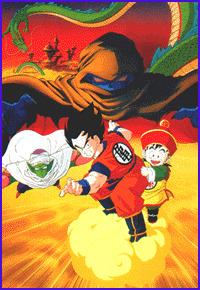


DEAD ZONE
Original Japanese Title: Return My Gohan

SYNOPSIS: Garlic Jr. is on the hunt for the seven Dragon Balls, and Gohan lands on the hit list when he refuses to surrender his own magic orb. Goku is ready to fight to save his son, but the situation takes a dire turn after the pint-sized villain summons Shenron and wishes for immortality.
MY THOUGHTS: I didn't expect nostalgia to kick in so early when starting to rewatch these movies, but here we are. Timeline wise, "Dead Zone" takes place just before the Saiyan saga, so for those who started watching with DBZ, this gave viewers of taste of the original Dragon Ball series. There was no mention of aliens, the fights were more about martial arts (and included Goku's power pole) than energy clashes, Kami got more hands on in the conflict, and Goku and Piccolo were still enemies turned reluctant allies for this film. It seemed so simple compared to how universal the franchise is today.
The biggest strength of the film in my opinion is the animation. The setting of Garlic Jr.'s castle with its spiky structure and the red skies does a good job in creating a demonic landscape where we spend most of the film, the fight scenes are entertaining (again due to the martial arts), and a lot of the facial expressions are top notch (particularly when Nicky gets enveloped by Goku's Kamehameha wave and when Gohan unleashes his power to push Garlic Jr. into the Dead Zone). I also think the film does well in hyping up the tension. For example, I got goosebumps during this rewatch at the start of the film when Garlic Jr.'s henchmen arrive at the Son family house; there's such an air of menace as they've already took down Ox King and circle around Chi-Chi with the four year old Gohan clutching to his mother's leg in fear.
It's worth noting that the villains of some of these films are considered retreads of villains from the main series. In the case of Garlic Jr., he's essentially a more competent version of Emperor Pilaf (which isn't helped by the fact that they basically have the same voice in the dub). Still, I thought Garlic Jr. was well done for the kind of villain these films bring to the table. He seeks world domination and seems to have the strength to make it happen, especially once he receives immortality. Garlic Jr. is also a pioneer of transformation in the series, which would become a staple for the main DBZ villains. And considering he goes from a light blue imp to a hulking dark green monstrosity, it's a transformation that should definitely evoke fear.
Aside from the inconsistency that Bulma, Krillin, and Roshi are aware of Gohan's existence, "Dead Zone" works well as a prelude to Dragon Ball Z. It's somewhat essential viewing as the film received a follow up story within the main anime. As series creator Akira Toriyama had intended to end the series at the Frieza saga but decided to continue, he needed time to begin crafting the Android saga. As such, we received the infamous ten episode Garlic Jr. saga to fill up some time.
There are a couple plot points in the film's story that are questionable though. First, why did Garlic Jr. try to have Piccolo and Kami killed before he used the Dragon Balls given all three's existence are intertwined? Yeah, it doesn't make much sense; the only explanation I can think of is because they needed a reason to have the two become aware of the villain's plan. The second is why the now immortal Garlic Jr. would open the Dead Zone? This one I can defend. Garlic Jr. was getting overwhelmed by Goku and Piccolo and pulled his trump card, protecting himself with an energy shield as the portal began sucking up everything. And let's be honest, DBZ villains have a tendency to try to destroy everything when things aren't going their way. Plus, this showed Garlic Jr.'s overconfidence which would prove to be his undoing as Gohan would release his own tremendous power to push Garlic Jr. through the portal and cause it to close. And now that I think about it, this was Gohan's first big victory in the franchise and would be a harbinger of great things to come for the character.
For the first Dragon Ball Z movie, "Dead Zone" is certainly not dead on arrival.


WORLD'S STRONGEST
Original Japanese Title: The Strongest Guy in the World

SYNOPSIS: After his cunning assistant gathers the Dragon Balls, Dr. Wheelo is finally freed from his icy tomb. The deadly duo plans to conquer the world with their brilliant biotechnology, but first they must find a body worthy of the doctor's amazing brain. Number one of the wish list - none other than Goku.
MY THOUGHTS: So this is where it all began for me. When DBZ was first starting in the United States, the first three movies were split into multi-part episodes, and I caught the final part of "World's Strongest" late night on Cartoon Network as a kid. Knowing nothing of what I was getting into, I saw these different looking characters fighting a brain in a giant robot with lasers coming out of their hands, tons of explosions, and a fight above the Earth's atmosphere in the end. And I was hooked. Over twenty years later, this film holds up extremely well.
During this rewatch, a thought occurred that "World's Strongest" could be looked at as a sci-fi horror film, which certainly helps it stand out in the Dragon Ball franchise. Dr. Wheelo is a unique movie villain, being a mad scientist with these creatures he's created to aid in his quest for domination; you could argue he was a precursor to Dr. Gero in the main series, even down to his brain occupying a robotic body. And of the forementioned creatures, the higher-ranking Bio-Warriors have some nice designs and unique power sets that make for some entertaining fights. A bulk of the film takes place in the confines of Wheelo's fortress/laboratory, which really stands out when you realize most Dragon Ball fights tend to take place in an open space. The structure and lighting (or lack thereof) within the fortress certainly creates a threatening environment and the feeling you're trapped along with our heroes.
While the characters match their stats as they were at the end of the Saiyan saga, the events of "World's Strongest" (as well as movies three and four) can't really take place until during the three-year training period for the Androids. Yes, you do have to fudge the power levels a little to make the threats credible, but it could work. While Goku was a Super Saiyan by then, I argue that Goku would normally get a feel for his opponents and raise his power to what the fight needs; and personally, I feel like Goku wouldn't want to use Super Saiyan as a crutch.
Everything that I thought was great about "Dead Zone" also applies to "World's Strongest" and to a higher degree at that. Aside from the Biomen just being blue Saibamen with different faces, I have nothing but positive thoughts toward the film. And at this point in my rewatch of the films, it's certainly reaffirming my belief that nothing beats old school Dragon Ball.


TREE OF MIGHT
Original Japanese Title: The Decisive Battle for the Whole Earth

SYNOPSIS: Turles, a Goku look-alike with very bad intentions, pits father against son with the help of a plant designed to consume the energy of an entire planet.
MY THOUGHTS: Of the original Dragon Ball Z movies, I have one main favorite and three runner-ups. "Tree of Might" is one of those runner-ups. What I love about the film is its "all hands on deck" nature. This is one of two films where all the Z-Fighters at the time of release got involved in the conflict. As someone who grew up on Power Rangers and Justice League, I always liked seeing heroes teaming up. While Goku is the only one to really get anything done, it's still cool to see the other characters in action and showing off their skills. Plus by this point as a kid, this was the first time I saw the Earth nearly destroyed in the franchise, what with the Tree of Might absorbing all of the planet's resources.
Of course one of the biggest topics of discussion of the film is its main villain Turles and his resemblance to Goku. Thematically, his appearance is supposed to be a dark mirror of Goku had he embraced his Saiyan instincts and took over the Earth as he was sent there to do. The two prevalent theories for his looking like Goku are that low-class Saiyans have similar features to each other or that he's simply another brother of Goku. I tend to side with the latter, because of what we would learn later about the nature of Saiyan hair both pure blood and hybrid. Throw in other characters from Goku's family including Bardock, Goten, and Goku Jr. from GT, it's clear that Saiyan hairstyle is hereditary (which can also be seen in Vegeta's family with his own father and descendent in GT). Turles being another son of Bardock isn't that impossible.
Turles and his role in the film has been considered a retread of Vegeta in the Saiyan saga. I don't really see that though as his motives were quite different. I'd say he's closer to Raditz, but that could be the potential familial ties influencing that thought. And while he does chastise Goku for turning his back on his heritage, that's pretty par the course when it came to Saiyan characters by that point.
Appearance and personality aside, I thought Turles was an impressive villain. He brought one of the most brutal moments in Dragon Ball by blasting Goku multiple times in the back while he was down and it was shocking to me when he was able to deflect Goku's initial Spirit Bomb (albeit a weaker one, but still). It certainly made his defeat through a wild west style showdown all the more satisfying in the climax.
While not perfect, "Tree of Might" is a worth a watch for those who want to see good triumph when things seem their darkest.
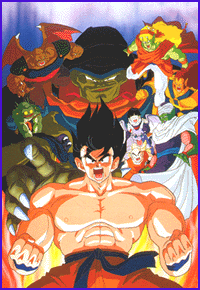


LORD SLUG
Original Japanese Title: Super Saiyan Son Goku

SYNOPSIS: Goku and Krillin race to save Earth from a giant asteroid, but a far greater menace lurks in the shadows. Lord Slug, a Namekian with legendary powers, seeks to create a new home for himself in the wake of his banishment.
MY THOUGHTS: To be blunt, "Lord Slug" is a serviceable film, but it's not one I'd go out of my way to watch outside of a movie marathon. While its biggest criticism is that it's a blatant retread of the King Piccolo saga from Dragon Ball (even down to Goku flying through Slug's chest), it's still very entertaining. The fight between Goku and Slug through a desolate city is a real highlight, both on the ground level and when Slug goes full kaiju. I also have to give a shout out to one of Slug's minions, Medamatcha; his rolling bulgy eyes and ability to spawn mini-me's that absorb energy make him a unique adversary in Dragon Ball as a whole.
So something to note is that the Japanese title for the film references Super Saiyan. And we do see the power-up...in a way.
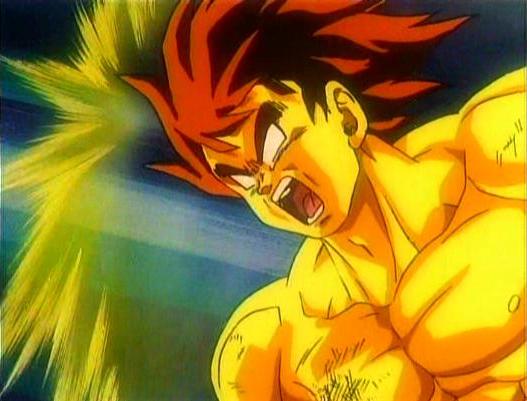

When the film was released in Japan, the anime was still in the Frieza saga and Piccolo, after fusing with Nail, was about to fight Frieza in his second form. Super Saiyan hadn't officially debuted yet and Toriyama hadn't actually nailed down what the transformation would entail. In this film, we see what fans would dub "False Super Saiyan". While it appears more like a golden version of Kaio-Ken, it does nail down some of the aspects of what Super Saiyan would become known for, with a yellow aura and being triggered when a Saiyan is angered and at their lowest point (plus I think there was still debate at the time about whether Super Saiyan would be a controlled transformation or only came out when most needed). When it came to the dub's release schedule, the film didn't come out until well after the series finished the Cell Games. So imagine ten-year-old me, knowing the Japanese title for the film and expecting to see Goku go Super Saiyan for the first time in the movies. It was honestly a little disappointing for me, especially since the False Super Saiyan transformation didn't really play a part in Slug's defeat. Learning the circumstances later, I can't really fault them for my expectations.
Something else to note is that with movies four and five, the dub included then-current hard rock music, featuring bands like Disturbed, Deftones, Finger Eleven, and more. A real highlight of this aspect for "Lord Slug" is the use of "Stupify" by Disturbed, kicking in when an exhausted Goku catches Slug's fist and goes "Super Saiyan." Honestly, that moment alone makes the film worth a watch.
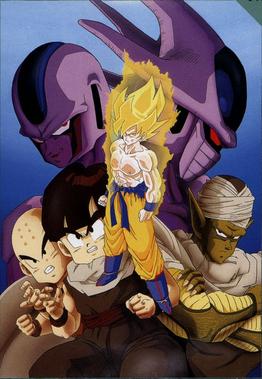


COOLER'S REVENGE
Original Japanese Title: The Outstanding Strongest vs. Strongest

SYNOPSIS: Cooler, brother of the fallen Frieza, travels to Earth on a mission to settle an old score with Goku. Backed by his evil Armored Squadron, Cooler aims to eliminate all of Goku's closest allies, staring with Piccolo and Gohan. The monster seeks vengeance, and he'll destroy the entire planet to get what he came for.
MY THOUGHTS: The final movie for this post is another one of my runner-up favorites. "Cooler's Revenge" has the benefit of building off the events of the main series and while the plot is simple, how it uses its elements is what helped engrain the film into my memory.
Cooler and his Armored Squadron are quite similar to Frieza and the Ginyu Force, but they still stand out to me. The Armored Squadron play a much bigger role compared to other movie villain minions, which makes them easier to remember than others, especially their fights with Piccolo and their deaths at his hand. Showing how strong they are also hypes up how more powerful their boss could be.
Along with being more methodical in his actions, what I think really sets Cooler apart from Frieza is his power level. Being set after Frieza's defeat, it only makes sense that Cooler would be stronger than his brother, especially if he's to be taken seriously as a threat in the movie. It was a good start with Cooler incapacitating Goku with a shot in the back from his eye lasers. The most iconic thing about Cooler though is he has one more transformation than Frieza; not only is it an intimidating design (and also more creative than the new forms Frieza would get in Super), but it's in that form that Cooler is able to give Goku a pretty brutal beatdown, including being able to fly through a Kamehameha to deliver a punch in one of the more amazing visuals of the film.
As such, this beatdown leads to Goku's first official Super Saiyan transformation in the movies. It's a spectacular sight in its own right and one of the best "going Super Saiyan" moments of the franchise, but it's the dub's use of "Change" by Deftones that takes the scene to a higher plane. Between this and the scene in "Lord Slug", the dub really knew how to hype up the legendary transformation.
As mentioned, the connections "Cooler's Revenge" has to events of the main series helps hype up the film and it would be easy for someone to see it as canon. Along with Frieza's defeat being Cooler's motivation for coming to Earth, the opening of the film shows Cooler was present during Bardock's last stand against Frieza and the destruction of Planet Vegeta. Said scene also shows Cooler witnessing a baby Goku's Saiyan pod flying from the planet but allowing it to go believing it to be Frieza's problem, which makes his defeat by Goku even more satisfying when he realizes he could have prevented his family's demise. While movies two through five can be placed during the three-year training period for the Androids, "Cooler's Revenge" is the one with the least trouble doing so. The only real inconsistency is Gohan's hair retaining its bowl cut from the Frieza saga and his tail randomly appearing for a majority of the film despite not being there when we first see him at home or at the end after Cooler's defeat. Plus, as I brought up way back in the Super Android 17 Saga post, Cooler's appearance in GT among the villains who escaped Hell does make "Cooler's Revenge" canon to the anime in some regard.

And so, "Cooler's Revenge" gives us a strong finish to a strong start to this series of posts. Will the second batch of films from the Android Saga keep this streak going? Find out next time on the Dragon Ball Z Movie Retrospective!

Sunday, January 1, 2023

My Top Five Favorite Imagine Dragons Songs


Much like Nickelback, alternative rock band Imagine Dragons is another musical act that tends to get a lot hate thrown their way. While the criticisms are similar, I can't really defend Imagine Dragons the same way I did Nickelback a couple years ago. There are certainly some songs by Imagine Dragons that sound generic and fit right in with modern pop music, whereas Nickelback at least has their own distinct sound. Still, I don't think this happens too often as most of the songs I've heard by the band do tend to fit more with the alternative genre. Again, it's up to you whether you like an artist or not. For the most part, I think there's more to like about Imagine Dragons than not, and I wanted to share my thoughts on some of their best hits. These are my top five favorite Imagine Dragons songs.


5. WHATEVER IT TAKES

If you're building a motivational playlist, I feel like "Whatever It Takes" would be a good selection. Lyrically, the song is meant to amp you up, trying to build your confidence as you work towards your goals. There's also this need for support from others but acknowledging you may have to go it alone. Musically, I love how each stage from the song, from the verses, pre-chorus and chorus (especially the background vocalization), is different while still building off each other. It does a good job at showcasing lead vocalist Dan Reynolds' range as a singer, from fast paced to soft spoken and everything in between.
But as an English major, I am going to use this opportunity to call out a grammatical error in the song: a comma is more appropriate to signify there's more to see rather than an apostrophe.


4. ZERO

"Zero" is a fascinating song in how its sound and message juxtapose each other. Much like "Semi-Charmed Life" by Third Eye Blind, "Zero" is an upbeat song with dark lyrics when you listen closely. To top it off, the song was written for the Wreck-It Ralph sequel "Ralph Breaks the Internet" and played as the end credits begin to roll; it's just kind of ballsy to close out a kids film with a song that has nigh suicidal tendencies. And yet, it fits really well for the film. "Zero" is basically an outcast anthem that acts as a rallying call to other outcasts (possibly quite literally with the vocalizations at the song's beginning and ending), showing they're not alone. Ralph and Vanellope were the outcasts of their own games, bonding over their similar lots in life and becoming best friends. The line "I'm looking for a way out" could also be a reference to the characters "going Turbo" by jumping into different games, like Ralph did in the first film and Vanellope staying in "Slaughter Race" at the end of the second.
The film's context aside, I find "Zero" to be an easily relatable song in its own right. Sometimes you'll find yourself going through life feeling without purpose, and to some degree, you'll either be open about it or keep it inside while finding ways or reasons to stay afloat above the darker thoughts. The verses before the final chorus with the loss of the upbeat music may signify opening up as a way, as said before, to find others who feel the same way.


3. RADIOACTIVE

While considering my choices for this list, I had a feeling that the song that gained Imagine Dragons widespread recognition would be included, similar to what "How You Remind Me" was for Nickelback. While "It's Time" was the band's debut single, I think it's the follow up in "Radioactive" that truly set Imagine Dragons apart. I like "It's Time" and understand its sound had more appeal, but "Radioactive" probably should have been the lead single because it brought something unique and was more likely to catch your attention (it did for me at least). Its' foreboding tone accompanies the description of a world unlike our own and a darker one at that. The lyric "Welcome to the new age" works not only in the message of the song but also as the introduction of the band as they bring something new to the mainstream music scene.


2. DEMONS

Much like "Zero", "Demons" is a song about self-worth but more even more so, it's about being afraid to open up. Even good people have darker traits they keep hidden out of fear of how those they care about could be affected by it. They don't want their own darkness to hurt or spread to someone who doesn't deserve that kind of pain. "Demons" does well in capturing the emotions of such a struggle. The lines that resonate most with me are "Don't wanna let you down but I am hell bound" and "Your eyes they shine so bright, I want to save that light." There is a glimmer of hope though of the right person standing beside you in spite of that ("I can't escape this now unless you show me how").

Before my number one, here's some quick honorable mentions of songs I enjoy just as much and/or feel are similar to those on this list: "Ready, Aim, Fire", "Shots", "Believer", and "Bad Liar".

And my favorite Imagine Dragons song is...


WRECKED

Inspired by the death of Dan Reynolds' sister-in-law, "Wrecked" is about how losing someone close can affect you in a way that you may never fully recover, likening it to the wreck of a ship. It's another easily relatable situation, and in my opinion, this is the band's best song. Ironically, everything about "Wrecked" is so well put together. At each stage of the song, the musical composition heightens Reynolds' emotional vocals as the ship metaphor is used perfectly to describe the feelings being conveyed. While there's a silver lining of the song's message in the verses before the final chorus, it's really more about how grief works in a circle; in between the moments of pain, you remember that the person you lost would still want you to live your own life to the fullest along with the hope you'll someday meet again in wherever the journey after life leads next.
Overall, "Wrecked" highlights the complex feelings of loss and is a perfect example of how deep Imagine Dragons can really be.

Sunday, November 13, 2022

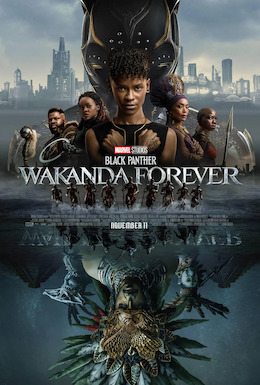
Movie Review: "Black Panther: Wakanda Forever" - Making Peace


It came as a shock to the world when the Black Panther himself, Chadwick Boseman, passed away in 2020 after years of battling colon cancer. It was an unprecedented situation where the lead of a mainstream superhero franchise died while still active in the role. In spite of the loss, Marvel moved forward with the Black Panther sequel and decided to lay the character of T'Challa to rest as well. Many have disagreed with this choice given superhero recastings of the past and normally I would agree that an actor shouldn't be bigger than their character. But this is different. One, this isn't some behind the scenes drama like with what happened with Terrence Howard and Edward Norton in their respective roles. Two, the first Black Panther movie was a cultural milestone with Boseman's performance being a key factor. And most importantly, it's too soon. There are people still grieving for Boseman's death, including the cast and crew of the first film, who returned for the sequel to both process their grief and honor their fallen friend. At this point, it would be cheap and disrespectful to swap another actor in. So will we ever see T'Challa in the MCU again? Well, the multiverse and variants are in play now, so there's certainly a chance. Right now, we have "Wakanda Forever", which acts as a powerful tribute to the past and a moving path to the future.

As much of the MCU post-Endgame has dealt with how one processes loss, "Wakanda Forever" probably has the most poignant portrayal due to the real world connotations. Much like Boseman, T'Challa's death is due to illness, which is respectful to the actor's memory and shows that a hero's death can be the normal kind of tragic and not due to some sort of supervillain's plan. After a one year time jump, we see how his passing still affects those closest to him and the world at large which reflects how anyone could deal with such a loss. Some bury themselves in their work, some ignore their emotions, some try to make the world a little better as a way to honor their memory, some feel anger and the need to release it, while others are more opportunistic (which kind of ties in with my thoughts in my "Ms. Marvel" review with the direction the MCU may be heading).
It's an overwhelmingly emotional film full of many outstanding performances with the best coming in my opinion from Letitia Wright as Shuri, the central character of the film. As T'Challa's sister, she seems to be hit the hardest by his loss, especially since she was trying to cure his condition before his passing. As such, we see her go through much mental anguish, processing her own grief while dealing with the new threat to Wakanda. Her arc reminds me much of T'Challa's back in "Civil War" and Killmonger's motivation in the previous film as she tows the line between duty and self-satisfaction.

Our main antagonist of the film is Namor, with Tenoch Huerta Mejia successfully bringing one of Marvel's oldest characters to live action for the first time (and is actually less dickish than I thought he'd be). Similar to Black Adam, he is more of an anti-hero than a villain and there are many parallels with his story and Shuri's. Namor is the ruler and protector of the underwater civilization of Talokan. Much like the introductions of Wakanda in the first Black Panther and Ta Lo in Shang-Chi, the film does a good albeit brief job of establishing another new world to the MCU with its Mayan influence helping it stand out. Since Talokan is also rich with Vibranium, it puts its warriors on even footing with the Wakandans, making for some well-done fight scenes. I believe the similarities between the two cultures ties in with the political message of the film which calls back to T'Challa's speech to the UN in the previous film, and it's something that's still relevant today as division still rears its ugly head in society.

A new hero is introduced in the film in the form of Dominique Thorne as Riri Williams. A nineteen year old genius, she's able to build her own prototype Iron Man armor before using the resources of Wakanda to craft the perfected Ironheart suit for the film's climax. Thorne gives a good performance for a young character thrown into some superhero craziness but wants to do what she can to help. We don't learn too much about her, but it should be enough to get people interested in her Disney+ series coming next year. While the film seems to connect her more to Black Panther in the MCU rather than Iron Man like in the comics, I would still like to see her and Spider-Man interact at some point in the future and maybe compare notes.

I still prefer the first Black Panther film due to some of the action being more appealing to the eye, but I know action (as good as it was) isn't the driving force for "Wakanda Forever." As the film pours out so much emotion that you'll still be processing it long after the ending, we're given a successful tribute to the late Chadwick Boseman and T'Challa's legacy as well as one of the best entries in the MCU in its own right.

Tuesday, October 25, 2022

Changing of the Doctor Part Two: Final Thoughts on the Whittaker Era


Another era of Doctor Who has come to an end as Jodie Whittaker has completed her final adventure as the series' Thirteenth Doctor. It's been an interesting time to say the least, and it seems only right to give my thoughts on the show's last few years from the Doctor herself, her companions, the storylines, and the game changing moments that came about.

As I said in my previous Doctor Who post, Whittaker brought a lot of youthful energy very reminiscent of both David Tenant and Matt Smith and an optimistic personality that never wavered even when her whole universe was literally crashing down around her. I really have no negative notes as her performance was a joy from beginning to end.

The Thirteenth Doctor's initial companions included Ryan Sinclair, his former school mate Yasmin "Yaz" Kahn, and his step-grandfather Graham O'Brian. Having three main companions was a real change of pace for the revival era with the diversity of the characters creating more of a family dynamic, hence the Doctor constantly referring to them as "fam." I really liked them all and what they brought to the show, particularly Ryan and Graham's relationship as they grow closer while still mourning the loss of Grace, Ryan's grandmother and Graham's wife, in the season eleven premiere. Admittedly though, it was a bit of a juggling act getting to know each one and who got more focus in an episode, especially since this era seemed to give just as much focus to an episode's guest characters as the main ones.
Ryan and Graham left the show after season twelve, leaving Yaz as the Doctor's sole companion for the time being. It was by this point that it became evident that Yaz had romantic feelings for the Doctor; it may feel like it comes out of nowhere, but a rewatch shows these seeds were being planted since episode 11.4, "Arachnids in the UK". While they could have returned to formula with the Doctor and their companion with romantic connotations, the thirteenth season introduced Dan Lewis as a new fellow companion. Now Dan was a fun character, but his introduction kind of highlighted this era's penchant for constantly adding characters. More importantly though, it made it seem like the people behind the scenes didn't want it to be just the Doctor and Yaz on adventures. It's as if they either didn't have the skills to write stories for just the two of them or they didn't want to commit to a same-sex relationship for the Doctor without someone of the opposite gender in the mix somehow.
I'd also be remiss if I didn't talk about Sacha Dhawan as the new incarnation of the Master. He reminded me much of John Simm's portrayal, having this manic energy and penchant for theatrics that highlighted his psychopathy. He made a great archenemy to Whittaker's Doctor with his reveal alone being one of the best moments of her era.

When it comes to the stories of the Thirteenth Doctor, there's nothing I can really say that I couldn't about any other Doctor's era. You have some great episodes, some are less so, but the performances of the actors are always on point, usually resulting in entertainment to some degree. I do think her first season was the best, as doing done in one stories with no overarching plot was a fun change of pace. The main criticisms I've seen during this era are that the show became "woke" or that the messages of an episode were too blatant. To the first one, I refer you back to my comments about toxic fandom from my She-Hulk review. On the second, honestly in this day and age, some people need to have things spelled out for them.
I will say though that in their efforts to harken back to the Tenant and Smith eras, they may have borrowed and remixed ideas from Tenant's episodes a bit too much (which makes the next regeneration funny, but we'll get to that). The following is a list of things I noticed that happened during both Tenant and Whittaker's runs:
* The Doctor leaving a pre-recorded message that seemed to respond to its recipients in real time.
* A black and red bug themed monster of the week.
* The Doctor's memories being contained in a pocket watch.
* The current Doctor's end being prophesized with the message hanging over their head up to their final episode.
* Companions from the classic era returning and making the current one feel less special.
* The Master copying his genetic template into someone without their consent.
* The Doctor and a large group of allies working to save the day (twice in Whittaker's case).
It just seems a little too coincidental if you ask me.

Of course, the biggest development in Doctor Who to come from this era is the Timeless Child revelation. As it turns out, the Doctor was not born on Gallifrey, but was found as a child and brought there with their ability to regenerate discovered and then implanted in what would become the Time Lords. At some point, the Doctor had their memories erased before regenerating once more into a child that would eventually become the First Doctor introduced when the series began in 1963.
The implication that there were multiple regenerations before the First Doctor has had a polarized reaction within the fanbase. Some applaud it for doing something new with the franchise while others see it as a needless change that brings complications more than anything. I'm a bit torn on the matter. I started watching with Tenant, so I don't think I'm allowed to be as mad about this as those who have been lifelong fans. Besides that, Doctor Who has been no stranger to retcons, with John Hurt's War Doctor being a prime example. More relevant though, the rules of regeneration have been a little fast and loose within the show's history, but the prominent standing has been that Time Lords are only allotted twelve regenerations (though the Doctor received another set of twelve at the end of "The Time of The Doctor"). However, the classic era episode "The Brain of Morbius" from 1976 implies that there were more incarnations of the Doctor before the First and is referenced during Whittaker's era.
I do sympathize with some fans' anger though who adhered to the established rules of regeneration and that William Hartnell was the true First Doctor. The Timeless Child revelation has felt like a black cloud over the show ever since. I was honestly expecting them to retcon the retcon after the fan reaction and reveal it was the Master who was actually the Timeless Child, but they stuck to their guns and I respect that. However, it does feel like this is something that the showrunners moving forward will avoid referring to, similar to how Marvel didn't talk about the Spider-Man Clone Saga for years after its completion. When the Doctor retrieves a pocket watch that contains her pre-First Doctor memories, she asks the TARDIS to hide it away, and it's not brought up again for the rest of Whittaker's run.

When it comes to the Thirteenth Doctor's final episode, "The Power of the Doctor", I thought it was overall fine if a bit rushed. The premise was interesting and there were a lot of good ideas used, though not to their full potential in my opinion, especially since this episode also seemed to be serving as an anniversary special as well. Nonetheless, it was a good way for Jodie to ride off into the literal sunset.
Overall, I think Whittaker's time as the Doctor will be viewed as infamous not because of her but because of story choices made during her run. It's kind of a shame because there were still plenty of good moments these last few years.

I'm about to go into SPOILER territory now concerning the Doctor's latest regeneration and what it might mean for the future, so I'd advise to stop reading now if you haven't watched "Power of the Doctor" yet.


First off, I'm sure the TARDIS appreciates that the Doctor actually landed this time and regenerated outside. Of all the regenerations I talked about, this one is definitely the most optimistic and fits Jodie's Doctor well. Even in the end, she was just happy to give someone else a turn.
During the course of the episode, the Master had actually prompted a forced regeneration on the Doctor and transfer himself over to her body, intent on ruining the legacy of the name (sort of a Superior Spider-Man situation, which is funny because I used this comparison in my Iron Fist season two review and it was Sacha Dhawan there too). Inside the Doctor's mind though, she was alive and encountered manifestations of her previous incarnations (with actors reprising their roles) who tell her she can still return. Thanks to Yaz's efforts, the regeneration was reversed and the Thirteenth Doctor came back and saved the day. As a proper regeneration was triggered by the episode's end, it seems that despite looking forward to the future, some part of her was still looking back and threw a curveball as she regenerates into another previous incarnation with David Tenant returning to the role. And they've since made it clear that this isn't the return of the Tenth Doctor; the version Tenant is playing now is indeed the Fourteenth Doctor.
While it feels like a stunt to bring David Tenant back as the Doctor (in addition to Catherine Tate as Donna Noble) for a few special episodes in hopes of bringing back fans who may have given up in the last few years, it is still David Tenant after all. The man's original tenure as the Doctor brought in a new generation of fans (myself included), is regarded by many as the best version, and they even considered ending the show again when he wanted to retire. His reputation precedes him, and it will be fun to see him on new adventures and it could be interesting to see how Fourteen may be different from Ten.

Doctor Who won't return until November 2023, but like Thirteen, I'll be hopeful for what the future brings to the Doctor and the fans.

Sunday, October 23, 2022

My Top Five Favorite Song Covers

Sometimes a song is so good that other artists will want to put their own spin on it. And sometimes those versions become iconic in their own way. I've heard a lot of song covers over the years, and while a lot of them are very well done, there are some that have left such a personal impact that I can't help but think about them even when listening to the original versions. The following isn't necessarily a "better than the original" list, but more so just my thoughts on how these specific versions stood out to me. So without further ado, these are my top five favorite song covers.


5. "THE BOYS OF SUMMER" BY THE ATARIS
Original version by Don Henley

In 1984, Eagles vocalist Don Henley produced a classic song about lost youth and summer love with "The Boys of Summer". In 2003, the Ataris took the song and were able to put a pop punk spin on it, resulting in the band's most successful single. Both versions are able to deliver emotional vocals and encapsulate the sound of the decade they were released in. Where I think the Ataris' version shines best though is how it closes out, screaming out the final verse with the music gradually reaching a stopping point rather than continuing while slowly fading out. Even when I'm listening and singing along to Henley's version, I'll still belt out the end as if it were the Ataris' for that strong conclusion.


4. 'RUNNING UP THAT HILL" BY PLACEBO
Original version by Kate Bush

Kate Bush's 1985 song "Running Up That Hill" has seen a resurgence this year thanks to its inclusion during the fourth season of "Stranger Things", resulting in a considerable amount of radio airplay. Personally though, the first time I actually heard this song was as a cover by Placebo. I first heard it when it was used in a video package hyping up the match between Shawn Michaels and the Undertaker at WrestleMania XXVI, later on in episodes of CSI and Bones, and I even felt it could be used to describe Peter and Harry's relationship in the Amazing Spider-Man films. Through all that though, it wasn't until this year that I realized it wasn't Placebo's song to begin with.
When you compare the two versions, it's clear how Placebo made the song their own. A haunting tone coupled with the unique vocals of frontman Brian Molko brings about darker implications of the song where you can really picture someone desperate and at the end of their rope.
The resurgence of Kate's original is honestly what prompted me to make this list because Placebo's version always comes to mind whenever I hear her's. It made me start thinking about what other song covers impact my listening of their originals.


3. "CARELESS WHISPER" BY SEETHER
Original version by George Michael

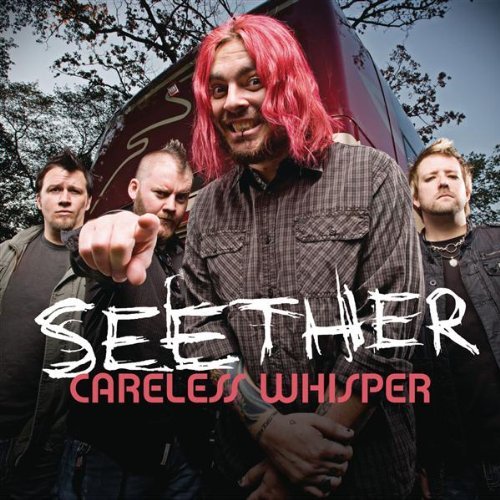
This is another instance where I heard the cover version first and it took me awhile to really appreciate the original. Seether's cover of "Careless Whisper" was released in 2009 while I was a senior in high school and the hard rock sound resonated with my young emo heart about to close a chapter of my life with graduation. George Michael's original just felt tame to me by comparison. As I matured and my musical tastes started to expand, I began to enjoy the original "Careless Whisper" in its own right.
There's much to love about both versions when you think of them as two sides of the same coin when it comes to the pain of lost love. George Michael is more somber and reflective while Seether's is raw and frustrated. Still, whether it's a saxophone or guitar, either version of "Careless Whisper" should be able to get you in the feels.


2. "PATIENCE" BY CHRIS CORNELL
Original version by Guns N' Roses

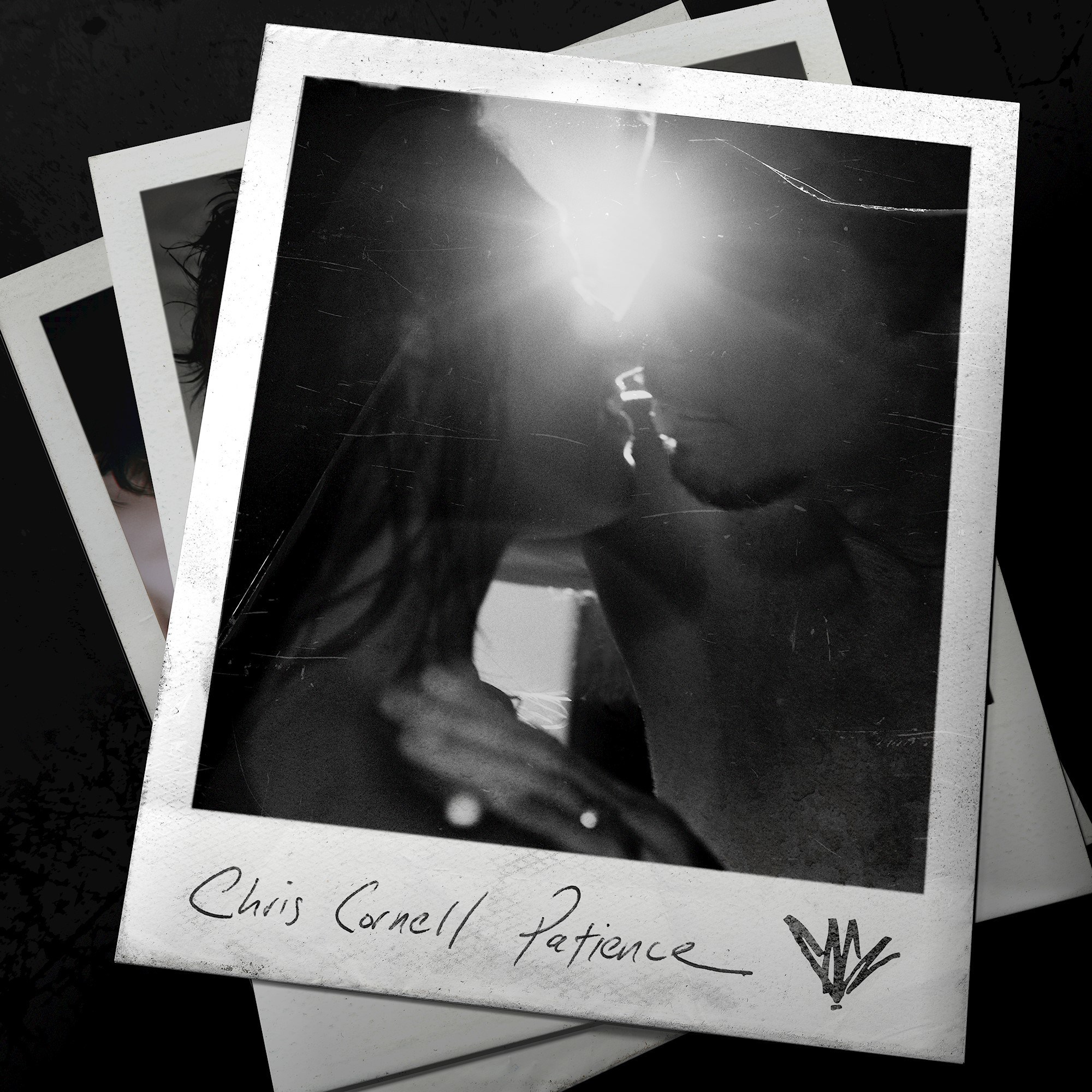
Before his death in 2017, Chris Cornell of Soundgarden and Audioslave fame recorded a number of cover songs. This collection would be released posthumously in 2020 on the album "No One Sings Like You Anymore". One such track included his own take on Guns N' Roses' 1989 hit, "Patience." The song had significance for Cornell, recording his version in 2016 after teaching his daughter to play the song and learning of GnR's recent reunion. While this may seem blasphemous, in my opinion, Cornell's version truly outdoes the original.
I just feel Cornell got right to the point of the song. I don't think it's out of line to say you could look at the Guns N' Roses version as a tad drawn out and its message could be missed in the long musical interludes. Besides trimming some of the fat so to speak, I feel Cornell's iconic vocals helped elevate the song and including one last chorus at the end was a stroke of genius.
The big reason this is one of my favorite covers though has to do with the time of its release. 2020 was a tumultuous year to say the least that affected everyone to some degree. Cornell's version received some significant airplay upon its release and hearing it repeatedly during this time made me think about who and what was important to me. I think a lot of people had some similar introspection in 2020; Chris Cornell's "Patience" just had a hand in my personal journey.

And my number one favorite song cover is...


"UNDER PRESSURE" BY THE USED AND MY CHEMICAL ROMANCE
Original version by Queen and David Bowie

I will admit that my being a big fan of My Chemical Romance might have played a part in this being my top choice, but it's nevertheless a great cover.
In a collaboration between Queen and David Bowie, these legends of rock released one of the greatest and most beautifully crafted songs of all time in 1981 with "Under Pressure." 2005 saw the song covered when The Used and My Chemical Romance joined together in an effort to provide relief for the 2004 Indian Ocean tsunami through profits made from the single's release. As two of the biggest alternative rock bands at the time, they were able to bring their own style to the song and create a version that rivals the original. The faster pace gives it high energy that matched the "Revenge" era MCR while the distinct vocals of Bert McCracken of the Used and Gerard Way complement each other just as Bowie's and Freddie Mercury's did.
Both versions have merit in my opinion for their unique compositions and duets, and much like the message of "Under Pressure", it goes to show what can be accomplished when people are able to come together.

Do you agree with my choices? What are some of your favorite song covers? Leave a comment below and let's get the conversation started.

Friday, October 21, 2022

Movie Review: Black Adam - Electrifying


When I started watching wrestling in 2001, one of the biggest stars of the time was Dwayne Johnson, better known by his ring name of The Rock. It was during this time when the Rock was starting to branch out as an actor. Initially splitting his time between WWE and Hollywood, I would go to see whatever movie, usually action based, was being promoted at the time, including "The Scorpion King", "The Rundown", and "Walking Tall". As Rock began spending less time in WWE and started to do more than action movies, I was less inclined to see a movie of his unless it interested me. He may be using his real name for starring roles and he's more actor than wrestler now, but to me, he'll always be The Rock.
When it comes to "Black Adam", this has been a passion project for Rock, having been attached since 2014 when the larger DC Extended Universe was still being planned out after "Man of Steel". It's taken some time, but the film that's been hyped up to forever change the DCEU has finally arrived. Was the hype warranted? While it certainly delivers repercussions that will be felt later in the DCEU, the film itself I can at least say is worthy of the Rock.

Of all the DCEU entries so far, "Black Adam" feels the most like a popcorn action flick. If you like seeing the Rock kick ass, you won't be disappointed. And personally, this is the most fun I've had watching a movie starring the Rock in a very long time. I didn't really have high hopes going in to this, but it started to win me over after the first action scene. And said action in the movie is the most unexpectedly brutal I can recall from a superhero movie from either DC or Marvel, and it apparently had to be toned down to avoid an R rating. The style as well as overall visuals of the film reminded me much of Zack Snyder's work (and that includes a lot of slow-motion), which really hasn't been seen from DC since his Justice League, despite the fact he doesn't seem to have been involved here. People who complained about the violence in Snyder's DC films will see he's actually been outdone here.
As Black Adam, the Rock's performance is the driving force of the film. Black Adam is intimidating and straightforward with a bit of a dark comedic side, making him a force to be reckoned with throughout. There's also a bit of an emotional arc to him as well; this isn't as surprising as John Cena in "Peacemaker" since the Rock has proven to have that kind of range, but I just didn't expect it here.

Admittedly though, the film is chock full of superhero movie tropes with many visuals and plot points that feel ripped from multiple DC and Marvel films. The most prominent way to describe the film is a darker "Shazam" (obviously), even down to a superhero fanboy offering advice to our protagonist, with the "fish out of water" plot from "Wonder Woman" thrown in. But I can honestly forgive all this though just because I was so entertained by the film.

One criticism I have could be seen as more nitpicky, but it's the Justice Society. For the most part, the Justice Society are fun characters in the film with their costumes and powers displayed well, not to mention their role offers an antithesis to Adam's methods and points out some hypocrisy in doing things by the book. I also must praise the performances of Aldis Hodge as Hawkman and Pierce Brosnan as Doctor Fate. Quintessa Swindel as Cyclone is fine while Noah Centineo Atom Smasher had the same awkward comedy Ezra Miller brought as the Flash, but they get less focus compared to their older teammates. Despite all the good they brought, my main problem is their inclusion in the film actually kind of undermines them. They're either there to get jobbed by Black Adam or to act as support to him in defeating the film's main villain Sabbac. Their introduction also raises a lot of questions like how long the team has been active and how and why they work for Amanda Waller. The team honestly could have benefitted more from their own movie.
Personally, I think the overall plot of "Black Adam" could have been reworked into a "Shazam" sequel with Billy and his foster siblings filling the Justice Society's roles fighting Adam and eventually working together to defeat Sabbac. Considering Black Adam is Billy's archnemesis, the fact Rock wanted him to have his own movie first makes it feel like he didn't want to play second fiddle in such a movie or go full villain. The film we did get shows Adam's heroic ambitions despite his villainous actions and that same character arc could have applied to a "Shazam" movie. But it is what it is.

Despite some small issues and personal takes on how the story could have gone, "Black Adam" was still better than I thought it would be. It will quench the thirst for action and entertain for what it is. And based on the mid-credits scene (which had me freaking out as much as the one in "Spider-Man: Far From Home"), it seems the DCEU may have a plan moving forward after years of disarray. The promise of change in the hierarchy within the DCEU has been delivered, but time will tell whether we see what that entails.

Thursday, October 13, 2022

TV Review: "She-Hulk: Attorney at Law" - Good Green Fun


The character of She-Hulk has been an interesting one since her creation in 1980. Unlike her male cousin of the same namesake, Jennifer Walters is able to maintain her rational personality, which has allowed her to live a more balanced life as a gamma powered individual. For the most part, She-Hulk has been depicted as a fun-loving character with stories to match. Going into her Marvel Cinematic Universe Disney+ series, I feel that most need to know that beforehand.

In the case of "She-Hulk: Attorney at Law", this is basically Marvel's take on a workplace comedy, with emphasis on the comedy. Tonally, this show is a bit more over the top compared to other MCU movies and shows; I think it's because of that sitcom nature that makes "She-Hulk" feel the most like a Marvel TV show since "WandaVision", especially with episodes being mostly able to stand on their own. It has its serious moments, but its biggest strength is its comedy, which allows for some of Marvel's more sillier characters like the Wrecking Crew or Leapfrog to make their live action debuts. Before Deadpool debuted, the She-Hulk comics would frequently break the fourth wall, an aspect that has carried over to live action. Without spoiling much, the finale shows the fourth wall being obliterated in a way that not even the Deadpool movies have done (yet); the results of which I'm a little mixed on, but I still admire the risk and craziness of what was produced.
A point of worry that worried some since the show's first trailer was the CGI, especially for our title character. Thankfully, most of the issues with that seemed fixed in the final product. There are a few scenes where the character seemed a little off, but I think She-Hulk was well rendered in a serviceable way for a majority of the series.
There isn't a ton of action, which makes sense when you consider the nature of the show. What action that is present is still well done, and I think there was a lot of thought put into those scenes since they knew there wouldn't be a lot of them.
When you boil it all down, "She-Hulk" is a show where you're just supposed to have fun, and not everything has to be taken so damn seriously.

I really have to applaud Marvel for calling out a lot of toxicity in their fanbase. Since the mid-2010's, there have been a certain subsection of comic fans accusing Marvel of "replacing" their well-known characters, typically white males, with new ones, whether they be female or a different race, using the same monikers, not even waiting to read the stories they star in before decrying them (Jane Foster's Thor or Sam Wilson's Captain America being examples). Within the show, She-Hulk is the target of Intelligencia, a men's rights group who inexplicably hate her and think she doesn't deserve the power or attention. And if you feel personally attacked with how Marvel portrays the group or individuals within it, you're kind of proving their point.
I wish this was a problem solely within Marvel, but unfortunately many fandoms have these kinds of individuals. Star Wars, Doctor Who, Lord of the Rings, and even freaking Scooby Doo are only a few examples. It's people like this who give geeks with more open minds a bad name. It's kind of ironic when you think about how before geeky things became mainstream pop culture that those who liked this stuff were made fun of, and now some of those outcasts are now trying to exclude others from something they like. Before I get off my soapbox and back to the review, I'll just leave this message for those people:


Leading actress Tatiana Maslany does a good job at selling the average 30-something Jennifer Walters. Despite being thrust into the spotlight as She-Hulk, all Jen wants is to have a normal life working as a lawyer, with the primary conflict of the series being how having celebrity thrust upon you can get in the way of those goals. In addition to turning in some good comedy, Maslany's performance really shines as both Jen and She-Hulk when we see how she reacts and opens up about her feelings of inadequacy over how her Hulk form is able to open doors for her when she's still Jen inside. You really feel for her when life is kicking her down.
I also really enjoy how the first episode shows how she's different from her cousin Bruce. When Jen becomes a Hulk, Bruce is all ready to take her on his multiyear journey he used to reach the Smart Hulk state he's in now. However, Jen is quick to show that she has a more stable mindset to control her form compared to when Bruce first transformed. It goes to show that not all Hulks are the same (which can also apply to Abomination).

Going off of that, there are a couple things I'd want to talk about with the MCU's Hulk. The first, which came about while watching this series, is I really wish the character got some more spotlight after his 2008 film. This show goes into detail about why Jen is able to control her Hulk form, but why was Bruce different? The comics go into detail about this, but the MCU never did; I would really like to see a deep dive into Bruce's psyche and learn how his Hulk manifested the way it did.
Another thing is a long time fan complaint about Hulk being "nerfed" after "Ragnarok" and how turning into Smart Hulk made the character weaker than he was before. Let's just think about this. It's established that Hulk is as strong as he is angry, especially when he's in the driver seat. Smart Hulk is an amalgamation with Bruce's smarts and Hulk's strength. The comics have shown this combination, but when Bruce relinquishes control, we get our classic, savage, indestructible Hulk. Shouldn't it stand to reason that the same could happen at some point in the MCU with Bruce letting go of control? And even if it doesn't, shouldn't we just be happy that Bruce has been able to find some happiness in his life after so many years of strife?

Of course, what many fans were excited to see in this series was the return of Daredevil. After a cameo in "No Way Home", Charlie Cox once again reprises his role as Matt Murdock and suits up for the first time in four years. Despite the hiatus, Cox has not missed a step in either identity. He still kicks ass and has a way with the ladies, having immediate chemistry with Jen. And while some fans worried about adding the classic yellow to the new suit, it really works here and plays well with the more lighthearted depiction presented. It just makes me more excited for his series to return on Disney+ in a couple years and any team-ups with heroes he's yet to meet.

Overall, while it's nothing outstanding and is yet another needlessly divisive entry for the MCU, "She-Hulk: Attorney at Law" is still a good show when you know what it's trying to accomplish.