Friday, April 10, 2020

Retro Review: DCeased - Final Crisis meets Blackest Night (SPOILERS)


I was going to wait until October to do this review to tie in with Halloween, but with the announcement of its sequel series coming this summer (hopefully), I figured why not get this out ahead of that?
A six issue miniseries released in 2019, "DCeased" is essentially the DC Universe's take on a zombie apocalypse. For awhile, DC wasn't very clear about whether or not this series took place within the main DCU, with its non-canonicity only becoming evident just before the first issue's release. Given I had already added the series to my pullist and the concept did interest me, I decided to stay on board. And considering "Heroes in Crisis" was wrapping up and leaving such a bad taste in my mouth, I desperately needed a good DC event story in some form.
The writer of the series is Tom Taylor, who is most well known for his work on the Injustice video game tie-in comics, so the guy has experience with DC Universes that have gone off the rails. Other works of his that I've enjoyed include a fun Justice League/Power Rangers crossover and two single issue Batman stories that were so good that I think he deserves his own run on the character. Over on the Marvel side, he wrote a decent fourteen issue run on "Friendly Neighborhood Spider-Man", including a touching issue where Spidey helped a Make-A-Wish child fulfill his dream of being his sidekick for a day.
Many have compared this to the "Marvel Zombies" series from DC's main competitor. Personally, I never really had interest in those comics and feel they've been overdone. I did look into it a little to see how it compared to "DCeased", and it doesn't change my opinion much. While "Marvel Zombies" was basically just "all the heroes are zombies", the heart of "DCeased" is that it's a story of survival.
And with that intro out of the way, let's dig into what makes "DCeased" to die for.

It's worth noting that there is narration through the series provided in the form of Lois Lane writing a story to report the events that will transpire, allowing to exposit important information as well as set the tone. So early spoiler, Lois lives through this.
Issue one begins with the Justice League defeating Darkseid after a week long invasion by him and his forces of Apokolips. The team stand over Darkseid, with his jaw broken by Superman and Wonder Woman's lasso around his neck. Superman and Batman tell him to leave Earth and never return as Wonder Woman tries to use the lasso to force him to. Green Arrow chimes in saying it might be easier for Darkseid to say it if Superman hadn't broke his mouth. This is the first instance of both Tom Taylor's excellent dialogue in the series, showing natural conversation and good banter between characters, and Green Arrow being one of the best characters of the story.
Darkseid, however, is still able to speak and removes the lasso before escaping through a boom tube, claiming he has what he came for. Green Arrow worries about how ominous that sounded as Batman gets an alert that Cyborg is missing, not showing up anywhere in the solar system. Other Leaguers question how he would know that, to which Batman replies that given the Apokoliptian technology in Cyborg's body, it would be irresponsible not to keep tabs on him. Superman and Flash follow up asking if Vic knew Batman was doing that and that if he's tracking anyone else as Batman dodges the questions. The morality of Batman being Batman aside, the League have a bigger question of where Cyborg actually is.
We then cut to Apokolips, where Darkseid's minion Desaad has Cybrog bolted to a table through his limbs as Desaad explains about the Anti-Life Equation and Darkseid's desire to use it to enslave all sentient life. Darkseid, arriving on the scene with a Mother Box, already has half of the equation and believes the other half to reside in Cyborg's system. While Cyborg had been using humor to cope with his situation, Darkseid then orders Desaad to remove the hero's tongue, a move that is only a taste of the brutality that's to come in this series. As Darkseid places his Mother Box to Cyborg's chest, Desaad warns his master that by combining his physical half of the equation with the digital half in Cyborg that the process could kill Cyborg and the equation will be lost. Darkseid takes this into account and states that he will "control Victor Stone's end" and "summon death." Cyborg's agony brings about the Black Racer, the New Gods' personification of Death. Darkseid immediately catches the Racer by his neck, saying he has need of him as Desaad sticks a device in his arm that is essentially a blood transfusion going into Cyborg. With this final piece, an Anti-Life Equation appears to Darkseid, but not the one he sought. This is a corrupted version that drives Darkseid so mad that he tries to claw it out of his own head. Desaad teleports Cyborg back to Earth hoping to sever the equation, but it's too late. Darkseid has lost his mind, leading to him punching through the Black Racer and jumping into one of the fire pits of Apokolips, causing a chain reaction that destroys the whole planet. Considering how much of a threat Darkseid and Apokolips are, you know this is serious when an entire planet is done away with in an instant.
But the terror is only beginning as a boom tube drops Cyborg in the middle of Metropolis surrounded by people who immediately take out their phones. Lois' narration states that Cyborg's system automatically connected to the internet and the corrupted Anti-Life Equation in him made its leap to the world wide web. Cyborg's attempt to firewall himself was too late, as the Equation spread through all forms of social media as a techno-organic virus into anyone using it. With all the people around Cyborg on their phones, they all become infected and enslaved, attacking one another as Cyborg watches in horror.
Elsewhere, Superman is meeting with Mr. Miracle and Big Barda to form a plan to rescue Cyborg from Apokolips when Superman's super-hearing picks up screaming. "The world is screaming," he states as he watches chaos unfold on the streets of Metropolis. His thoughts immediately turn to Lois and their son Jon. At the Kents' apartment, Lois is looking for her phone as Jon and Damian Wayne are playing video games. Jon asks Damian to find it with his detective skills, who then points out Jon could just use his x-ray vision. Jon sees it behind a bowl of oranges and is about to pick it up when his father flies in and uses his x-ray vision to destroy both the phone and the TV, telling everyone to not look at the screens (in another context, this could be used to promote limited screentime). Superman says he needs to assemble the League but Lois points out how there may not be a League left. These worries are well founded as Damian is unable to contact his father. The Kents try to reassure him that if anyone could survive this, it's Batman.
Speaking of Batman, down in the Batcave, Bruce has already firewalled his system from the virus and surveying the situation. Gotham is just as bad as Metropolis and the batcomputer calculates 600 million people are already infected worldwide, and with the virus spreading both through the internet and blood to blood transfer, the number will skyrocket to billions. Unfortunately, the internet wasn't disconnected up in Wayne Manor (which is probably a big oversight on Bruce's part) and he initiates an emergency EMP to knock out the power. Bruce races up to the manor to find Alfred with a knife trying to hold off an infected Nightwing and Red Robin. Issue one ends with Bruce trying to fight them, screaming at Alfred to run as Bruce is bitten and scratched by his young wards.

Issue two begins with Aquaman investigating a cargo ship that has veered off course and many of its shipping containers going overboard. He opens a door to discover a horde of infected people inside, with many of them instantly pouncing on Aquaman, sending the hero and his attackers overboard. Meanwhile in Gotham, Poison Ivy is giving encouragement to Harley Quinn to go inside Joker's lair to finally end their relationship. Ivy tells Harley that she's strong enough to do it on her own and that she'll meet her at the botanical gardens afterward. Harley goes in and finds Joker staring at multiple TV screens. As she states that it's over between them, she's unaware that Joker is already infected.
Meanwhile meanwhile, outside Metropolis, Green Lantern, Green Arrow, and Black Canary in their civilian identities of Hal Jordan, Oliver Queen, and Dinah Lance, have decided to go camping to take a break after defeating Darkseid. Hal is complaining that he hates camping as Dinah and especially Ollie give him a hard time for it. After Ollie jokingly inducts Hal into the "Killjoy Corps" (again, I love the character banter in this series), Hal decides to retire for the night and heads to his tent. While they notice Hal's phone light through the tent, Oliver and Dinah decide to make music together, with Ollie using the string on his bow to make a tune as Dinah begins to sing. The performance is cut short when they hear Hal scream and his tent explodes with green energy. An infected Hal has suited up in his Lantern uniform and begins using lethal constructs against his friends, slicing Dinah's back. Oliver shoots a boxing glove arrow at Hal and threatens to use a real one next. Hal is about to attack Oliver with a monster mouth of a construct with sharp teeth when Dinah props up and uses her Canary Cry to stop Hal, the act of which puts the hero down for good.
Back in Metropolis, Jon and Damian have suited up as Superboy and Robin as they go with Superman and Lois to the roof of the Daily Planet as a means to communicate with anyone they can. They can't go inside though, as Superman uses his X-ray vision to see that everyone inside is already infected, including his and Lois' co-workers. Superman's super-hearing picks up on Dinah's scream and heads toward the campsite. Dinah and Oliver are in shock over what happened as Hal's power ring scans for a replacement, instantly going to Dinah and inducting her as a new Green Lantern. This is a good moment that was perfectly set up before with Dinah fighting through her own injury to save someone she loves. Plus, her design is pretty cool as it mixes her own Black Canary costume with the Lantern uniform, including the leather jacket. Dinah says she doesn't want this as Superman arrives and tells them they're going to need it.
Ollie suits up as Green Arrow as he, Dinah and Superman arrive back at the Planet's roof and are informed that contact was made with Batman. Batman explains to them what we already know about how the infection is spreading, but clarifies that they're not zombies. "They're not consumed by hunger. They're not feeding. They're spreading death. They're stealing life. These are the Anti-Living."
At this point, I'd like to point out what I mean with tagline of this review, as I feel this story is a good combination of two past DC events, 2008's "Final Crisis", and 2009's "Blackest Night". "Final Crisis" involved Darkseid succeeding in using the (proper) Anti-Life Equation and is able to spread it through TV, computer, and phone screens. "Blackest Night" is the more similar event to "DCeased" involving the rise of Nekron and the Black Lantern Corps with power rings reanimating the corpses of fallen heroes and villains to spread death to the entire universe. Both events had a real 'end of the world' feel to them and "DCeased" is able to mix the ideas greatly. While I already see "Blackest Night" as one of DC's best events, I feel "DCeased" does a better job with the Anti-Life Equation than "Final Crisis" did, much like how "Forever Evil" better captured "The Day Evil Won" tagline of the event. My point is this makes two stories where concepts from "Final Crisis" were better executed in other stories; I think that shows how mishandled that event was.
Back to "DCeased" though, Batman also reveals that he's been infected himself and in a move of genius is wearing one of Mr. Freeze's suits to help slow the virus down. Alfred is standing behind him with shotgun in hand and a look of worry of what will need to be done. Despite everyone's objections that Batman will find a way out of this, Bruce says there's nothing they can do for him or anyone, and that the only way to save the world is to destroy the human carriers and take down the internet. Bruce then tells Damian that Alfred will give him something, contained in a suitcase with the bat-symbol on it, that Bruce had always wanted to give his son. As Bruce's begins to express regret he won't be able to do it himself, the infection takes hold of Bruce, who smashes the Freeze helmet around his head and turns his attention to Alfred. Alfred cuts the transmission and points his shotgun toward Bruce. Issue two ends with Alfred stating "It shouldn't have ended this way. Not for you. I'm sorry, son", with the last panel of the issue just having the word "BANG". While this was already an alternate universe story, with an emotional ending like that, I think the fact that not even Batman would make it to the end was a sign that no hero was safe and subverts any expectations one would have going in.

Issue three opens with Alfred laying the bodies of Bruce, Dick and Tim side by side in the Batcave, expressing regret that he was unable to save "[his] boys" as he takes the suitcase for Damian and leaves in the Batwing. The scene adds some extra overtones with Lois' narration about how there was no time to process or grieve over all the loss. All anyone could do at the moment was act, which is shown with Alfred flying over Gotham using the Batwing's missiles to take out any of the Anti-Living as he can. Down on the streets, Harley is running away from the infected Joker. Harley picks up a shotgun dropped by a civilian trying to defend himself from other Anti-Living, deciding to stop running and "face [her] monster." In a moment that's been a long time coming no matter what continuity, Harley blasts Joker point-blank in the stomach, putting down the clown for good. Harley feels on top of the world right now, but as she's making her way to meet with Ivy, she's blocked by, as Harley puts it, "Zombie Birds of Prey", made up of infected Batgirl, Batwoman, Huntress, and Catwoman. Harley's not running anymore and decides it's "bird hunting".
Meanwhile in Atlantis, Mera is helping Tempest train when they notice it getting darker, but it's not night. The water is becoming drenched in blood due to the infected Aquaman and his seemingly infected sharks attacking multiple Atlanteans. As the blood spreads, Tempest breathes some of it in and becomes infected as well. The Anti-Living Atlanteans circle around Mera, who uses her powers to push back her would be attackers and the tainted blood. As Mera swims away from the scene, we see Atlantis covered in red, signifying the loss of the nation.
Back in Metropolis, Jon is comforting Damian over the loss of his father as Superman decides he needs to get to his parents in Smallville, only after securing the building to make sure none of the Anti-Living can get to his friends and family in the meantime. Despite his intended mission, Superman stops to help as many people as he can along the way, emphasizing the selfless nature of the character. This includes saving Black Lightning and his daugthers, Thunder and Lightning, from an infected Clayface, telling them afterwards to head to the Daily Planet in the helicopter they're on.
As Superman reaches his family farm, he finds his mother with shovel in hand outside the barn. Martha tells Clark that Jonathan's inside and Superman enters. In a scene with mostly no dialogue outside of an infected Jonathan's grunts, he tries to attack his adopted son. While Superman is able to hold him off easily, the Man of Steel has a solemn look on his face throughout it all, signifying the hurt and regret he's experiencing. After locking Jonathan back in the barn's tornado shelter, Clark returns to his mother and tells her it's time to go. Issue three ends with Martha telling Clark that they can't leave Jonathan, as Superman carries her off and replies with "He isn't here, Ma. He isn't here." Another emotional scene that can be best summed up by Spider-Ham: "the hardest thing about this job is you can't always save everybody."

Issue four begins in the underground lab of CADMUS in Washington DC, where we see Captain Atom and Amanda Waller discussing a plan of action. Ray Palmer/"The" Atom (no relation) has shrunk down into an infected corpse to analyze the virus and how to destabilize it. While the Captain wants to wait until Ray returns, Waller says the order has been given and that they need "to start excising the infection"; by that she means Captain Atom needs to start wiping out all the Anti-Living he can. As the Captain begins taking down the Anti-Living in the streets of Washington, he feels something happening inside of him. It turns out Ray Palmer had become infected himself, hopped over to Captain Atom and began infecting him from the inside. To be clear, Captain Atom is basically a living weapon with atomic energy powers. Him succumbing to the virus has made things go from bad to worse.
Back in Metropolis, Superman and Martha regroup with everyone on the roof of the Daily Planet, as the Kent family immediately embrace each other to mourn the loss of Jonathan. In the first bit of good news, they've managed to set the antennae to broadcast a message to every TV and radio they can reach. Superman plans to go back out and keep saving people, but Oliver and Dinah try to point out that it's too much of a risk for him being infected, even if he just glanced at a screen. Superman reassures them by saying that he's been using his X-Ray vision since the start of the mayhem (smart thinking). Even so, Dinah decides to join him.
Lois begins broadcasting her message, reassuring the people that the Justice League is combating the situation and putting out the call to any heroes to come to the Daily Planet roof if they're able. We see glances of people hearing her, from civilians hold up in their homes, to heroes including Beast Boy, Wonder Girl (Cassie Sandsmark), and Hawkgirl, and even Lex Luthor and Mercy. The message even reaches Themyscira (they have an old time radio), prompting Wonder Woman into action as well; it's also worth noting that Mera has made her way to the island and is granted sanctuary by Queen Hippolyta.
We then cut to Keystone City where Superman and Dinah have found Flash and Kid Flash (New 52 Wally West). The speedsters have been hold up, realizing that either of them being infected would only make things worse, but they agree to be moved safely by air.
Back in Gotham, Harley is trying to hold off the zombie Birds of Prey with her shotgun, only to run out of ammo. Luckily, she's saved by Poison Ivy, who crushes the heroines with vines. Ivy walks off with Harley, stating that "the green will protect [them]."
Back in Metropolis, Lois is still broadcasting when a big threat arrives, and I mean huge: an infected Giganta, tall enough to look over the Daily Planet. Black Lightning and Green Arrow try to hold her back with their powers and arsenal as Superboy blasts her with heat vision. Help arrives in the form of the Batwing, firing missiles at Giganta, only for her to take out a wing. Thankfully, the Batwing is caught by the construct of a hand courtesy of Dinah, as Superman flies a double punch into Giganta that knocks her down to the ground. Wonder Woman arrives and plans to finish Giganta with her sword, only for Superman to stop her, his reasoning being that if they're infected, they could still be saved. Their argument is cut short though as Cyborg arrives and blows a huge hole from ear to ear through Giganta's head. The first time I read this, I thought for sure Cyborg was lost back in issue one, so seeing him alive (and his tongue regrown too) was a nice surprise. While Superman is shocked at what Cyborg had done, Cyborg clarifies that none of the infected are alive.
Damian rushes to the Batwing, expecting to see his father, but as we know, it was Alfred piloting it. Alfred gives Damian the case, revealing a batsuit for the young man. "He said you were worthy of it. That he was proud of you...", Alfred says to Damian. "...and that he should have told you that every day." This is followed up with a crying and trembling Damian being embraced by Alfred.
As the heroes regroup, Thunder gives Barry and Wally her contact lenses; while it'll make their vision blurry, it'll protect them from any screens. Cyborg then explains a bit of what we already know about the Anti-Living, but adds on that they can sense life and have a drive to find it and end it. Things are cut short though when they see Hawkgirl, her wings on fire, falling from the sky. Wonder Woman catches her, who's still lucid enough to tell them about Captain Atom, and he's about to blow.
As Captain Atom is tearing up Washington even worse than how it was already, Superman and Wonder Woman arrive and attempt to remove him from the area before he explodes. But it didn't matter. Captain Atom explodes and doesn't just eradicate Washington. According to Lois' narration, the blast radius is large enough to take out Baltimore, and as issue four ends, Metropolis begins to be engulfed by the blinding light.

So how do our heroes get out of this mess? Well, issue five shows Superman and Wonder Woman, who survived thanks to their physiologies, in the wasteland that was once Washington DC. They head to the ruins of Metropolis and see that Dinah was able to use her ring to place their group in a protective bubble construct, keeping them safe from the fallout as well. As it turns out though, Lex and Mercy also survived thanks to their Lexosuits. Lex calls out to Superman, who thinks Lex is there for a fight. But all Lex can do now is fall to his knees, look up to his enemy and say "Look what happened to our city." Normally you'd expect Lex to blame this all on Superman, but even he isn't that blinded by hate.
With the worst seemingly over, the heroes attempt do what they can to help others. First things first, the League take down all of the internet, from servers, satellites, and undersea cables, leaving the only way to spread the virus is by blood. Two sanctuaries are set up. Wonder Woman is able to convince her mother to allow outsiders on Themyscira, as she, Superman, and Mera lift sections of the seafloor to add more landmass to the island.
The other sanctuary is one they hope to set up in Gotham. A jungle had grown in a week, including an impenetrable thorn filled wall. With Poison Ivy being the obvious architect behind this, Oliver, Dinah, and Damian, now suited up as the new Batman, hope to convince her to help. As they approach the wall, they're attacked by an infected Killer Croc. While they attack with batarangs and arrows, Croc is ultimately taken down via vine impalement. Damian and Oliver are also tied up by vines, and while Oliver tells Dinah to cut them down, Damian has enough forethought to stop her from harming the plants. Harley and Ivy emerge through an opening she made the wall, first wondering why a Robin is dressed as Batman. Damian tells them his father's dead, and even the villains feel sorry for the boy. The heroes are let loose as Damian asks Ivy to allow survivors into her shelter. It turns out Harley had already been "nagging" Ivy into letting others in. Harley tells Ivy that she wants her to be a benevolent queen and have some empathy. Ivy finally relents and lays down her terms, to which the heroes agree: fruit will be given as necessary and anyone who hurts any plants will be thrown outside to the monsters.
So obviously, Damian is still a young man and quite shorter than Bruce. Even so, he's able to wear the Batman suit well. I'm guessing Damian may be a bit older here than in the main continuity though, so any Batboy jokes don't come off so blatant. In any case, he still looks more intimidating than David Mazouz's suit in the Gotham TV series finale.
The Fortress of Solitude has now become a new hub for the heroes, and it's here that Cyborg and Lex are designing arks, each able to fit seven million people, to leave the planet. Superman still wants to fight for the planet, though the consensus is escape is the only means to survive. And if you think Lex is totally playing nice now, he has to get a jab in to Superman with "Losing two homeworlds in one lifetime. How careless." This immediately gets him decked by Lois, possibly breaking his nose. As she notices Jon and Damian were watching, she feels the need to say "Violence is never the answer" to her son. Jon then looks to Damian and says "It looked like a pretty good answer just then." Agreed. Badass mom moment right there.
As the weeks go by, survivors are brought to the sanctuaries in Gotham and Themyscira as work begins on the arks. But just when things seem to be going well, the horror returns. At the Fortress, an infected Martian Manhunter, initially cloaking himself, appears and slices Lex Luthor in half, as well as slash Flash's back. Honestly, this is my one problem with the story. All this time goes by and an infected Martian Manhunter just shows up out of nowhere? Where was he and how long had he been infected? I don't know, it just seems a little contrived.
Anyway, Black Lightning and Firestorm use their powers to put down J'onn, but Barry's gone. The infection has already taken hold and he's running and infecting everyone he can at top speeds. Wally wants to go after him, but Superman stops him, not wanting him to turn too. Superman takes flight, but doesn't plan to catch him. He first makes sure with Cyborg that Flash is really dead, showing that after everything they know and been through, Superman still wants to hold on to hope. Superman's plan is to build up enough speed and meet Barry head on, causing a collision that splits Barry into pieces. But the situation is only made worse, as Barry was able to dig his fingers (literally) into Superman's side. Lois' narration adds to the dread: "That day, we found out what happens when the unstoppable force meets an immovable object...they merge." That is hauntingly poetic.
Superman's Kryptonian physiology helps him fight the infection longer than others, and he uses the time to head back to the Fortress. First he informs Wally that Barry is gone and he's not far behind. Superman asks Wally to connect him and his family to the Speed Force, using Flash Time to allow him to say what he needs to. To Martha, he thanks her and Jonathan for taking him in and instilling their values into him. To Lois, he feels lucky for having loved her and thanks her for choosing him, sharing one last kiss. To Jon, he tells him to have hope, that he'll always be proud of him and that being his father was the best experience he had in the universe.
Issue five ends with Superman attempting to fly out of Earth's atmosphere, hoping to cut himself off from oxygen before the virus took hold. As Lois' narration points out that there may have been a chance had he not stopped to talk to them, it's too late. Just above the Earth, Superman succumbs to the infection. While many powerful heroes and villains had already been infected and caused horrific damage, the Anti-Life Equation taking hold of Superman and being able to use his unlimited feats truly feels like the loss of hope.

Issue six shows Superman's reign of terror beginning, by flying full speed through 432 Park Avenue in New York City, the caption also noting it as the largest residential building in the world. The force of the impact implodes the building and who knows what other kind of devastation on the ground level. At the Fortress, Cyborg says to get the arks ready to leave Earth. Since Superman could take the arks down instantly, it means the heroes need to keep him busy. Damian reveals that Bruce had also left him his plans to take down every major hero, including Superman. Green Arrow brings up that even in death, Bruce had to scheme against them all. Damian points out that there wasn't one for Green Arrow, which causes Oliver to be slightly hurt. Damian has some kryptonite on hand as well, but Wonder Woman points out that Bruce's plans were never lethal and they can't hold back in this situation. To this end, Diana forges the kryptonite into her sword, fusing with Superman's other weakness of magic, and heads off to face Superman with Cyborg and Dinah.
They were only able to build two arks, which they take to the sanctuaries in Gotham and Themyscira, with very limited space and time to save who they can. Damian and Wally gather everyone in Gotham, save for Ivy and Harley. Ivy won't abandon the plants and Harley won't abandon Ivy, so at least they'll all have each other. It's also worth noting that Wally is wearing a new mostly yellow suit, lacking the red pants of his Kid Flash costume. While it could be chalked up to a coloring mistake, a big part of this story is seeing the younger heroes stepping into the roles of their mentors, so a new suit for Wally could be seen as his way of becoming the new Flash.
Anyway, things don't go as easy on Themyscira, as the infected Aquaman arrives to the shores with an army of Anti-Living Atlanteans, and a freaking kraken. Aquaman is quickly taken out with an arrow through the eye, thanks to Green Arrow. "And Batman didn't think I could be dangerous", the archer remarks. "Just fired an arrow half-a-mile through raging winds into the brain of the undead king of the sea while he was controlling the damn kraken. @#&% you, Batman." Great, people already complained about the character stealing from Batman on the Arrow TV series, now he's stealing Robin's infamous line from Titans.


Seriously though, while I already said in the intro Tom Taylor would be great on Batman, rereading this convinces me he needs to take over for Green Arrow too. Anyway, to buy time to load people onto the ark, the Amazons go to war with the Atlanteans. Unfortunately, the longer the fight lasts, the more Amazons become infected as well. Queen Hippolyta, knowing the sacrifice her and her people are making, orders Wonder Girl to the ark as the ship escapes from the war zone. In another poetic line, Lois' narration states that "Paradise held off oblivion."
Meanwhile, Superman continues causing destruction (presumably still in New York), as Diana, Vic, and Dinah arrive. With no signs of life around them, the heroes don't hold back. Dinah beings with a ring construction of a megaphone to amplify her Canary Cry. This only works for so long until Superman is able to power his way through. He tries to get through her shield until Diana swoops in and cuts off Superman's right arm and impaling him with her sword. But Superman still has power to spare, punching through Wonder Woman's stomach. She falls and as Cyborg and Dinah attend to her, Superman flies off to the arks. Cyborg tells Dinah to go stop Superman, revealing that he was always planning to stay on Earth since the virus was still within him.
On one of the arks, Jon sees his father coming with his super-vision. He looks to Damian and asks him to look after his mom, hugging his best friend and saying he'll be a great Batman. Lois tries to stop Jon, but the young man says he knows what he has to do. In similar fashion to his father that symbolizes the passing of the mantle, Jon takes off his jacket revealing his Superboy uniform. Superboy flies out of the arc and heads on a collision course with his father, causing a major boom that knocks them both unconscious, though Superman recovers quickly. Lois' narration points out that Jon wouldn't have been able to stop Superman, but he was able to buy time as the entirety of the Green Lantern Corps arrive, led by Guy Gardner and Ganthet. They face off against Superman, who decides to fly straight into the sun and begins absorbing all its radiation. Through this process, the solar system will eventually grow cold and die. With nothing left for them to do, the Corps place the Earth under quarantine and escort the arks in search of a new world.
Back on Earth, Cyborg holds an infected Wonder Woman in place with her lasso of truth. Cyborg asks if she can speak and she replies "We have a voice." Cyborg then asks if there's a cure to the virus, with Diana revealing, in a true horror movie fashion of a twist, that the cure was in Cyborg all along. "You are man and machine. You are binary. Off and on. Patient Zero and the One. The Alpha. The Omega." Realizing everyone they fought could have been saved, Cyborg looks up to the sky and knows he has to inform the arks. Distraught, he inadvertently let go of the lasso, Wonder Woman is free and rips off Cyborg's head.
So between Superman going into the sun and speaking through Wonder Woman, it does seem that the Anti-Life Equation has a form of sentience. I guess this would excuse the surprise appearance of Martian Manhunter at the Fortress in issue five, but the kind of time it took for him to make his move still feels off. Even if the Equation was biding its time, part of me feels the drive it has to spread death would have overridden any rational thinking and that the way things played out were only done to add more drama at the exact moment there was a chance of hope. While I have been harping on this, it's really a small hiccup rather than a major plothole though and doesn't hurt the story at all.
And so, the series ends with the arks approaching what Lois refers to as "Earth 2" (not to be confused with the multiverse Earth 2) and declares that "the monsters were behind [them] now."

"DCeased" is an awesome well written story. Tom Taylor has a brilliant handle on the characters of the DC universe, capturing the dialogue and emotional moments in a natural way. Being set outside the main DC universe allows it to have major consequences than would normally be allowed in a way that it doesn't feel like things are being done for shock value. The art by Trevor Hairsine is pretty decent, giving a unique feel to this story. There's obviously a dark atmosphere throughout, since there was no recovery time between the Apokolips invasion and the Anti-Living outbreak; hell, the brightest spot I can think of is the final splashpage when the arks reach Earth 2. Some of the art in the relaxed moments can feel a little off, but he truly shines when it comes to the Anti-Living with the horrific transformations of civilians, heroes, and villains.
The Anti-Living are a unique take on zombies. With the way it can spread through the internet, it meant that unless you were completely off the grid, you were susceptible to it. There's also the fact that it doesn't necessarily kill but corrupts the mind and that anyone infected could still be killed by conventional means, even if they may have a little more endurance to begin with. Also, it's mostly fast acting, which does away with the trope of someone being infected but hiding it from others that we see in so many zombie stories.
Admittedly, there is a bit of a pacing problem with our heroes gathering on the roof of the Daily Planet for three issue in a row and no significant progression of the story happening until issue five. I feel it's forgivable though as nothing that happens really feels like filler, and with as much as I wrote on each issue, there's definitely importance with each scene that pays off by the end.
Overall, I highly recommend "DCeased" as a great story for fans of superheroes and horror and easily accessible to new readers.

Wednesday, March 18, 2020

Movie Review: "Superman: Red Son" - Rushed and Shallow


An alternate history story that depicts what would happen if the rocket that brought the last son of Krypton to Earth landed in Soviet Russia, the "Superman: Red Son" comic miniseries is regarded as one of the best Superman and Elseworlds stories published by DC. Henry Cavill even included it in his reading material when he was prepping for the role in "Man of Steel." It was really only a matter of time before the series was adapted as part of DC's animated film line. While I was looking forward to its release, the final product makes me wish they had made this a two parter in the vain of the Dark Knight Returns and Death of Superman adaptations.

For the most part, the movie hits the main points of the original story. The important thing that remains the same is Superman's character. Despite being raised in a different part of the world, much like his mainstream counterpart, this Superman still values the sanctity of life anywhere on Earth.
The problems lie in the changes they make, both in story and characters. Certain moments are either rushed or lose the significance they had in the comics. One such instance is the fight between Superman and the Superior Man (this universe's version of Bizarro) created by Lex Luthor for the United States. In the movie, the two just fight until Superior Man's power overloads and he melts into a puddle of goo. In the comic though, the fight between the two accidentally causes a nuclear missile to launch and the clone sacrifices himself to save millions; it showed that despite being flawed, the clone still held Superman's value of life. In the movie, Superior Man's personality is best described as "'Merica!"

One of the biggest changes from comic to film is Superman's discovery of a gulag full of dissidents that had been kept secret from him by Stalin. One of the prisoners of the gulag is Superman's childhood friend, Svetlana, who dies in his arms asking him to be the savior the people need. It's a really emotional scene. Unfortunately, this moment is undercut later in the film when Superman, now the ruler of Russia, begins lobotomizing those who would go against his rule with electronic implants to make them productive members of society. Superman justifies this as saying it's better than imprisonment or execution, but he's failing to realize he's imposing his will as much as Stalin did.
In the comic, Superman eventually took over Russia after Stalin had died of cyanide poisoning, working to raise people from poverty and create a utopia. The electronic implants are introduced, but this is supposed to be a step in Superman ultimately realizing he's overstepped his bounds in a world not his own. Having Superman use the electronic implants after seeing the atrocities ordered by Stalin that lead to his friend's death makes him no better and it disrespects Svetlana's memory.

The Red Son version of Wonder Woman is changed as well. Wonder Woman works with Superman like in the comics, but the reasoning for the dissolvement of their partnership is different. In the comics, she ended things after seeing how far Superman was going with the electronic implants. In the movie though, they make her experiences lead her to a conclusion as simple as "all men are bad"; it's the narrowminded idea of what some think feminism is and the kind of thing I'd expect from Frank Miller. If she had been working with Superman and acted as an ambassador for Themyscira for a short time, I may have understood her thought process. (Remember how close Diana was to giving up on man's world in the 2017 film before realizing their potential for good? She had only left Themyscira for roughly a week.) But in "Red Son", she had been acting for at least two decades; was her whole time that unpleasant that she saw nothing good about the rest of the world? Even her role in the third act is severely limited to the point where she could have been cut, and yet it's her final appearance that seems to push Superman over the edge to invade the US; it makes it look like Superman is doing it over a girl rather than just being manipulated by Brainiac.

It may seem like I'm being nitpicky about this, but I just expected the Red Son movie to be as riveting as the comic was. As I said before, I feel this should have been a two part film to give it a proper adaptation. That way, the characters and relationships that were cut would remain and the moments that were rushed or changed could resonate as they should, as well as include the twist ending that was left out. Granted, I'm not sure where the break between would be considering it's a three issue series, but the point is it needed a longer run time.

Before you think I'm being totally negative, I do have some positive notes to mention.
I found it politically relevant, even more so that when the original comic was published. It deals with the issues of social injustice and inequality, as well as the issues between America and Russia rising again.
The animation is pretty good, with my favorite fight scene being between Superman and Batman for its brutal nature.
The voice cast is decent while not that outstanding. We have good performances from Jason Isaacs and Amy Acker as Superman and Lois Lane, while Vanessa Marshall and Roger Craig Smith do well reprising Wonder Woman and Batman, respectively. The best of the lot though is Diedrich Bader as Lex Luthor, who perfectly captures the arrogance and bravado this version of the character exudes.

Overall, "Superman: Red Son" is an alright film adaptation that captures some moments of the story better than others. Those familiar with the comic may have problems with the changes made, but the uninitiated may find it more enjoyable.

Thursday, February 13, 2020

My Top 5 Jim Carrey Movies


In my opinion, Jim Carrey is one of the finest actors of our time. Between the 90's and 00's, Carrey starred in many iconic films and gave some very memorable performances. He may be well known for his comedic skills, ranging from straight-forward funnyman to zany maniac, but he's also been praised for his serious roles in drama films. When I think about it, there aren't many movies I can think of where Carrey isn't entertaining in some variety. Growing up on his films, some of them stand out to me more than others. So I wanted to take some time to talk about my top five Jim Carrey movies, and my choices may be surprising.


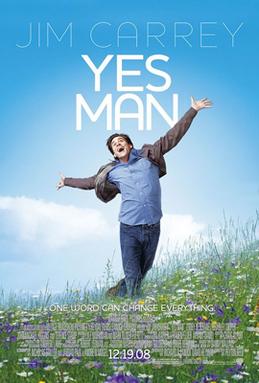
5. YES MAN (2008)

Since this isn't a well known Carrey film, I'll explain the plot. Carrey plays bank loan officer Carl Allen, who is having a rough time following his divorce, leading to him ignoring his friends and just having a dim outlook on life. After being suggested that he attend a motivational seminar, Carl follows the speaker's advice to say "yes" to any opportunity that presents itself. This leads to a chain of events that not only helps improve Carl's life but those around him.
This is a more down-to-earth comedy for Carrey. He's not as zany as when he was younger, but he still has that Carrey charm when it comes to the comedy. Carrey is also supported by a well rounded cast who work naturally off each other, including Bradley Cooper and Danny Masterson. Zooey Deschanel plays Allison, Carl's new love interest, and I love the quirky chemistry her and Carrey share.
What also stands out to me in this film is the music, specifically two selections. The first is "Separate Ways" by Journey. The song is epic in its own right, but its meanings and use at the beginning and end of the film greatly show Carl's progress. It's featured as Carl's ringtone when he's at the video store and he's called by Pete (Bradley Cooper). At this point, Carl is depressed due to his divorce, and that works with the song's break-up meaning. By the end of the film, the song is played again as Carl is driving a Ducati motorcycle he borrowed from a friend to get to Allison across town. This time it plays on the song's more triumphant themes of love, corresponding to Carl's new positive outlook and his feelings for Allison.
The other song is "Jumper" by Third Eye Blind, though in this case, it's Carl putting his new guitar lessons to use by playing the song trying to talk down a man threatening to kill himself.


The first time I saw this movie was early 2012, and I'll be honest, I was feeling really down on myself at the time. I think Carrey's performance and the meaning of the song being played out gave me a new appreciation for "Jumper". I was in no way suicidal, but I had this feeling of being unwanted, and it was a deep cut. I think "Jumper" and "Yes Man" helped me out a lot during that time.
Basically, it's more of a personal connection that makes "Yes Man" one of my favorite Jim Carrey movies. Its message is one I needed when I first saw it: a little positivity goes a long way. Plus, it's a funny movie in its own right, and if you haven't seen it, I really recommend it.


4. BATMAN FOREVER (1995)

This is definitely an unpopular opinion, but "Batman Forever" is my favorite of the original Batman movie series. I know fully well it has some problems, the biggest probably being the contrasting tones, with the film being stuck between the dark aesthetic of the prior Tim Burton films and before director Joel Schumacher went full neon camp in "Batman & Robin". That being said, I feel there is a balance that brings a lot of cool shots, with the lighting actually helping accent the darker colors. Considering "Batman: The Animated Series" was airing at the time, I think "Forever" matched the tone in some way with a mix of serious and fun. There's also a lot of cool designs, from the Batcave, vehicles, villain lairs, and costumes (batnipples notwithstanding). Plus, it actually gave more focus to Bruce (the main character I remind you) than the other films in the series.
So admittedly, Jim Carrey as the Riddler isn't the main reason I like this movie. But this is still a Jim Carrey movie and the film has a place in my heart, so that's why it makes the list. That said, Jim Carrey is pretty entertaining in the film and is a major part of what makes it fun. He brings his standard zany schtick, but considering the high energy Frank Gorshin brought to the role in the 60's TV series, I'd like to think Carrey was inspired by that. One person who definitely didn't like Carrey was Tommy Lee Jones, who played Two-Face in the film. He flat out told Carrey he hated him while also trying to match Carrey's energy in his own performance. I feel like that's the impact Jim Carrey can have; Jones didn't like him yet was so threatened by him that he tried to be like him. Admittedly, it probably would have been better if Jones played the more serious villain by comparison, but that's what happens when ego goes unabated.
Whether you liked Carrey's performance or not, it was definitely a memorable one.


3. ETERNAL SUNSHINE OF THE SPOTLESS MIND (2004)

I'd dare say that this is one of the best movies ever made due to its emotional resonance and cinematography.
Jim Carrey plays Joel, a soft spoken man who decides to have a procedure to erase his memories of his free spirited girlfriend Clementine (played by Kate Winslet) after learning she had done the same over him. Joel finds himself in a dream state reliving his relationship in reverse, but remembering the good moments of their time together leads Joel to regret his decision and attempt to keep some sliver of Clementine alive in his mind.
I first saw this about ten years ago for a film study class back in college; it moved me to tears then, and it still does whenever I decide to rewatch it. Carrey and Winslet bring this immediate connection as Joel and Clementine and there's so much emotion in their performances. You become invested in them from their budding beginnings to their slow burn of a break-up, with all the fun and heartfelt moments they shared in between.
What also makes this film stand out is how it depicts memories and dreams within the mind. It's not as clean cut as other stories make it out to be. This film shows memories blending in and mixing together as Joel's lucidity allows him to try and manipulate the situation he's in, allowing for surreal moments as well. There's also the degradation of memories, which is shown through both blatant and subtle ways. In both aspects, they are done very well with the set designs and the mix of practical and computer effects. Even the music has this distortion to it, working well with the dreamscape and the fading of memories.
The film has a big twist moment that I won't spoil here if you haven't seen it, but the observant may pick up on it right away while others may catch the hints the next time around. I also feel the film leaves things open-ended, and that what the viewer thinks happens next depends on whether they want to look at the situation logically or hopefully. In that regard, I'd like to believe in a happy ending.


2. THE MASK (1994)

Sometimes I feel lucky that I grew up with Cartoon Network in the 90's. Not only did it have much more variety than it does now, but it gave kids a chance to experience and appreciate the classic cartoons their parents grew up on, including the Looney Tunes and Hanna-Barbera catalogs. And it was the slapstick comedy of those cartoons, particularly the works of Tex Avery, that helped inspire one of the most iconic movies of all time, "The Mask."
Jim Carrey plays Stanley Ipkiss, a bank clerk that comes across a magical mask that when donned suppresses the wearer's inhibitions and allows them to act on their impulsive desires in a chaotic way that can defy logic. In Stanley's case, his behavior as the Mask is like a wacky cartoon character in the vain of Bugs Bunny or Woody Woodpecker. While his initial use of the mask plays on his more selfish desires, his altruistic side shines through at the end.
Jim Carrey plays both sides of his character very well. Stanley is relatable as the lovable loser, whereas the Mask is funny as hell and totally quotable. He also gives two memorable music performances, with the night club dance scene to "Hey! Pachuco!" that had amazing choreography and a police stand-off where he's able to escape by performing "Cuban Pete" and getting the whole police force to sing and dance with him.
Carrey's not alone in what makes this movie great. We had Stanley's love interest Tina, played by Cameron Diaz in first ever film role; it was a hell of a debut for her as a character who was likable in her own right and wasn't just there for eye candy. There was also Stanley's dog, Milo; it's not only adorable watching Carrey act with him, but Milo also plays a significant role in the film's third act. Then you have police detectives Kellaway and Doyle, total opposites that have hilarious interactions with each other throughout the film; I tell you, I may have watched a movie that focused on these two if given the chance.
Much like the classic cartoons that it homaged, I feel there's a mostly timeless quality to "The Mask." Not only does it really feel like its own world, but it doesn't have any dated references. Even the CGI holds up pretty well over fifteen years later. I think this has to do with the cartoony nature of the Mask; you know it looks silly because it's supposed to be.
Overall, "The Mask" is a trifecta: a good Jim Carrey movie, a good comedy, and a good superhero film. On one hand, it's a shame we never got a direct sequel, but I think it just means we can appreciate the one film even more.

Before we get to number one, here are a couple honorable mentions:
* Liar Liar (1997): As a lawyer "cursed" with being unable to lie for 24 hours, Carrey is a laugh riot both verbally and physically in a performance that in the real world probably would have gotten him committed. In addition, Carrey's character goes through some decent development by the end and the bloopers at the beginning of the credits are just as funny as the rest of the movie.
* Bruce Almighty (2003): A unique premise for a comedy, Jim Carrey with the powers of God offers for some creative visual gags in addition to his own wacky personality. As Bruce learns the pressures and responsibility of being omnipotent, it leads to what I feel is a heartfelt and inspirational conclusion. Besides that, I enjoy Carrey and Jennifer Aniston's relationship and Morgan Freeman as God is just perfect. 

And my favorite Jim Carrey movie of all time is...


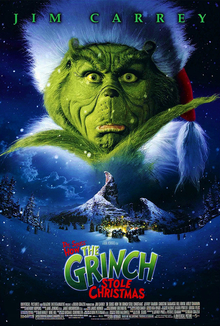
HOW THE GRINCH STOLE CHRISTMAS (2000)

By extension, this is also my all time favorite Christmas movie. I make a point to watch this every year around the season, specifically the extended edition that airs on Freeform. From what I can tell, said edition never had a home release and I prefer to watch this since it gives extra laughs and more reasoning for Cindy's investigation about the Grinch.
Compared to other Christmas movies, I feel this has a timeless quality, like it really does exist in its own little world. I love the set designs and the make-up, especially the Grinch's look. Seriously, when I saw the first trailer as a kid, Carrey's look as the Grinch scared the crap out of me to the point where I could hardly look at the poster for the longest time. Considering the Grinch is supposed to be a scary guy, I think the desired reaction was achieved. Since the cartoon version with Boris Karloff was a big part of my childhood, I find it easy to see this film as an expanded version of the story (especially compared to the recent "Cumber-Grinch" version). Come to think of it, I feel this is probably the best Dr. Seuss movie adaptation as well; "Horton Hears a Who" is a close second, which coincidentally also starred Jim Carrey.
Speaking of, what would this movie be without Carrey as the mean one himself? Through the heavy make-up and suit, Carrey brings his trademark wit both verbally and physically to the role, resulting in a lot of quotable moments. The scariness of the Grinch is already on deck, but Carrey is also able to have a funny side show through even the character's cynical moments. Hell, as I get older, I've found the character can actually be relatable to adults at least when it comes to his home life. Plus, Carrey also puts his own spin on the classic "You're a Mean One, Mr. Grinch" song.
Between the original cartoon and the live action adaptation, whichever version you prefer, "How the Grinch Stole Christmas" is a classic. In the latter's case, it's hard to imagine anyone else but Jim Carrey covered in all that green fur.

Sunday, February 9, 2020

Movie Review: Birds of Prey - How Harley Got Her Groove Back


Many would agree that one of the best parts of the 2016 Suicide Squad movie was Margot Robbie's performance as Harley Quinn. It was only a question of when we would see her reprise her character. Enter "Birds of Prey". In the comics, the Birds of Prey are a group of female vigilantes based in Gotham. Despite the film using the team name, the marketing for the movie focused heavily on Harley, so much so that it made me worry that the rest of the team members were going to get shortchanged. A "Harley and friends" movie isn't a bad idea, but at least have the title match the contents. Thankfully I was worried for nothing, as the main protagonists all get a significant amount of screen time in a suprisingly wild ride of a film that's hardcore fun.

First and foremost, Margot Robbie outdoes her performance in "Suicide Squad" and brings new energy to her character. After her break-up with the Joker, Harley is trying to find a purpose and place as she sets out on her own, and it leads to a lot of crazy and fun antics that have consequences to the same degree. What's great about her journey in the film is that it doesn't change who she is deep down; she's only out for her own self-interest and those who get in her good graces, whether they want to be or not. Still a villain, close to anti-hero, but in no way a straight-up hero.
In recent years, Harley Quinn has been seen as DC's equivalent to Deadpool: a comedic red and black wearing reference making fourth-wall breaker. Bearing that in mind, one could see some Deadpool influence in the film, with Harley narrating most of the story (including flashbacks when needed), fantasy sequences and adding in some cartoony drawings from time to time.

The fight choreography is pretty damn amazing. In a more grounded story, there's less reliance on CGI and more abundance of real stunt work. Coupled with an R rating allows the film to get real brutal, and it kept surprising me with how much they didn't hold back.

While Harley is the majority focus, the film does a good job at showcasing the other characters in a way that feels natural to the story and warrants the movie being named after the team. Let's talk about each "Bird" in order of my favorites:
* Jumee Smollett-Bell as Dinah Lance/Black Canary: Next to Harley, Dinah's character has the most connections to others in the film. It's fun to watch her navigate her way through it all as she tries to figure out the right thing to do. There's also hints of an interesting backstory that could be explored in a future film.
* Rosie Perez as Renee Montoya: Perez gives a decent performance as a hard-as-nails veteran detective. The only downside to her character is that life seems to keep finding a way to shit on her for actually doing her job.
* Mary Elizabeth Winstead as Helena Bertinelli/Huntress: In terms of focus, this character unfortunately drew the short straw. It reminds me of Drax in the first Guardians film: a good character with entertaining moments, but doesn't seem to get as much spotlight as the other protagonists (plus, both characters are out to avenge their families). Hell, she doesn't even get to meet the others until the third act. It's honestly a shame, because I think Mary Elizabeth Winstead is probably the third most recognizable star in this film given her own filmography (Sky High, Final Destination 3, Scott Pilgrim vs. the World, 10 Cloverfield Lane). Hopefully like Drax, Huntress will get a little more attention in a future film.
* Ella Jay Basco as Cassandra Cain: The young actress turns in a good performance as a charge that ends up befriending Harley. My only problem is how different this portrayal of the character is from the comics. I honestly don't mind her not being the daughter of assassins (as far as we know), but you know what would have been interesting? If they kept her mute. Just imagine Harley and the others having to act off a character who couldn't talk back to them. It certainly would have been different from the troubled foster kid in an abusive home we've seen many times before.

Then you have the villains. As soon as Ewan McGregor was cast as Roman Sionis/Black Mask, I was totally on board with the idea. His performance is pretty entertaining; he's a person who likes to have fun, both in a conventional sense and in a sadist kind of way. There's one scene in the film that gets down right unsettling, highlighting how unhinged his character is. It was also great to see him wearing the comic accurate mask for the film's climax, adding significance to it as he seems to wear it when it's time to get down to dirty business.
There's also Sionis' right hand man, Victor Zsasz, played by Chris Messina. He's shown to be just as deranged as his boss, and in keeping to the comics, we see that he scars his body with tally marks for each person that he's killed. Honestly though, I kind of wish he got a little more screen time, as I felt a little more fear towards Sionis, while it probably should have been the other way around.

My nitpicks aside, "Birds of Prey" is a damn fun film that doesn't pull any punches. Whether you're a Harley fan, an action movie watcher, or just want a good girl power adventure, this film is worth a view.

My DC Extended Universe Film Rankings:
1. Aquaman
2. Wonder Woman
3. Shazam!
4. Batman v Superman: Dawn of Justice
5. Man of Steel
6. Birds of Prey
7. Justice League
8. Suicide Squad

Friday, January 24, 2020

Retro Review: "Spider-Man Noir: Eyes Without A Face"


Back in 2016, I reviewed the miniseries that debuted Spider-Man Noir, a dark 1930's reimagining of the character and one of my favorites versions of the web-slinger. Since that review, Spidey Noir has gained some prominence again thanks to the "Spider-Verse" movie where he was voiced by Nicolas Cage. In the comics, Noir remained part of the Web Warriors team through the book's cancellation. He would then appear in the Spider-Verse sequel event, "Spider-Geddon"...where he was killed by Morlun. Yeah, you can imagine that didn't sit well with me. However, the character has been announced to be making his return in the current Spider-Verse miniseries before getting a new one of his own. How he's coming back is yet to be explained, but I'm not complaining. The upcoming miniseries will be the character's first in ten years since the subject of today's review: "Eyes Without a Face", the direct sequel to the original Spider-Man Noir book from the same creative team. I wanted to look back on this story, see how it holds up and how it compares to its predecessor. So let's dive in.

Issue one begins outside the Manhattan office of the FBI, where a speeding car drops a body in front of the building. Said body has had his tongue cut out, money stuffed in his mouth and a sign around his neck that says "Squealer". As the agents investigate, one of them named Jean De Wolfe recognizes the man and the money, as De Wolfe's informant. From a nearby rooftop, Spider-Man watches, recounting how his defeat of the Goblin eight months earlier had left a power vacuum and now someone has filled the void, with the body serving as message to both sides of the law. Sometime later, Spider-Man goes to a warehouse where he pumps two goons for information about "the Crime Master."
In the main continuity, the Crime Master has been a minor Spidey villain through the years with multiple people taking on the role. The original Crime Master first appeared in a two parter where he waged a gang war against the Green Goblin; I'd like to think that the Crime Master filling the Goblin's void in this continuity is a nod to that story.
Anyway, after knocking one of the thugs out, Spidey puts the fear of god into the other. The thug says "Do you know what he does to stool pigeons?" Spidey smashes the wall next to the thug's head and responds "I've seen what he does. Thing is...he isn't here. I AM." It's a badass moment highlighted by the thug's scared look reflected in Spidey's lenses.
We then cut to four hours earlier in the Crime Master's office where the masked mob boss is laying down his terms with one of New York's dons named Moretti. Moretti refuses and spits in Crime Master's face. In response, Crime Master has his enforcer Flint Marko, nicknamed "Sandman", put the don "to sleep", crushing his head. I see this as a clever reinterpretation of Sandman; Flint still has the green striped shirt, but they use the Sandman name having to do with sleep rather than an elemental villain.
Back in the present, the goon's information leads Spider-Man to an abandoned theater, where he discovers "the stench of a slaughterhouse" with the chairs filled with the dead bodies of New York's crime bosses. Spidey later meets up with Felicia Hardy to see if she can keep an ear open at her Black Cat speakeasy for any information about Crime Master. She refuses since the Black Cat is supposed to be neutral ground. Peter reminds her how she helped with the Goblin, but she in turn reminds him that was a personal matter. Felicia asks why else Peter came to see her. He says "no other reason", to which Felicia calls him a liar and drops her robe, revealing her underwear and kisses Peter, who spends the night. The next morning, Peter thinks there's something serious between them, only to get the boot from Felicia. She jokes about him bringing her home to Aunt May before telling him to find a nice girl, saying to come see her if he wants a little excitement on the side. Considering even the main continuity makes a point that Peter and Felicia can't have a serious or normal relationship, it makes sense that the Noir version follows suit.
This story introduces more Noir versions of Spider-Man characters, including Mary Jane, who works at the welfare center that Aunt May runs. More prominently, we have a younger version of Joseph "Robbie" Robertson and his father Carver, family friends of the Parkers. Robbie is a reporter like his mainstream counterpart, in this version working for the Negro World newspaper. Robbie has been investigating a story involving Dr. Otto Octavius, but after getting nowhere for an interview, Robbie asks Peter if he could do a story for the Daily Bugle (still working there as a reporter so he can save up for college) so he can tag along as well. The two later go to Octavius' government funded lab on Ellis Island, first meeting with Dr. Connors, who brings them to Octavius himself.


This version of Octavius has legs that have been useless since birth and has outfitted his wheelchair with mechanical arms that allow him to use tools for his work. He apologizes for the smell of blood and formaldehyde since he's in the middle of an experiment where we see a live monkey with its brain exposed and electrodes inserted into it. It's a pretty gruesome sight, with the monkey even having tears in its eyes. Otto says a monkey is the closest they can get to a human brain, as he hopes to use his experiments to gain a new understanding of the human mind and psychology.
While Peter sees the benefits of Octavius' work, Robbie only sees cruelty on display. Peter senses Robbie's not telling him something; Robbie believes there's something bigger going on and that he'll tell Peter about it once he's put everything together.
Robbie's suspicions are correct as the first issue ends with Connors meeting with Sandman, who has come to Ellis Island to bring a new batch of test subjects, in the form of kidnapped African Americans.

Issue two begins with De Wolfe and other FBI agents at the theater full of bodies from before processing the scene. They also take a look outside and find some of Spider-Man's webs, figuring he's the one who called in the tip. While De Wolfe doesn't believe Spider-Man is working with Crime Master, he doesn't endorse his vigilante behavior.
Speaking of, we then see Spider-Man heading toward a club in Harlem called Seventh Heaven. It used to be run by Moretti, but since his death, Spidey believes it to be under new management. He busts in the door, incapacitating the two guards and taking their respective tommy gun and pistol. With all eyes in the club on him, Spider-Man makes his proclamation:

"The truth is this den of filth is built on crime and corruption, and from this night I consider every one of you as guilty as the scum who take your money. You are guilty by association. Guilty of narcotics, trafficking, theft, extortion, blackmail, torture, rape, and murder […] You will never set foot in here again. Now I'd like you all to leave."

Another badass moment that reminds me very much of Batman's "You have eaten well" speech from Frank Miller's "Year One" story. This is followed up by Spider-Man using the two guns he procured to shoot up the ceiling and get the people moving out. I think it's worth noting that this is the only instance we see Spider-Man using a gun in this story; he's using them as a threat but is not aiming to kill anyone. I think Aunt May's chastisement from the previous story really stuck with Peter, and that's some nice development.
Spidey then singles out Fat Larry, the man who managed the club for Goblin, Moretti, and now Crime Master. Spidey has Larry give him tour of the place hoping to find some clues about Crime Master. We see the usual vices like prostitution and drugs, but Spidey is especially sickened when they find what appears to be a torture chamber, with multiple locks and soundproofing. Larry just says this is for people into BDSM. Feeling dirty just being there, Spidey leaves after giving Larry one last warning to close the club down.
Afterwards, Spidey swings by Felicia's penthouse only to see she has a man with her. The next morning, Peter comes into the welfare center, cutting off MJ as she tries to say "Hi, Pete", excited to show Aunt May that the Bugle printed his story on Octavius. It's worth noting that as MJ tried to talk to Peter, she pushed some of her hair behind her ear, which I believe is supposed to be an indication she's interested in him. Peter's ignorance of this could be either his excitement over the paper, his own hang-ups over Felicia, or possibly both.
Carver and Robbie's girlfriend Gloria come into the center and tell everyone that Robbie's gone missing. They reveal that he's been investigating white supremacist activity, particularly the Friends of New Germany, and the disappearance of dozens of black men from Harlem. The police have been no help in finding Robbie or any of the missing men for obvious reasons. Peter, thinking back to what Robbie said about a bigger story and the torture chamber at the club, rushes out determined to find his friend.
Back at Ellis Island, Octavius and Connors are looking through their prisoners (where Robbie is indeed being held), and picks out a young female to be brought to the lab. At this point it's revealed that both Octavius and Crime Master are working for the Friends of New Germany. Octavius recounts his childhood living in German southwest Africa where his father ran a copper mine and the native house servants that were under his employ. Otto saw them as "always problematic. Troublesome, lazy...and degenerate." The panel where he refers to them as degenerate shows Otto looking through his window as two of the workers are having sex; that's a little hypocritical Otto you little peeper. Anyway, Otto made it his lifework to turn "inferior races" into obedient servants, with no hint of free will or rebellion.
We cut back to Seventh Heaven where Spider-Man, wanting more information, finds Fat Larry drinking alone. However, it's a trap with Crime Master, Sandman, and a whole bunch of goons entering the room. Crime Master's men are armed with crowbars, as he wants Spider-Man kept alive so he can spill his guts on the floor himself. Spidey's ready for a fight, and said fight only lasts three panels on one page. Easy, quick, lazy, however you want to look at it, considering I counted about a dozen guys, it's just surprising how short the fight was. After that, Spidey is face to face with Sandman. Spidey punches him in the cheek, which feels like hitting granite to him. Sandman pushes Spidey back with what seems like a powerful shove. With Spidey disoriented on the ground, issue two ends with Crime Master holding our hero with a knife to his face.

Issue three shows Sandman holding Spider-Man down as Crime Master is about to make his move, only for Spidey to web Sandman's face and break a couple of Crime Master's fingers. Spidey's second wind is short lived though as Sandman just begins punching and pounding on Spidey repeatedly. Said beatdown is seen from Spidey's point of view and is highlighted with the color of the panels turning more red, blood splatter and shattered lenses. Suddenly, De Wolfe and other agents bust into the club acting on a lead about Crime Master and Sandman. Everyone freezes except Sandman, who continues his assault on Spider-Man. De Wolfe shoots Sandman, who is still standing. He stops beating Spider-Man and turns his attention to De Wolfe and the other agents, who unload their guns into him. Sandman remains standing only briefly until he drops dead. Again, it seems a little easy considering how strong we saw Sandman to be, but it at least keeps with the realism of this world that he's not totally invincible. Crime Master and some of his thugs use the opportunity to make their escape, with Crime Master ditching his mask to mix in with those on the street.
De Wolfe checks on Spider-Man, who informs the agent about the situation. Spidey thinks about how Sandman smelled like formaldehyde and his mind goes to Octavius. Spidey asks De Wolfe what he knows about Octavius, and while De Wolfe suspects some wrongdoing, the bureau is unable to touch him. Spidey has no restrictions. De Wolfe gives Spidey his name as he leaves in case he needs to get a hold of him.
Peter realizes he's in no shape to find Robbie and needs to rest up. He ultimately goes to Felicia's where she finds him passed out on her balcony. But before that, Peter thinks to himself "Can't go home either. Aunt May must be worried sick. If she sees me covered in bruises...if Sandman had killed me..." Something I didn't touch upon in the previous Spider-Man Noir story was a moment where Peter realized he had been shot in the arm and how it could have been his head. In these two moments, Peter realizes his mortality and it helps him come down from any thought he may have about being invincible. This is something I'll get into more a little later, but this instance also has Peter thinking about those he cares about and the effect his life and possibly death as Spider-Man could have on them.
Peter fills Felicia in on the situation and rests up before getting the boot from her again, especially since her new man is at the door. The man's name is Sammy, and the guy talks a big game about how he'll be as big as Norman Osborn; just to get this out of the way, he's Crime Master. After the two have sex, Felicia asks him with his connections that if he knows anything about the black men disappearing from Harlem, to which Sammy responds to telling her to stay out of his business. Sammy takes a shower and searches for a towel, finding a bloody one in the hamper. After finding a bloody handprint on the ledge of Felicia's balcony, he's able to figure out that Felicia is involved with Spider-Man. He slams Felicia against her mirror, shattering it, and puts on his mask. When Felicia refuses to tell him anything, he takes a mirror shard to her and leaves her for dead.
Later on, Spider-Man is able to sneak his way into Octavius' lab on Ellis Island, where we see that the young woman the doctor selected from the prisoners has been lobotomized and made into a mindless slave. Spider-Man works his way down to the cells, releases all of Octavius' prisoners and finds Robbie. A brief flashback shows Octavius talking about a simplified procedure compared to the electrodes used before with "a simple hole drilled directly into the frontal lobe". Issue three ends with the first subject to undergo this procedure revealed to be Robbie, as we see him with a bandage on his forehead, a dead stare, and saliva dripping from his mouth.

Issue four picks right up with Spider-Man realizing what's happened to Robbie. One of the other prisoners tells him that everyone comes back like that after Octavius is done with them; Robbie can't talk but will do what anyone tells him. Spider-Man plans to lead Robbie and the others out only to discover Crime Master's goons are present. Crime Master is in the facility and informing Octavius that because of Spider-Man's interference, the higher-ups have ordered every shred of evidence to be incinerated, including the prisoners. Octavius is furious since this is his life's work, but Crime Master makes a point by slashing the lobotomized woman's throat. Octavius calls him an animal; again, quite hypocritical. Crime Master sends his goons to kill the prisoners in the cells, only to be ambushed by them and Spider-Man. During the commotion, Crime Master sneaks in and takes Robbie hostage, holding a knife to his throat and saying that he'll kill him like he did Felicia. One of the goons informs Crime Master that the FBI have arrived outside the lab. Crime Master orders his men to hold them off, until Spidey points out that Crime Master's the only one who killed anyone there and that they'd be on death row along with their boss if they fought back. Crime Master's men decide to bail, which makes them smarter than they look. Soon after, Octavius arrives and proceeds to stab Crime Master in the back with knifes he has attached to his mechanical arms. Crime Master looses his grip on Robbie and Spider-Man has the prisoners take him to escape and find the agents. Octavius continues to stab Crime Master repeatedly until he dies.
Octavius then turns to Spider-Man, asking if he'll put in a good word for him at his trial after killing Crime Master. An angry Spidey claims there won't be a trial and starts to break away the mechanical arms. Otto tries to fight back with his remaining arms, but they're obviously not as dangerous as other versions...which honestly makes the covers to issue four a little misleading.


Spider-Man seems ready to kill Octavius right then and there until De Wolfe and the agents arrive. De Wolfe reveals that Felicia had called him, and Spidey releases his grip on Octavius realizing she's alive. As Spidey and De Wolfe get the prisoners and criminals back to the mainland, Spidey heads toward Felicia's penthouse to check on her, being met by her bodyguard Lippy. Lippy tells him she's at the private clinic and that she'll recover, but that she doesn't want to see Peter, as she blames him for what happened to her.
A month passes by and good news is in short supply. Robbie is physically fine but nothing can be done to repair the damage to his brain. To make matters worse, Octavius isn't standing trial, since that could potentially expose state secrets. Instead, he's deported to Germany. Peter blames himself for what happened, and Mary Jane's attempts to comfort him don't do much. Peter says "I'm losing everyone, Mary Jane. All the people I care about." Peter's definitely in a dark spot when you look at both stories. He lost mentor figures in both Uncle Ben and Ben Urich, Robbie was lobotomized, and Felicia wants nothing to do with him. He became Spider-Man to help people, and yet what he's doing doesn't seem to be enough.
We then cut to Octavius arriving at the airport in Berlin to be met by members of the Nazi party, who immediately shun him for his condition, believing an inferior body means an inferior mind. With all his talk about superiority, you could say Otto got at least some comeuppance.
The last two pages focus on Felicia, with Peter narrating that she doesn't leave her apartment or take visitors. He plans to respect her wishes to stay away, but still checks on her from afar like he has before. Peter says that while her bones and organs have healed, "only the scars remain" with the final splash page showing Felicia wearing a cat like mask, implying that her face had been scarred by Crime Master.


This comic is good but not as good as its predecessor. The writing, art, aesthetic, coloring, and character reimaginings are still on point from the first story. My main problem is that Crime Master isn't as imposing as the Goblin, and that's probably due to Crime Master merely a puppet of higher powers while Osborn was his own man. Octavius was definitely more compelling and probably should have gotten more focus, along with more menacing arms.
The ending is pretty bitter sweet, which can be disappointing, but also probably the point. Spider-Man won, but the villain wasn't dealt a significant punishment and those hurt by him would continue to suffer. I think this ending is meant to challenge Peter's belief at the end of the last story that "good guys always win". Obviously that's not always the case. It honestly feels that the creative team had an idea for a third story but were unable to produce it with the Noir line becoming defunct. There's also what Peter says at the end with MJ: "There's something coming. Something so bad all the decent people will be crushed like insects...". This could be referring to World War II looming years later, but it could have also been build up to Peter's next challenge. Still, the original series has the benefit of being able to be read on its own with a proper, satisfying conclusion.
I also found the story to be surprisingly relevant when it comes to racial and political issues. Considering how things are today, with certain races being treated as less than people and the flames of intolerance being spread by those in positions of power, it's kind of sad to think we still have to deal with that crap almost a whole century later from when this story was set.
Overall, "Eyes Without a Face" is worth a read even with its flaws, especially for fans of Spider-Man Noir in general.

Friday, January 10, 2020

Movie Review: JOKER - Put on a Happy Face


When the Joker movie came out last October, I had a lot of friends asking me what I thought about it, leading them to be surprised when I told them I hadn't seen it yet. I just hadn't made it a priority. To be honest though, I wasn't a fan of this movie being made. Even though it was intended to be one-off film not connected to the DC Extended Universe, I thought it was a disservice to Jared Leto, who had played the character in 2016's "Suicide Squad." I'm of the camp that feel Leto didn't get a real chance to prove himself, especially when so much of his performance was left on the cutting room floor. Said camp is the minority though as it's appearing more and more unlikely that Leto will return to the role. My opinion on Leto's Joker aside, the trailers for this Joker film and the snippets of Joaquin Phoenix's portrayal showed a lot of promise. Now that I have finally seen the film, I found it to be quite the reinterpretation.

The film is weird mix of being inspired by the comics while also creating something unique. From the comic influences, I noticed quite a lot from "The Killing Joke" and a little bit from "The Dark Knight Returns" for the talk show scene. At the same time though, director and writer Todd Phillips does a brilliant job at creating the character of Arthur Fleck, the world around him, and his journey into madness. The trailers gave me the feel that maybe they were making a Joker movie where he's an anti-hero standing up to a corrupt system that's pushed him over the edge and inspiring others. While the film does make you sympathetic to him, he may be our protagonist, but he is no hero. Hell, there are no real heroes in this movie. It's just people and Arthur makes it clear that all he wants is attention, which does fit with what people usually expect from the Joker.

Between the writing and cinematography, the film does a great job at creating a world that feels as realistic as ours, while also bringing a surreal feel to it. While part of it has to do with recreating an early 1980's landscape, there's also the fact that most of the film is from Arthur's point of view. He's not right in the head and after a certain point in the film, you'll begin to question what, if anything, actually happened as we saw it or if it was just in Arthur's head. It'll be something you'd probably think about during repeat viewings. Also, there are a lot of well done shots in the movie. Some of it is due to the lighting, the camera staying on Arthur for an extended period of time (making you wonder what he's thinking in that moment), as well as symbolism that helps create parallels between scenes as we follow Arthur's journey.

Then you have the man himself, Joaquin Phoenix. Like Heath Ledger and Jared Leto before him, Phoenix put himself through the wringer in preparation for the role. The fact that he got so skinny for the role is proof. For the multiple scenes he's shirtless in the film, the level of concern actually rose for me the more I stared at him; part of me thought "jeez, get this guy a burger." There's also a level of unpredictability in his performance; you're not sure what he's going to do and it can keep you on edge. From the behind the scenes featurette I saw, there was a lot of improvisation from Phoenix, which works in hand in hand with the unpredictable nature of the Joker's character. This lead to his first dancing scene which would become a major part of the film and works with Arthur's need to perform, as well as multiple takes of his talk show introduction. Finally there's the laugh. The trailers alone showed he had it down, but the reason for his laugh in the film is clever. Something else I noticed is that the moments he's laughing are when he has the most emotion and inflection in his voice, as if those are the moments where he feels truly alive.
As for where I'd rank Phoenix among the other Joker actors, it's kind of tough. Nicholson, Ledger, and Leto have all brought their own flair to the villainous Joker, with the former two being able to play off their respective Batman. In that regard, Ledger is still the clown prince of crime above all others. Phoenix's interpretation is so different that he's really in his own league while still bringing the insanity and scariness that we've seen before and expect from the character.

Overall, "Joker" is a unique and disturbing character study. Its' atmosphere, lack of a standard "good vs. evil" conflict, and reinterpretation of a franchise that's already had so many help it stand out in what seems to be a never-ending sea of comic books films (not that that's a bad thing).

Saturday, December 28, 2019

My Favorite Stan Lee Cameos


Many creators in the comic book industry can leave their mark in the business, but none have done it in such a way as Stanley Lieber, better known as Stan "the Man" Lee. In the 1960's, he helped spearhead the Marvel universe we know today with the creation of many popular characters and teams, from the Fantastic Four to Spider-Man, Avengers, X-Men, and even Groot. Even those who don't read comics would know Stan from his numerous appearances in adaptations of his works through movies, cartoons, and video games. Stan passed away on November 12, 2018, with his final filmed cameo featured in "Avengers: Endgame." But today, on what would have been Stan's 97th birthday, I'd like to share some of my favorite Stan Lee cameos through his illustrious career.


SPIDER-MAN: THE ANIMATED SERIES (1998)

You never forget your first. I think for a lot of Marvel fans who grew up in the 90's, self included, the final episode of the Spider-Man animated series was their introduction to Stan Lee.
After saving all of reality from Spider-Carnage with his multiversal counterparts, the main Spidey of the series journeys to the world of the powerless Spidey (who I'd like to call Tobey), where he learns of his status as a popular fictional character and meets the man responsible for it. Basically it's our world, and Stan Lee coming face to face with his greatest creation is equivalent to that of Walt Disney meeting Mickey Mouse. The meeting means as much to Spidey as it does to Stan, finally looking forward to a bright future after all the hardships he's faced over the course of the series.
There's also the nice touch of Madame Web, who I would find out long after the series' conclusion that she was voiced by Stan's wife, Joan. Stan and Web's compliments about each other made a lot more sense after that.


THE SIMPSONS (2002)

What, you thought this was going to focus squarely on Marvel? We all know Stan is bigger than that. Of the dozens of celebrity guest appearances the Simpsons has had in its decades spanning history, Stan Lee's appearance in the season 13 episode "I am Furious (Yellow)" surely ranks among the best (and it's one of my favorite episodes of the series in general).
It starts out simple enough with Stan Lee randomly showing up at the Android's Dungeon and giving Bart some creative advice (while also promoting Marvel over DC). You think that would be all, but we cut to some time later and Stan has apparently not left the comic book store, taking the "Marvel over DC" campaign further by crushing Database's toy Batmobile trying to force a Thing action figure to fit. Then you have the cherry on top with one more scene. After Homer is painted green due to one of Bart's pranks and ends up resembling the Hulk, an angry Stan claims he himself is the Hulk and attempts to transform. Comic Book Guy pities Stan but quickly comforts him after he fails. Honestly, the funny part about this scene is Comic Book Guy leads Stan back into the store after saying he wish he could get him to leave. But hey, it's Stan. Who wouldn't want his company?
Stan Lee would make a few more appearances on The Simpsons, including officiating Comic Book Guy's wedding in 2014's "Married to the Blob", but they don't quite top the first time he rolled into Springfield.


FANTASTIC FOUR: RISE OF THE SILVER SURFER (2007)

With the boom of Marvel movies in the 2000's, Stan Lee cameos became a staple no matter which studio they came from. If a Marvel movie was coming out, there was a 95% chance Stan would make an appearance. I think his cameo as a guest at Reed and Sue's wedding in the Fantastic Four sequel, "Rise of the Silver Surfer", is where they started to actually have more fun with his appearances. Stan Lee, as himself, getting kicked out of a wedding of characters he created is just hilarious. This one still goes down as one of my favorite cameos and I smile every time I watch it.


THE AMAZING SPIDER-MAN (2012)

It's Stan Lee as a librarian apparently wearing ridiculously loud headphones listening to music oblivious to the destructive battle between Spider-Man and the Lizard. Whether you like the "Amazing" reboot or not, how can you not love this cameo? Also, bonus points for Spidey saving him from being hit by a thrown table.


THE BIG HERO 6 FRANCHISE (2014-2019)

Not many know that Big Hero 6 is based on comics published by Marvel. So as tradition usually allows with Marvel films, Stan Lee does make an appearance. While a portrait of Fred's father uses Stan's likeness, the true cameo comes in the post-credits scene when Fred discovers his father's secret superhero cache and then his father (voiced by Stan) discovers his son's discovery (discoverception?). That alone probably wouldn't have made my list, but the subsequent animated series kept this cameo from being just for laughs.
In the animated series, we learned that Fred's dad is a semi-retired superhero known as Boss Awesome with a regular rogues gallery, some of whom appear to fight the next generation team of Big Hero 6. Stan would voice Fred's dad several times throughout the series' first two seasons. I love the fact that Stan got his own superhero life and I enjoyed it every time he showed up.
The last episode Stan recorded for before his death was "Supersonic Sue", which was dedicated to him. With a third season ordered, I'm kind of hoping Big Hero 6 has an episode that pays tribute to Stan and Fred's dad in some way.


AVENGERS: AGE OF ULTRON (2015)

For the most part, Stan's cameos are usually as some sort of civilian. That's why I feel his appearance in "Age of Ultron" is a special one. At a celebration party the Avengers are holding with many of their friends in attendance, we see Stan as one of Cap's old war buddies hanging with both him and Thor. It's made even better when he dares to drink a strong Asgardian elixir, messing him up so bad that he has to be escorted out while slurring one of his signature catchphrases, "Excelsior!" Excelsior indeed, Stan. Excelsior indeed.


CAPTAIN AMERICA: CIVIL WAR (2016)

So after the emotional turmoil of watching Steve and Tony nearly killing each other, we needed someone to help lighten the mood. Enter Stan "the Federal Express Man" Lee! The combination of Stan's delivery (no pun intended) of "Tony Stank?" and Rhodey's reaction to it make this cameo comedic gold. And Rhodey's right; this is one we won't be forgetting any time soon.


GUARDIANS OF THE GALAXY VOL. 2 (2017)

This cameo not only officially introduced the Watchers into the MCU, but it also gave credence to a long running fan theory about Stan's cameos. That theory is that Stan is a Watcher himself, witnessing events across time, space, and the multiverse. Of course, this excludes the times he appears as himself or a specific character. But whether it be MCU, the X-Men films, either Spider-Man series, etc., all Marvel movies/universes he appears in are connected in some way. His cameo in Guardians 2 is basically him on break with his fellow Watchers. There's also the fact that he directly refers to his "Civil War" cameo, despite the fact that delivery man and space man have literally nothing to do with each other and that Guardians 2 takes place two years before that.


SPIDER-MAN (2018)

I didn't play the Spider-Man PS4 game until after Stan's death so his cameo in the game would be the first one I'd see since then. As you'd expect, I got a little emotional when he popped up since it was nice to see him again. Another reason I enjoy this cameo, and I may be reading too much into it, is because it cements Peter and Mary Jane as Stan's favorite Marvel couple. Coincidentally, 2018 also saw Peter and Mary Jane finally get back together in the comics after splitting up way back in "One More Day". So yeah, it was a good year for those two.


VENOM (2018)

When it comes to Sony's 2018 Venom movie, while it still felt unnecessary, it honestly wasn't as bad as I thought it would be. It's not on the level of the MCU of course, but I still found it entertaining. One of the best parts in my opinion was Stan's cameo where he stops Eddie on the street to give him (and Venom) encouragement on his love life. I also didn't see this until after Stan's death, so it kind of felt like Stan talking to Eddie from beyond the grave to me.
It's a very blatant Stan Lee cameo, but it's one that's so meta that I have to bring up the Watcher theory again. Stan observing the events of the movie is the only way this makes sense. I mean, how does he know about Eddie's love troubles when he was nowhere near him and Anne during their conversation or that Eddie has a symbiote? Hell, it's such a strange interaction even Venom has to point it out by questioning "who was that guy?" A legend, Venom. A legend. It's still a memorable cameo though, even if it does lack some logic from a certain view.


SPIDER-MAN: INTO THE SPIDER-VERSE (2018)

The makers of "Into the Spider-Verse" sprinkled Stan Lee cameos throughout the whole movie like some kind of game of "hide and seek", but his most prominent cameo in the film is always hard for me to get through. Since this was the first of Stan's posthumous cameos, the context of the scene added much more meaning than it intended to. As the city mourns the loss of Spider-Man, fans feel it even more when Stan appears and says "I'm going to miss him." It's like a double punch to the heart.


CAPTAIN MARVEL (2019)

For the final cameo on my list, "Captain Marvel" marked the first MCU film Stan appeared in posthumously. The loss was still fresh and the film even had a special Marvel Studios intro dedicated to Stan and his cameos. It's a very simple cameo with Stan rehearsing for his part in "Mallrats" when Carol, searching for a Skrull, comes up and pulls it down. Stan smiles and Carol smiles back. Personally, I see Carol's smile as a way of saying "We miss you, Stan." While that wasn't the intention, that's the way I'll always look at it.

In conclusion, happy birthday Stan. We'll never stop missing you.